
When a stainless railing post joins different grades, identify the material on each side of every affected weld and obtain the welding specialist’s accepted procedure for that pairing. Review the exposure and performance requirements for the complete junction. A material upgrade on one part does not automatically resolve the suitability of the adjacent part or the weld.
List the materials by component
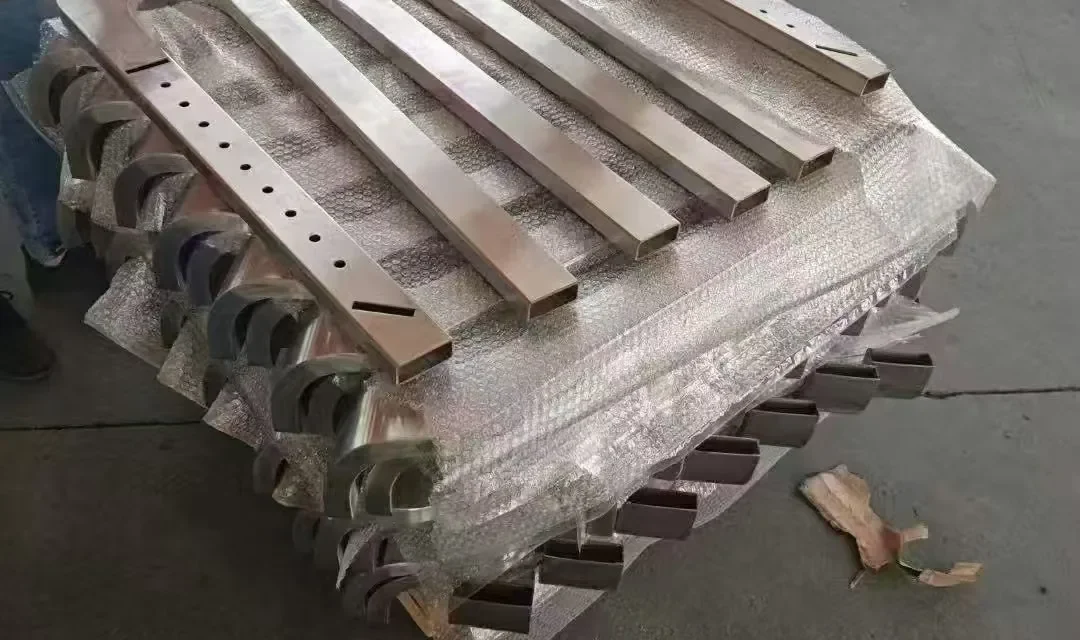
A post assembly can contain tube, base plate and welded adapter blocks supplied from different stock forms. Record the exact ordered designations and governing specifications next to their drawing marks. Avoid a single grade field that hides a different plate or attachment.
Ask whether a mixed pairing is part of the original design or a proposed substitution. The first case needs an explicit drawing and procedure basis. The second also needs a change decision against the already approved assembly.
Ask the welding specialist to review the pairing
TWI’s stainless welding presentation discusses dissimilar stainless combinations and illustrates that filler choice depends on the materials being joined. It is technical background for the review. The actual procedure must address the joint, product forms and service requirements.
Send both parent-material records to the welding specialist. Request the applicable procedure reference, filler designation and any required qualification scope. Purchasing should retain the reviewed pairing rather than selecting a filler from the higher grade name alone.
Create a junction schedule
| Review item | Information required | Buyer action |
|---|---|---|
| Parent materials | Tube, plate and adapter designations | Identify each pairing |
| Procedure | Accepted joint and filler scope | Confirm welding review |
| Substitution | Affected marks and revised material record | Obtain release before fabrication |
Give each distinct material combination its own line. Where several geometrically identical posts use the same pairing, group them under their affected post marks. Keep a stock substitution from entering production merely because the physical dimensions match.
An illustrative base plate substitution
A buyer specifies a 316L tube and plate. A quote revision offers a 304 plate of the same dimensions due to the supplier’s available stock. The junction now has a changed parent material even though the assembly drawing looks the same.
Ask the designer to review corrosion exposure and the full assembly requirement, then ask the welding specialist about the accepted procedure for the actual pairing. Record rejection or acceptance of the substitution before procurement. Do not describe the assembly as wholly 316L when the approved parts differ.
Connect the release to the shop records
After the material pairing and procedure have been accepted, the filler traceability guide helps connect the consumable records to production. Keep the parent-material evidence and procedure revision with that record.
For square stainless posts, submit the component list, joint sections and proposed departures through the drawing enquiry. Ask the supplier to identify separate assumptions in its quotation so the buyer can compare the complete assembly scope.
Does a stronger or higher alloyed part approve the junction?
Review the actual requirement being assessed. Mechanical strength, corrosion resistance, weldability and finish can involve different evidence. The responsible project reviewers should close each applicable question for the proposed combination.




