
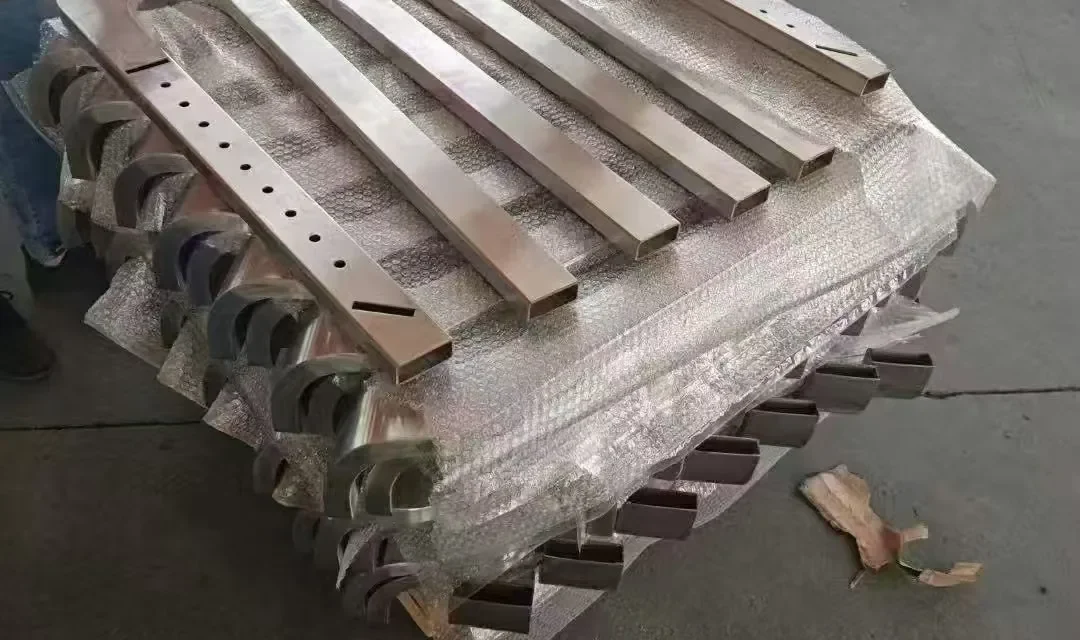
Before requesting a permanent mark on a stainless steel railing post, define the marking method, location, readability and finishing sequence. Review a representative marked sample in the intended material and finish. The marking process may alter the local surface, so any corrosion or appearance requirement needs evidence for that process and the actual application.
Define what must survive
Ask which event requires identification to remain readable: unpacking, installation, maintenance or future replacement. Specify the actual characters and whether a human-readable post reference is sufficient. Link the mark to the part identification schedule so a permanent serial number does not conceal a drawing revision mismatch.
If a temporary tag meets the handling need, document that decision. Where permanent marking is required, define the accessible viewing position after covers, glass clamps and handrail supports are fitted.
Review the actual marking process
Laser annealing, material-removing engraving and mechanical stamping affect a surface differently. Request the proposed method and a representative sample rather than approving all processes under the word engraved. DTU research on industrial laser marking examines how laser marking parameters and material behaviour can affect surface performance. Those findings support process-specific review; they do not provide a universal post-marking recipe.
A research result for a particular material and process cannot certify a different grade or production setting. Ask the responsible materials reviewer what evidence is appropriate for the required exposure and appearance.
Place the mark on the detail drawing
| Item | Evidence | Decision |
|---|---|---|
| Position | Drawing face and visible zone | Approve access and appearance |
| Process | Representative finished sample | Review local surface effects |
| Record | Code linked to material and drawing | Preserve traceability |
Show the location with dimensions or an unambiguous face reference. Identify prohibited zones where a mark could affect a seating surface, visible finish or another controlled feature. Have the design reviewer assess any material-removing or deforming mark near a load-carrying detail.
Example: the visible mark is moved beneath a cover
An architect wants the reference hidden under the base cover. The revised sample makes the code invisible after installation, and service staff cannot read it without the agreed access procedure. Check the actual purpose before accepting that location. A concealed mark may suit traceability during fabrication while a separate accessible reference is needed for installed maintenance.
Approve the sequence as well as the sample
Record whether marking occurs before or after final finishing and what subsequent cleaning or treatment follows. Inspect the finished marked sample after those steps. A mark approved before a surface treatment may not retain the same contrast or edge appearance afterwards.
For square stainless posts, submit the code format, drawing position and required evidence through the project enquiry. BalusterPost must confirm the proposed marking process for the order; this guide makes no availability claim for a particular marking machine.
Does a readable mark prove material grade?
A mark identifies the part represented by the traceability record. Grade verification still depends on the relevant material documents and their connection to that part.




