
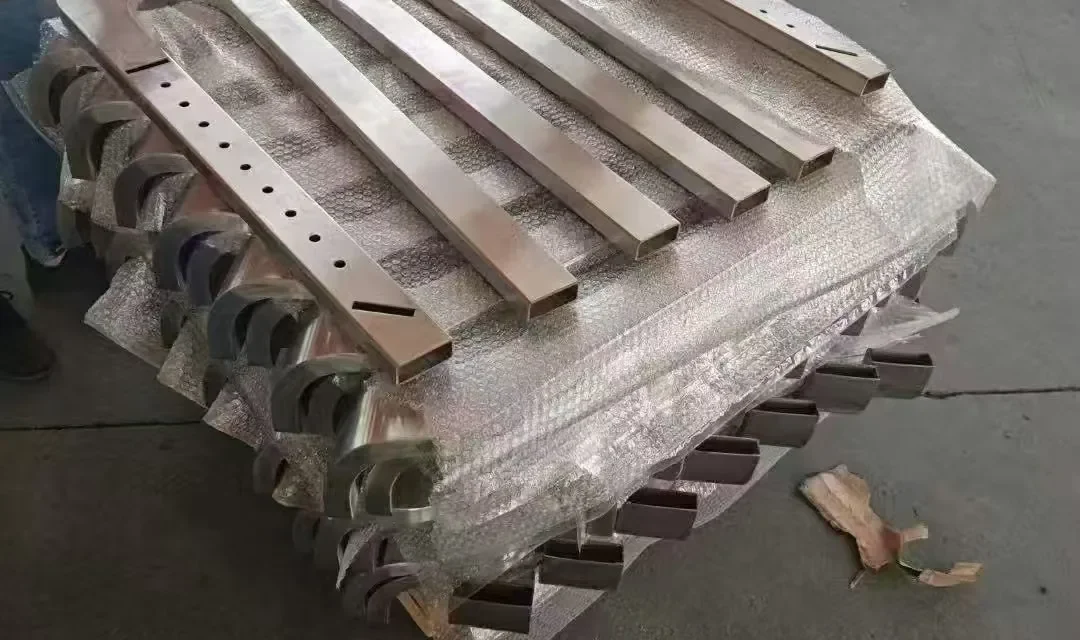
When reviewing a mill certificate for a stainless steel railing post, compare the mechanical property specified for the actual product form with the corresponding result. Proof strength and tensile strength represent different points in a tensile test. Confirm the product standard, units, thickness or size range, and material identity before accepting a value or deciding that an alternative is equivalent.
Read the field name before reading the number
A certificate can list proof strength, tensile strength and elongation on adjacent lines. The Outokumpu mechanical properties reference explains that 0.2% proof strength describes the stress associated with a defined offset when assessing the onset of plastic deformation. Tensile strength records a different point. Elongation describes deformation under its stated test convention. Compare each result to the field and method required by the order.
Match the result to the component being purchased
| Item | Verify | Avoid |
|---|---|---|
| Proof strength | Specified offset and units | Reading tensile strength instead |
| Tensile strength | Applicable range or minimum | Using as a proof strength result |
| Elongation | Test convention and reported value | Comparing incompatible test lengths |
| Material lot | Certificate applies to the component | Using plate evidence for the tube |
A welded post can contain a tube, a base plate and separate brackets. Identify which certificate belongs to each component. Product specifications and delivery condition can differ, even within one nominal alloy. Check whether the result is a test value for the identifiable lot, a general datasheet value, or a stated minimum. If the certificate uses another unit system, preserve the original and show the conversion.
Use an example line to catch mismatched fields
Suppose a drawing asks for a mechanical requirement on the plate and the submission highlights a higher number from the tube certificate. The buyer should first check the component and then the property. A tensile result for the tube cannot resolve a proof strength question on a plate. Send the reviewer the plate identity, its certificate and the section of the purchase requirement that needs resolution.
Keep material verification and design approval connected
A mill result can support acceptance of the specified material batch. A change to wall thickness, support or weld geometry still requires design review. Do not move a single actual test result directly into a design assumption for every post. If the proposed change is to another product specification, ask the designer which mechanical minima and other requirements must be carried into the revised order.
Prepare a usable acceptance record
Make a row for each component showing part mark, certificate, heat or lot, material specification, property name, required value and result. Add the applicable thickness or size and units. If a field is absent or the result cannot be tied to the part, flag it to the purchasing and quality team rather than closing the row based on the alloy label.
What can a generic data sheet establish?
It can give context for properties and expected specifications. Ask for the evidence required by the order and trace it to the material received when batch verification is required.
See the related technical guide and the square tube glass balustrade post. Send the drawing and project requirements for a quotation.




