
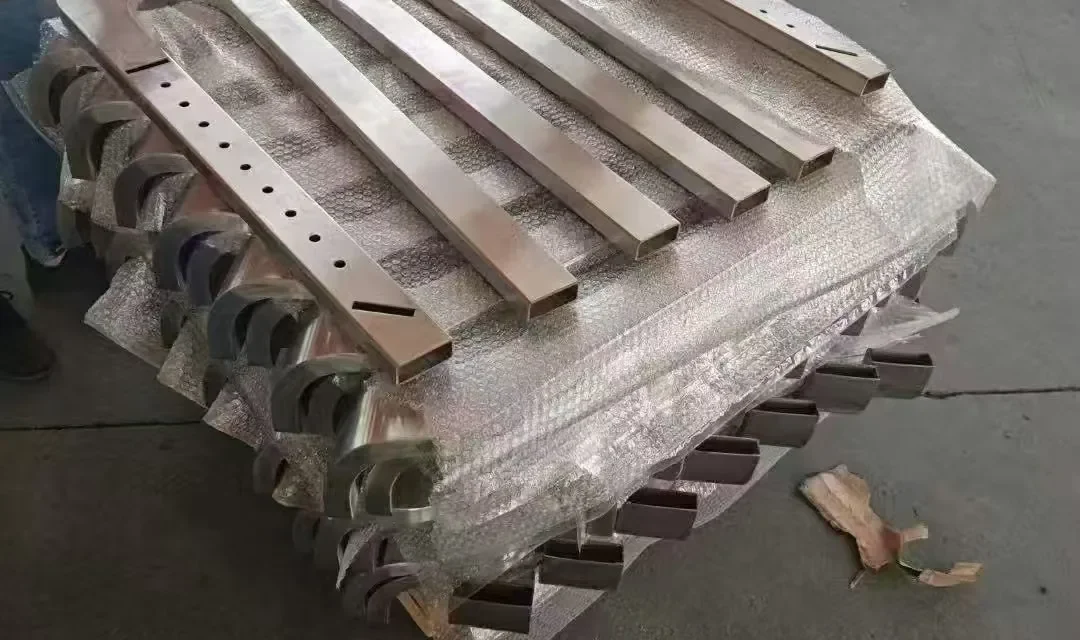
Dual-certified 316/316L material can be suitable for a railing post order when the supplied product is certified to the requirements actually ordered. The slash on a quotation is not that evidence. Check the applicable standard, product form, declared grades, test results and heat traceability, then connect the accepted stock to the finished post components before approving a material substitution.
Understand what the dual declaration means
The British Stainless Steel Association’s explanation of multiple certification describes a batch meeting more than one specification or grade through its chemistry and mechanical properties. It identifies 316 and 316L as a common example. The declaration concerns requirements that the material meets; it does not mean that two different steels have been mixed into one post.
A buyer should therefore ask which grades and standards the producer has actually certified. A supplier description such as marine grade, 316 quality or 316/316L stock leaves that question open until the product documentation is reviewed. Preserve the original mill declaration rather than rewriting it into a more attractive marketing label.
Read the purchase requirement first
Extract the ordered product form, standard and edition, grade designation, delivery condition and any project-specific requirements. A tube, plate and machined component do not become interchangeable because a familiar grade number appears on each certificate. Review each component against the requirement applicable to it.
If the specification uses a European number and the offer uses a US type designation, ask for the actual declared standards. Similar commercial names do not remove differences in product standards or supplementary requirements. A manufacturer’s typical grade data is useful background, but it cannot replace results and declarations for the supplied heat or lot.
Use a short acceptance decision table
| Offer or document | What it establishes | Buyer action |
|---|---|---|
| Quotation marked 316/316L | Supplier’s proposed description | Request the actual certified product declaration |
| Certificate declares both required grades | Producer’s stated certification for identified material | Review results, scope and traceability against the order |
| Only a low carbon result is highlighted | One chemistry result | Check the remaining grade and product requirements |
| Tube certificate supplied for complete post | Evidence for the identified tube stock | Request the agreed evidence for other components |
A low carbon result is relevant to an L-grade requirement, but acceptance should not stop at that one field. Check the complete applicable chemistry and mechanical requirements using the ordered standard and the certificate scope. Do not infer a second certification solely from an analyser label or a selected test result.
Keep the grade declaration attached to the actual stock
Match the certificate’s producer, heat or lot references and product description with incoming stock records. Follow the agreed identity transfer through cutting and fabrication. If a post combines tube and plate from different heats, record those links separately rather than applying the tube’s dual designation to the whole assembly.
The material verification guide explains the wider MTC, PMI and traceability chain. Use that process to investigate identity gaps. A positive material identification reading is a measurement with method-specific limits; it is not an administrative upgrade of a single-certified product into a dual-certified one.
Example: the quote is dual grade but the certificate is not
In an illustrative order, the quote says 316/316L while the submitted certificate lists one grade under one product standard. The supplier points to a favourable chemistry result and proposes immediate acceptance. First compare the document with the actual purchase requirement; a single designation is not automatically a defect if it already meets the order.
If the order explicitly requires a dual declaration, request clarification or corrected evidence from the responsible material source. If the supplier proposes different material, record it as a substitution for the authorised reviewer. Keep the affected stock identifiable while the decision is pending. Do not edit the certificate or silently relax the requirement on the receiving checklist.
Separate material acceptance from complete post approval
Accepted dual-certified stock does not by itself approve the post dimensions, welding, finish, connection or railing system. Those requirements remain on their own drawings and inspection records. It also does not establish that every clamp, screw or accessory in the shipment has the same declaration.
For stainless square-tube post enquiries, include the exact material requirement and evidence scope through the project contact. BalusterPost’s confirmed manufacturing scope is stainless posts. Request separate material information for specialist partner-supplied fittings where the project needs it.
What belongs in the release record?
Retain the accepted specification, original certificate, component-to-heat mapping and any authorised deviation. State why the supplied declaration meets the order. This makes later repeat orders and investigations easier: the next buyer can see the accepted material requirement without relying on an ambiguous slash in an old quotation.




