
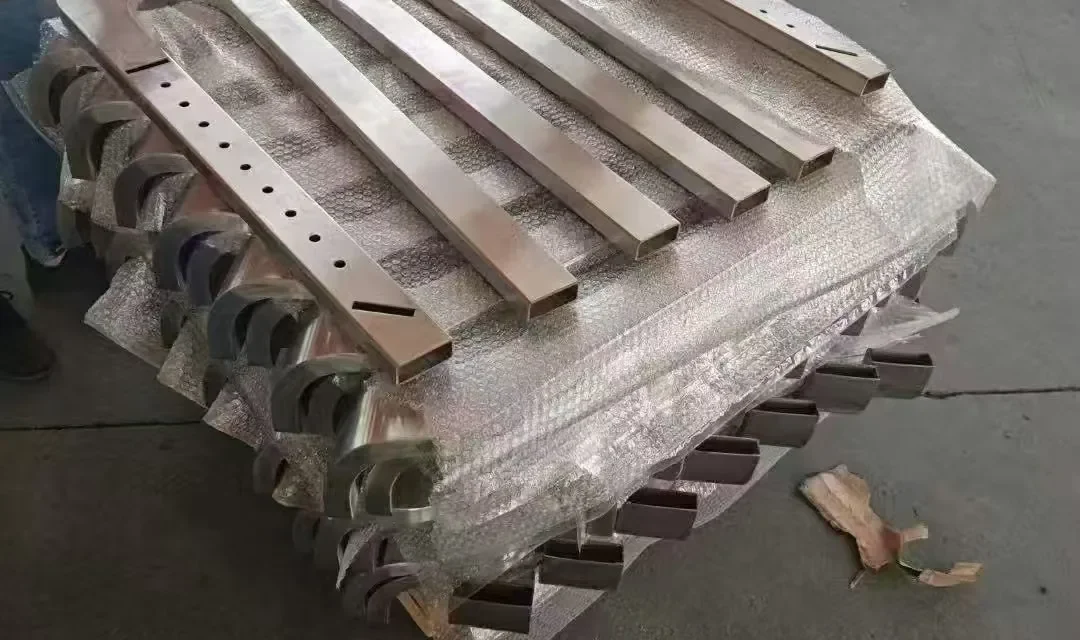
When a project specifies liquid penetrant inspection for stainless steel railing post welds, identify the joints, examination timing and acceptance criteria before fabrication. The examination is intended to reveal surface openings on suitable material. Use a report that traces the checked areas to the actual posts and records how any indication was evaluated under the approved procedure.
Start with the drawing and inspection plan
Mark the joints the project requires to be examined. Match each mark to a location such as the tube to base plate joint or a specified bracket connection. Define the extent of coverage and identify any area that will be inaccessible once a cover, bracket or other component is attached. If the buyer expects examination of every post, write that scope explicitly.
Know what result the method can support
| Report field | Question for the buyer | Supporting record |
|---|---|---|
| Joint and post identities | Which locations were examined? | Marked drawing and post schedule |
| Stage and coverage | Was the surface accessible then? | Inspection plan and result sheet |
| Indication disposition | What criteria were applied? | Applicable acceptance reference |
| Repair and recheck | Which revised parts were released? | Traceable retest or approval |
The ASNT liquid penetrant testing overview describes the method as an examination for discontinuities open to the surface. Surface condition affects whether a discontinuity can be detected. Coordinate the examination stage with the qualified inspector and fabricator, especially when grinding or finish operations can change the surface or restrict access. The result does not establish the condition of inaccessible subsurface areas.
Describe how indications will be evaluated
The examination instructions and acceptance criteria serve different purposes. The procedure defines the examination. The acceptance criteria define how relevant indications are assessed for the project. The buyer should be able to find both references in the report. Ask the qualified reviewer to disposition any indication or inaccessible area. Avoid deciding from the color or size of a mark in a standalone photograph.
Example: a report says ‘base welds passed’
The consignment has two base plate configurations, and the report gives only a batch number. The buyer asks for the actual joint marks, examined coverage and date. The inspector clarifies that one configuration was examined before a cover was added. The other is held until the project confirms whether the missing coverage is required and how it will be addressed.
Make the report usable after shipment
Keep post and joint marks, drawing revision, examination stage, procedure and acceptance references, the examiner’s identification and any approved repair or re-examination records. Compare those records with the packing list. When a report covers selected pieces, identify which pieces they were and retain the inspection plan that authorized selection.
Does a clean result replace other evidence?
Verify dimensions, material records, other specified weld checks and structural evidence independently. Use the penetrant report for the examination scope it identifies.
Use the related procurement guide alongside the square tube glass balustrade post. Send the released drawing and relevant check records for a project quotation.




