
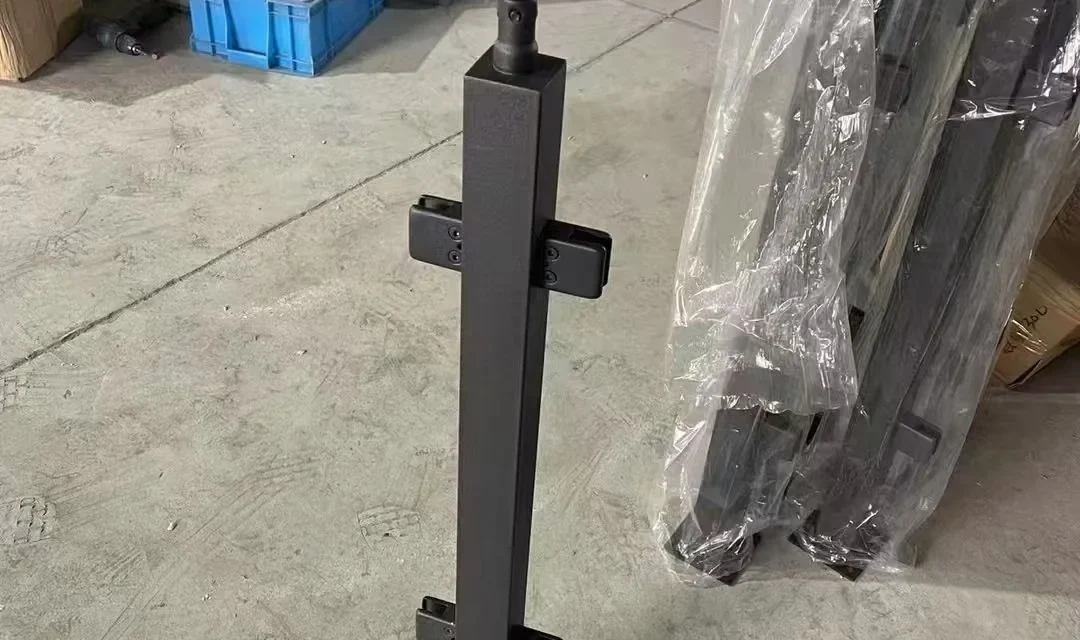
Confirm the exact glass clamp assembly and its glass-processing requirements before releasing panels for heat treatment. Obtain the approved fitting drawing, glass build-up and any required hole or notch information from the responsible suppliers. Do not infer drilling requirements from a clamp photograph, and do not plan to correct an incompatible tempered panel by drilling or cutting it on site.
Why must clamp selection precede glass fabrication release?
The glass and fitting orders describe one interface, even when different companies supply them. If the clamp model changes after the glass dimensions and processing have been released, the buyer may be left with components that no longer match. The important purchasing decision is therefore when the shared interface is sufficiently confirmed to release both orders.
The National Glass Association’s paper on fabrication before heat treatment explains that cutting and drilling heat-treated glass can cause breakage and that fabrication should be completed before heat-strengthening or tempering. This is why an unresolved hardware interface must not be treated as a detail that can simply be corrected later.
This guide does not provide hole diameters, edge distances, notch shapes or glass design rules. The actual component instructions, glass fabricator’s requirements and project design must determine those details. No universal pattern can be safely inferred from the words glass clamp.
Do all glass clamps require holes?
Do not generalize across product families. Establish the requirement for the exact proposed assembly, including any pin, support feature, gasket or other component identified by its supplier. A body shape or marketing name does not reveal every feature that may interact with the glass.
Use the glass clamp category as an enquiry starting point. BalusterPost coordinates these accessories from qualified specialist manufacturing partners; it does not claim in-house glass clamp manufacture. Actual models, available configurations and processing requirements need confirmation before ordering.
Ask the supplier to identify whether the proposed fitting relies on a particular glass preparation. If no hole or notch is required for that model, retain the confirmation with the model and revision. Do not carry the answer across to another clamp that only appears similar.
Which information must be shared between the suppliers?
Give the clamp supplier the approved glass specification, including its build-up and relevant dimensions. Give the glass fabricator the actual fitting reference and current approved interface drawing. Both parties should understand which document controls the relationship between the hardware and the processed panel.
| Information | Responsible input | Release check |
|---|---|---|
| Clamp assembly | Component supplier | Exact model and included features identified |
| Glass specification | Project designer and glass supplier | Build-up and applicable requirements confirmed |
| Processing detail | Approved interface and fabricator review | Required holes or notches fully defined |
| Panel identity | Project panel schedule | Drawing matches the intended position |
| Revision | Coordinating buyer or project team | Both suppliers use the same accepted issue |
| Authorization | Named release authority | Open interface questions closed |
Keep nominal thickness separate from the full glass specification. For a laminated panel, for example, the ordering description needs more than a casual reference to its overall thickness. The project and suppliers must confirm the actual build-up and fitting compatibility; this article does not select that build-up.
How should the post drawing connect to the glass drawing?
Identify the post positions and clamp mounting references that establish the panel interface. A square stainless steel railing post is the core manufactured product, but its attachment arrangement must be coordinated with the selected fitting and panel. The glass fabricator should not have to derive hardware centres from a general catalogue photograph.
Specify the measurement reference and orientation on the approved drawings. If a panel is handed or used on a slope, identify the viewing side and installation position. A drawing mirrored for convenience can become a costly mistake if nobody records which face the dimensions describe.
Ask the responsible project team to resolve any discrepancy between the post schedule and glass schedule before fabrication release. A small difference should not be dismissed solely because it looks minor on a printed page. Its acceptability depends on the actual interface and agreed tolerances.
What should happen at the final release check?
Compare the fitting reference, panel reference and drawing revisions together. Confirm that the glass fabricator has reviewed the processing detail and that all required dimensions are stated. Record the person authorizing release and the documents used for the decision.
A useful release note identifies any items that remain outside the approval scope. Approval of the panel outline, for instance, should not be described as approval of an unresolved hardware feature. Split approvals are possible, but their boundaries must be explicit enough that no supplier treats a partial decision as unrestricted production authorization.
The glass clamp sample approval checklist helps document the proposed assembly. A physical sample may assist identification and fit review, but it does not replace the glass drawing or establish project performance by itself.
What if the clamp changes after the glass has been ordered?
Stop the affected release process long enough to establish the actual status of both orders. Determine whether the panels are only scheduled, already processed or already heat-treated. Ask the responsible suppliers and designer to assess the change against the work completed.
Do not instruct the glass supplier or installer to improvise additional processing on a completed tempered panel. Obtain an approved disposition, which may involve a different accepted assembly or replacement glass. The buyer should retain the decision and its limits rather than describing every apparent physical fit as acceptable.
If a change is accepted, update all affected references. The new fitting model should appear on the purchase order, glass interface record, installation instructions and replacement information where relevant. Leaving the old model in one document creates uncertainty for the next delivery.
What evidence should be retained for replacement panels?
Keep the final panel drawing, actual fitting reference, glass specification and accepted changes with the project record. Record which position the panel serves. This information allows a future replacement enquiry to begin from the installed arrangement instead of reconstructing dimensions from photographs.
Do not assume the originally proposed hardware remains available or unchanged years later. For a replacement, confirm the current component information and the relationship to the existing installation before releasing glass production. The preserved record is a starting point for verification, not permission to skip it.
For example, if a proposed replacement fitting introduces a feature absent from the accepted panel drawing, mark the interface as unresolved. Ask both suppliers to compare their drawings before either order proceeds. A matching overall clamp width does not answer whether the panel preparation is still correct.
Glass-processing FAQ for clamp buyers
Can the glass order be released using an approximate clamp model?
Keep affected processing details provisional until the exact assembly and interface are accepted. An approximate reference is suitable for discussion, not a reliable fabrication baseline.
Does “no drilling” mean no glass specification is needed?
No. The actual glass build-up, dimensions and compatibility still need confirmation for the proposed assembly and project.
Can a sample panel prove the entire railing is acceptable?
No. A sample can support defined checks. It should not be presented as a substitute for the project’s required design and performance evidence.
What should be sent with the enquiry?
Send Ryan Liang the post layout, proposed glass specification and fitting requirement. Identify whether glass fabrication has already started so the enquiry can distinguish an open selection from a constrained replacement decision.




