
Compare glass railing posts, glass spigots and continuous base channels as different support arrangements, not interchangeable names for stainless steel hardware. First identify how the glass is held, how the assembly connects to the building and which components belong in the quotation. Choose against a coordinated project design; neither a minimalist appearance nor a larger visible fitting proves suitability for a particular guard application.
Why do these terms cause purchasing mistakes?
Buyers sometimes send a photo of a glass railing and request stainless steel bases without identifying whether they mean a post base plate, a compact glass support or a continuous channel. A seller can respond with a plausible product that performs a different role. The first useful decision is therefore the support concept, followed by the exact component and approved assembly.
This guide helps distributors and project purchasers organize that comparison. It does not select glass thickness, support spacing, anchor details or allowable loads. Those requirements belong to the project design and the documented system. BalusterPost’s core manufacturing product is the stainless steel post; other related products are coordinated through qualified specialist manufacturing partners.
What defines a post-based glass railing?
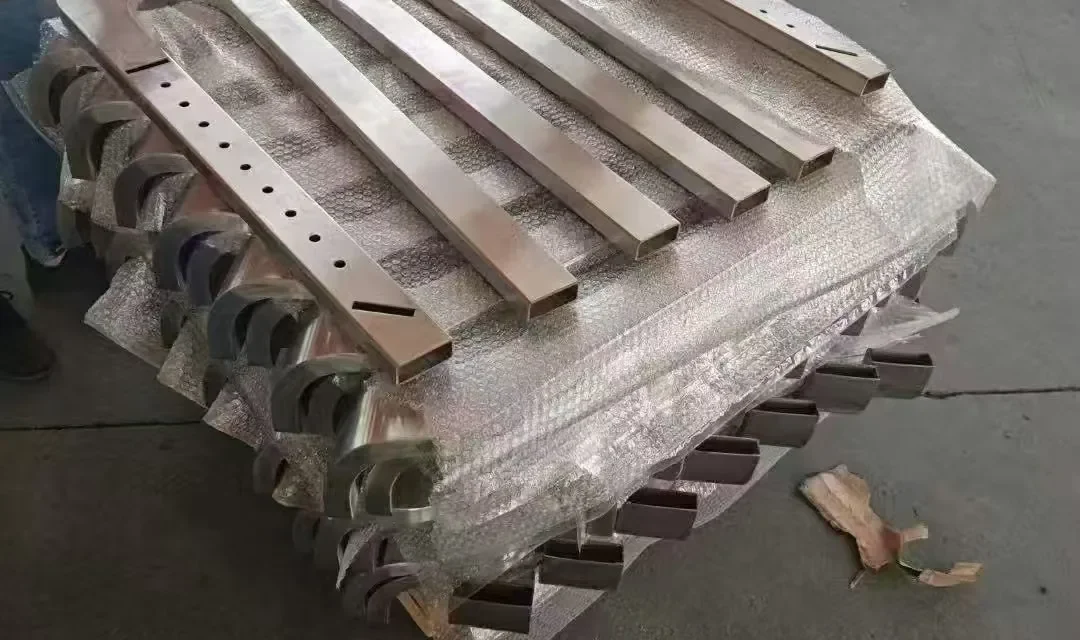
A post-based arrangement uses vertical members with defined glass connections, such as the fittings shown on the square-tube glass balustrade post. The order must coordinate post marks, mounting interfaces, glass attachments and any handrail supports. Glass connection positions and the relationship between posts and panels belong on the drawings.
Do not equate a post section with a complete railing system. A post quotation may include the fabricated member and specified attachments while excluding glass, anchors, rails or installation. Read the scope before comparing it with another offer described as a complete system. Even two post-based offers may allocate the same components to different suppliers.
What does a glass spigot describe?
In common purchasing use, a glass spigot is a discrete support located at the lower part of a glass panel. Its exact glass retention method, base connection and permitted arrangement depend on its model. It is different from the plate underneath a full-height metal post, even when both are made from stainless steel and both sit close to the floor.
Ask for a sectional drawing rather than identifying the product solely by the visible cover. The section should show the glass relationship, any model-specific inserts or retention features and the connection to the support below. A similar external shape does not establish that two spigots share the same installation details or evidence.
What is a continuous base channel?
A continuous base channel is a different product family in which the glass interfaces with a length of profile and its specified fixing components. The commercial package may separate profile, inserts, covers, end pieces and other items. Confirm the actual construction and supply list for the proposed system instead of treating the channel as a longer version of an individual clamp.
The term channel also appears in handrail and decorative accessory descriptions. Add its function and location to the enquiry: glass-supporting base channel, rail cap or another defined component. A label such as U-channel without a drawing is too broad to establish what the buyer needs or whether it is intended to support glass in the proposed application.
How can the quotation be compared fairly?
| Question | Post arrangement | Discrete spigot arrangement | Continuous channel arrangement |
|---|---|---|---|
| What needs identification? | Post, glass fittings and mounting detail | Exact support model and glass retention detail | Profile system and its complete component set |
| What schedule helps? | Post marks linked to panel positions | Support references linked to panel positions | Profile runs, joints and panel positions |
| Which interfaces need drawings? | Glass to fitting, fitting to post, post to building | Glass to support, support to building | Glass to profile system, profile to building |
| What cannot be inferred? | Capacity from tube size alone | Capacity from body size alone | Capacity from profile length alone |
The table describes purchasing organization, not a ranking of engineering performance. Actual support behavior depends on the specified complete assembly. Use the same site conditions and design requirements when requesting alternative proposals, and ask the responsible designer to evaluate the alternatives before one is released.
Why does glass specification belong in the comparison?
Glass is not a neutral infill that can automatically move from one support concept to another. Its build-up, dimensions, edge processing and connection details must match the chosen arrangement. A panel ordered for one connection may not be suitable for another, and the effect of breakage must be considered in the applicable project design.
The National Glass Association’s Glass Use in Guardrails paper discusses different glass support arrangements and glass retention after breakage in its explanation of the 2021 IBC. That is background for asking the right design questions. It is not a test report for a product shown on this website or a substitute for locally applicable requirements.
How should the building connection be described?
Show the supporting structure and the location of the attachment relative to finished surfaces. Identify whether the connection is at the top, side or another defined position, and establish which party specifies the anchors and substrate checks. Covers, floor finishes and waterproofing interfaces should be coordinated with the structural detail rather than used to conceal an unresolved connection.
A system change can affect more than the visible metalwork. For example, an existing construction detail developed around discrete posts may not provide the same fixing route assumed by a continuous profile proposal. The buyer should request a coordinated alternative section before substituting the product family, not simply convert a quantity of posts into a length of channel.
What about handrails and panel junctions?
Identify whether the project includes a rail, how it is supported, and how corners, ends and stair transitions are formed. These decisions belong to the assembly comparison even when the initial enquiry focuses on bases. A partial quotation can appear inexpensive because it omits junction components and the work needed to integrate them.
Keep the distinction between a rail cap and a structural glass support visible in the component list. Similarly, distinguish a post cover from its structural base plate. The post base plate guide explains why a decorative cover should not be assigned an assumed structural role.
A useful enquiry format for alternative concepts
Prepare one project brief containing the intended location, adopted design requirements, support construction, glass outline and architectural preferences. Ask each proposed supplier to identify the exact support concept, included components, exclusions, drawings and applicable evidence. Require a list of unresolved interfaces so the technical comparison is not buried beneath a price summary.
For a distributor building a product range, keep separate catalogue families and reference codes for posts, glass clamps, spigots and base channels. Do not combine them under an ambiguous glass clamp base label. This helps buyers reach the correct commercial page and makes later replacement enquiries more reliable without pretending that every family is interchangeable.
Comparison FAQ
Is a frameless appearance evidence of a particular support type?
No. Architectural descriptions can be broad. Use the component section and actual connection drawings to identify the support arrangement.
Does BalusterPost manufacture all these product families?
No. Stainless steel posts are the core manufactured product. Related accessory sourcing is coordinated with specialist manufacturing partners, and actual availability must be checked.
Can a buyer request alternatives before choosing a system?
Yes. Send a common project brief through the enquiry page, identify the alternatives clearly and retain design review before ordering. Comparable scope is more useful than visually similar hardware.




