
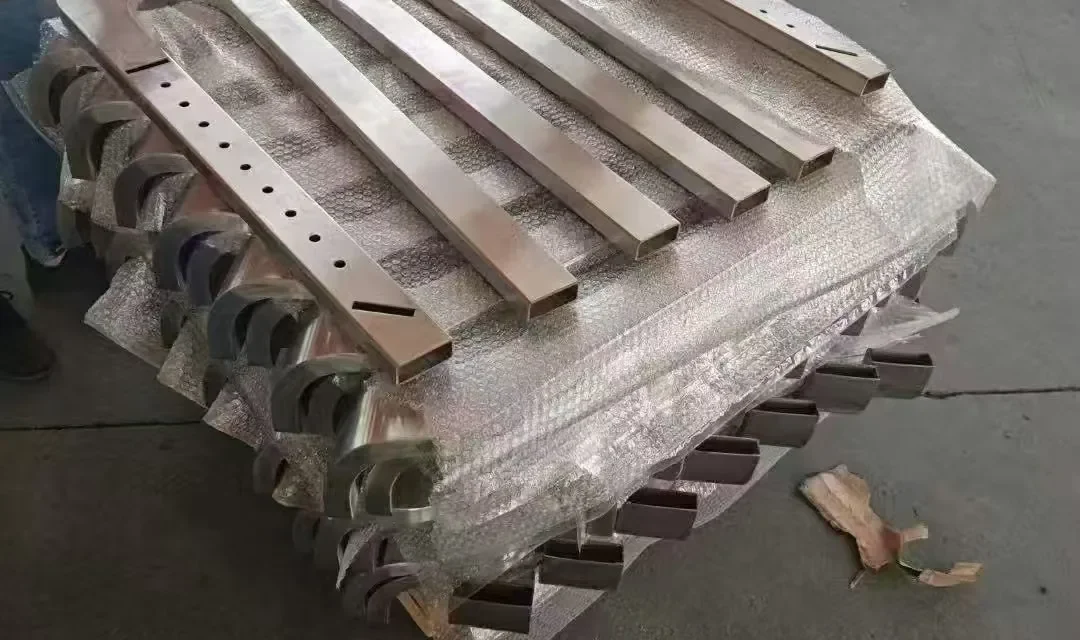
Specify stainless steel railing posts for an indoor pool by their actual exposure zone, cleaning access and approved corrosion requirements, not by the words pool grade alone. Describe whether components are immersed, regularly splashed or in the pool atmosphere, and identify concealed or difficult-to-clean parts. Obtain project-specific material approval before ordering; a general preference for 316 does not establish suitability for every pool-building location.
Why is a pool-building enquiry different?
For this related purchasing decision, see how to map winter salt exposure for exterior railing posts.
A single pool project may contain several distinct environments. A railing alongside the water, a stair near a changing area and a barrier above the pool hall should not automatically inherit an identical exposure description. Purchasing staff need the designer’s actual material schedule and the conditions that informed it. The building name is not a substitute for that information.
The purpose of this guide is to help overseas buyers assemble a useful enquiry. It does not prescribe a grade for an unassessed location or certify a railing for pool use. If the project has not completed its material selection, the quotation should identify that dependency explicitly rather than allowing an attractive catalogue finish to decide the specification.
BalusterPost manufactures stainless steel baluster posts and railing posts, with business coordination in Taizhou, Jiangsu, China. Related glass clamps come from qualified specialist manufacturing resources. Product availability and project suitability require separate confirmation; this article does not claim that a standard post or accessory is approved for every swimming-pool environment.
What does the corrosion guidance actually say?
The British Stainless Steel Association’s pool-building guidance discusses stress corrosion cracking and warns against using types 304 and 316 for components vulnerable to that mechanism where failure could injure people. That warning is important when reviewing a safety-related component; it should not be replaced with a blanket claim that 316 is always suitable around pools.
The International Molybdenum Association’s pool-design publication distinguishes immersed or regularly splashed applications from highly stressed applications within pool buildings. The practical procurement consequence is to describe the real location and obtain the appropriate expert selection. Different exposure conditions should not be collapsed into one generic pool label.
These sources explain why specialist review may be necessary. They do not establish the condition of an existing railing from a photograph, and this article does not offer a visual pass-or-fail test. If deterioration or a safety concern is present, refer it to the responsible facility and engineering professionals rather than relying on a purchasing checklist.
Which exposure details belong in the RFQ?
Mark each post group on a plan and describe the relationship to the water and the pool atmosphere. Identify whether the component is indoors or outdoors, whether splashing is expected, and whether all faces can be reached for the specified cleaning regime. Do not assume that the visible post face represents conditions behind a cover or at a concealed fixing.
Provide the approved environmental and maintenance information from the project team. Where water treatment, cleaning products or operating conditions affect the specification, include the relevant documented requirements. Buyers should relay those requirements accurately instead of creating their own chemical limits or exposure classifications.
If the project information is uncertain, label it as such. A statement that cleaning will be frequent is not the same as a documented maintenance arrangement with access and responsibility. Ask the owner or designer to resolve what the finished installation can realistically support.
How can the exposure schedule stay practical?
| Schedule field | Information to obtain | Buying decision supported |
|---|---|---|
| Location | Post reference and marked pool-building zone | Which specification applies? |
| Exposure | Actual wetting and atmospheric conditions | What must the material review consider? |
| Access | Reachable and concealed surfaces | Can the maintenance plan be implemented? |
| Material approval | Designer-approved requirements by component | What may the supplier quote? |
| Surface condition | Specified finish and fabrication treatment | What delivered condition is required? |
| Maintenance | Applicable instructions and responsible party | What must be handed over? |
The schedule should help distinguish locations that genuinely differ. Do not create many arbitrary exposure labels without a design basis. A concise set of approved groups is more useful than a long spreadsheet whose categories cannot be explained to the supplier.
Should hidden parts receive the same attention?
Yes. Identify the post body, base, welded attachments, fasteners and supplied accessories separately in the material schedule. A quotation describing the visible post as stainless steel does not define every concealed component. If a part is supplied by another contractor, retain its scope and approval responsibility in the interface record.
Discuss covers, recesses and enclosed areas with the designer in relation to the actual maintenance approach. Do not assume a decorative cover seals an interface or that a hidden surface will be washed when the visible post is cleaned. The relevant construction and access details should support the approved service arrangement.
The existing maintenance procurement guide explains how to obtain usable instructions. For a pool project, those instructions must match the selected material and location; a general household stainless-cleaning note is not enough to resolve a specialist exposure requirement.
How should quotations be compared?
Send each bidder the same approved component and exposure schedule. Compare the actual grade, product form, finish and documentation offered against that schedule. Where a bidder proposes a different material, record it as an alternative requiring technical approval rather than silently treating it as equivalent.
Separate the cost of the defined supply from unresolved engineering decisions. A low quotation based on a broad 316 description may not cover the same scope as a proposal addressing every listed component. Ask for clarification of omissions before making a price comparison.
Do not ask a supplier to promise maintenance-free performance or a universal corrosion lifetime. Seek a clear statement of the proposed product, the information on which the offer is based and any limitations requiring project review. That is more useful than an unsupported label such as marine or pool quality.
What needs approval before manufacture?
Release the post drawing, component material schedule and finish requirements together. Confirm that any glass clamps, handrail attachments or separately supplied fasteners refer to the same approved project conditions. Retain the documented decision on substitutions and unresolved scope.
For the core stainless steel post range, identify the chosen configuration rather than assuming the product name includes a pool-specific specification. Where drawing-based production is requested, the released package must describe the actual post interfaces and accepted material basis.
Use the first-article inspection guide to connect the agreed requirements with the delivered sample. Appearance acceptance remains separate from material approval and structural suitability. A polished sample does not resolve an outstanding corrosion-selection question.
What should the owner receive at handover?
Provide the approved material and component references, applicable care instructions and any specified inspection requirements. Identify limitations on products or procedures where the actual supplier documentation states them. Preserve the link between installed locations and the relevant component records so that future replacement enquiries start with the correct information.
If the operating or cleaning conditions change, refer that change for review against the original selection basis. Do not assume that an earlier approval covers an environment that was never described. Purchasing records are useful only when their assumptions remain visible to the people managing the installation.
Frequently asked questions
Is 316 automatically suitable for indoor pool railing posts?
No. The actual exposure and project requirements need assessment. The cited guidance includes specific cautions about stress corrosion cracking in pool buildings.
Can I select a grade from the distance to the water?
Distance alone is not a complete exposure description. Obtain the approved assessment and include wetting, atmospheric conditions, access and maintenance information.
What should I send with a quotation request?
Send Ryan Liang, Export Manager, the post schedule, location plan, approved material requirements and maintenance basis. Identify unresolved conditions so they can be clarified before the order is released.




