
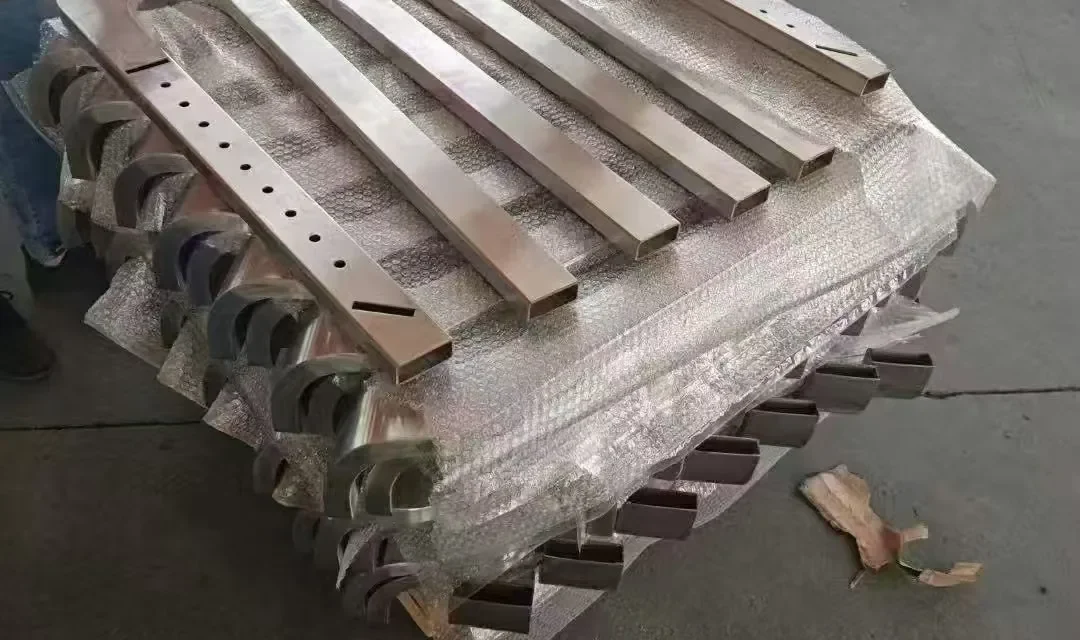
Use a salt spray report for stainless steel railing posts only within its documented specimen, method and evaluation scope. Test hours alone do not establish outdoor service life, approve a complete railing or prove that every supplied post matches the tested sample. Before accepting a claim, identify what was tested, how the result was assessed and how the evidence relates to the proposed order.
What does a salt spray result actually tell a buyer?
A report records a particular laboratory exposure and the observations made under its stated conditions. Its purchasing value depends on the question being asked. A buyer checking a specified finish requirement needs different information from someone selecting materials for a coastal installation. A headline number cannot answer both questions without the supporting context.
This guide helps importers and distributors review claims attached to stainless steel baluster posts. It does not prescribe a test duration or acceptance threshold. The project specification and competent technical reviewers must establish what evidence is appropriate for the intended product and environment. No BalusterPost test result or certification is asserted here.
BalusterPost’s core manufacturing scope is stainless steel railing posts, coordinated from Taizhou, Jiangsu, China. Glass clamps and other related accessories are supplied through qualified specialist manufacturing resources. A report on a sourced accessory should not be presented as a report on the manufactured post, or the other way around.
Can test hours be converted into years outdoors?
Do not apply a universal conversion. ASTM’s official B117 page explains that the practice creates a controlled corrosive environment and cautions that standalone salt spray results have seldom correlated with performance in natural environments. Extrapolating a laboratory duration into a service-life promise therefore needs evidence beyond a headline hours figure.
Keep the project requirement separate from the name of the laboratory method. A request for corrosion evidence must identify the purchasing decision it is intended to support. Ask the responsible technical reviewer whether the proposed report is appropriate for that decision.
These limitations do not mean every test report is useless. They mean its purpose and interpretation need to be appropriate. Ask what requirement the test was intended to evaluate and retain the limits of the conclusion when communicating it to a customer.
What specimen was tested?
Start with the specimen description and photographs. Was the sample a finished post, a cut section, a flat coupon, a coating panel or an individual fitting? Identify the material, finish and preparation stated in the report. A result on a flat sample should not silently become a claim that a complete assembled post was tested.
Check whether the features relevant to the proposed product are represented. Welded areas, edges, attachment zones and coatings may be described differently from the principal visible surface. The report should make its specimen scope understandable; the reviewer should not have to infer it from the supplier’s sales photograph.
If the report does not identify the sample sufficiently, request clarification before using it in approval or marketing. A familiar company name on the cover does not connect an unidentified sample to a particular part number or production order.
Which details belong in the review?
| Report detail | Buyer question | Unsupported conclusion to avoid |
|---|---|---|
| Specimen identity | Which actual part or sample was exposed? | Every product in the catalogue was tested |
| Material and finish | Do they match the proposed item? | A different finish inherits the result |
| Method and edition | Which documented procedure was used? | All salt spray methods are identical |
| Exposure | What duration and conditions are recorded? | Hours translate directly into outdoor years |
| Evaluation | What was assessed and against which criteria? | A broad pass label explains every observation |
| Traceability | How does the sample relate to the order? | An old sample certifies every later shipment |
Use this as a document-review aid rather than a substitute for the applicable test specification. If the project requires an independent laboratory or a particular report format, state that requirement before commissioning work. Do not add a new acceptance rule after seeing a result and present it as part of the original agreement.
Why is the word pass incomplete on its own?
A pass statement needs an identified criterion. Ask which surfaces, observations or measurements were included in the evaluation and where the acceptance requirement came from. A summary line without that information may be inadequate for the buyer’s intended decision even when the underlying laboratory work was performed correctly.
Keep observations and conclusions distinct. Photographs may show the specimen condition at a stated point, while a formal evaluation applies a defined criterion. Do not substitute a cropped photograph for the complete report or remove qualifications when preparing a distributor’s product page.
The railing post test-report scope guide addresses the broader relationship between tested configurations and supplied products. The special issue here is corrosion-exposure interpretation, especially unsupported claims about outdoor life.
Can two suppliers be compared by hours alone?
First determine whether the reports address the same purchasing requirement. Compare the identified product, finish, specimen preparation, method and evaluation basis. If these differ, the larger number is not automatically evidence that one complete railing post is the better choice for the intended environment.
Do not use an unlike-for-like comparison to rank different stainless materials contrary to the limitations of the selected test. Material choice needs its own appropriate technical basis. A corrosion specialist or responsible designer can identify the evidence required for the actual exposure conditions.
For a finish-specific contractual requirement, ask the relevant reviewer whether the proposed evidence is suitable and sufficiently comparable. Keep that decision with the quotation comparison. It is more defensible than awarding an order because one brochure displays a longer duration.
How should the RFQ describe a testing requirement?
State the product and finish to be evaluated, the applicable method and edition, the sample scope, the agreed evaluation criteria and the required reporting information. Identify who approves the test plan and who bears the agreed testing cost. Do not assume that a general request for salt spray testing defines all of these details.
Ask the supplier what existing evidence is available and whether it relates to the proposed configuration. If new testing is needed, obtain a specific proposal. This article does not promise in-house testing, a standard included test package or any particular laboratory turnaround.
Use the supplier quality-agreement guide to connect the requirement with release responsibilities. Testing should answer an agreed question before shipment, rather than become an ambiguous attachment that each party interprets differently.
What happens when the finish or construction changes?
Review whether the existing evidence remains relevant to the changed product. A revised coating, material, preparation process or component arrangement should not automatically inherit a previous claim. Record the change and ask the responsible technical reviewer whether further evidence is needed.
This is also important for repeat orders. A report retained in a distributor’s archive may describe a product that is no longer identical to the current offer. Keep the report reference connected to the approved specification and revision rather than treating it as a permanent company-wide certificate.
What can a distributor safely communicate?
Describe the documented test and its scope accurately. Identify the actual product or specimen and avoid adding a lifespan, universal coastal suitability or maintenance-free promise that the evidence does not support. If the report contains restrictions, keep those restrictions available to the person making the purchasing decision.
Use the stainless steel post category to identify the proposed product, then request the relevant information for that configuration. A broad catalogue range does not mean one report covers every listed post and accessory.
Frequently asked questions
Does a long salt spray exposure prove years of outdoor life?
No universal conversion is supported by the cited standards guidance. Service-life claims require an appropriate basis beyond standalone test hours.
Does a report on a coating panel cover the complete post?
It describes the documented specimen. Any broader conclusion needs technical justification; it should not be assumed from the report title.
What should I send with an enquiry?
Send Ryan Liang, Export Manager, the post configuration, finish specification, intended exposure and the actual project testing requirement. Distinguish evidence already available from testing that still needs to be proposed and agreed.




