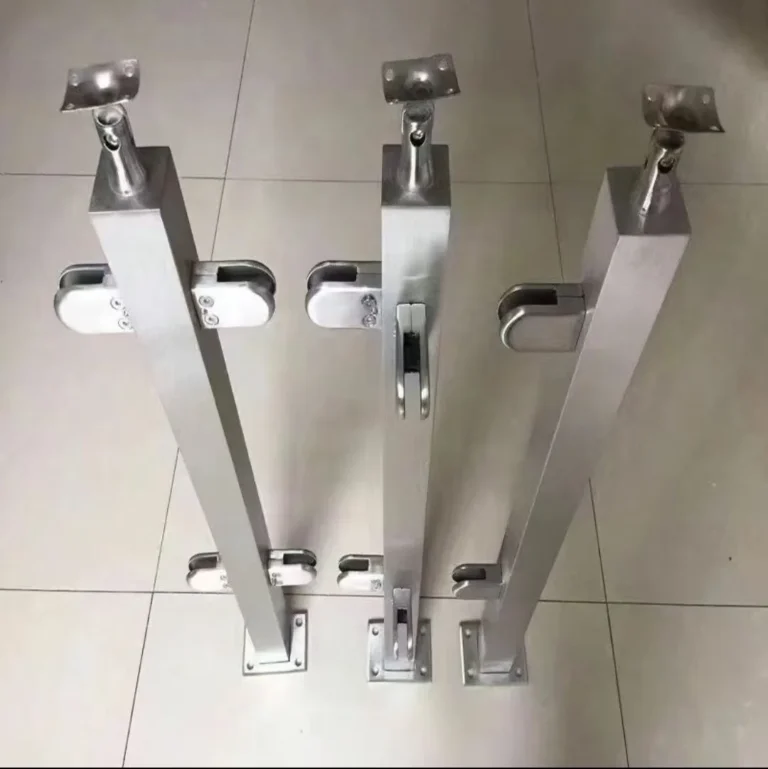
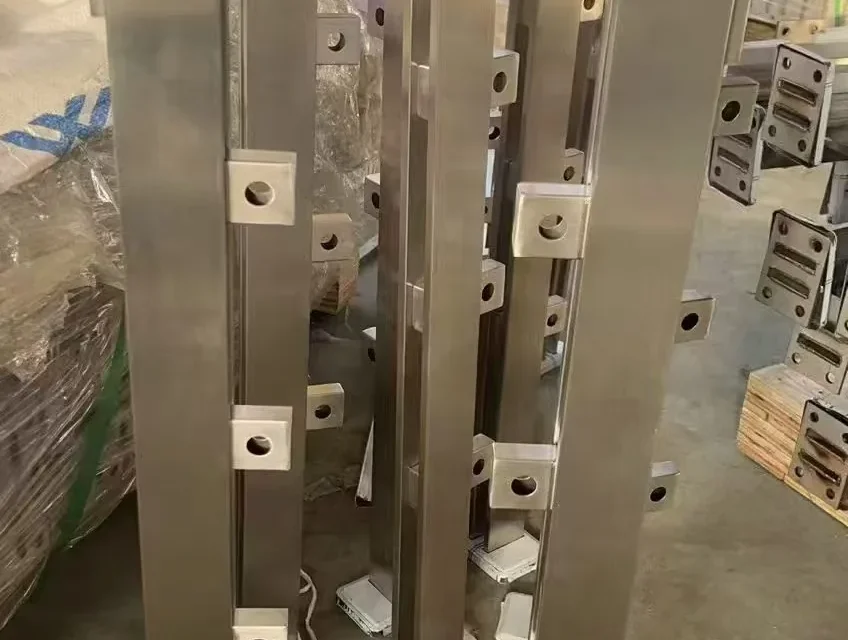
An OEM stainless steel railing post quality agreement should turn drawings and purchase-order language into auditable controls. It should identify the approved specification hierarchy, critical characteristics, material traceability, first-article and in-process checks, sampling rules, nonconformance handling, change approval, packing requirements and shipment records. It does not replace engineering approval or local code review; it defines how the buyer and supplier will control the agreed product.
Why is a quality agreement different from a purchase order?
A purchase order establishes the commercial transaction: part numbers, quantity, price, delivery terms and referenced documents. A quality agreement explains how conformity will be planned, verified, recorded and communicated across repeat orders. It is particularly useful when stainless steel posts are produced to buyer drawings, have several left/right or corner variants, or include appearance-sensitive welding and finishing.
The agreement should be proportionate to risk. A small trial order does not need a bureaucracy designed for safety-critical aerospace parts. However, “make according to drawing” is usually too weak for a repeat OEM programme because it leaves unresolved questions about revision control, sampling, approved deviations and evidence supplied with each lot.
What documents take precedence when requirements conflict?
Start with a clear order of precedence. A typical project may include the signed quality agreement, purchase order, approved drawing, technical specification, approved sample, inspection plan and packing instruction. The parties should state which document governs if dimensions, finish notes or revisions conflict.
The document list should include revision identifiers and approval dates. Verbal messages and unapproved marked-up files should not silently change production requirements. If a buyer approves a deviation for one shipment, the agreement should say whether that approval expires with the lot or changes the standard for future orders. Usually, a one-time concession should not become a permanent drawing revision.
Which railing post characteristics should be classified as critical?
Do not label every dimension “critical.” Instead, identify characteristics whose failure would affect installation, interfaces, safety review, appearance at an agreed viewing condition or interchangeability. The exact list is project-specific and should be confirmed by the buyer’s designer or responsible engineer.
| Control area | Possible characteristics | Evidence to define |
|---|---|---|
| Material | Grade, product form, heat or batch identity | Specified material document and traceability record |
| Interfaces | Base holes, glass-clamp centres, handrail support angle, mating threads | Drawing dimensions, gauges or fit check |
| Geometry | Post length, straightness, perpendicularity and orientation | Measurement method and acceptance limit |
| Fabrication | Weld location, continuity, blending and distortion | Visual criteria, sample and inspection stage |
| Appearance | Grain direction, finish consistency, visible scratches and repair zones | Approved sample and viewing conditions |
| Protection | Cleanliness, separators, wrapping, labels and crate arrangement | Packing instruction and pre-shipment photos |
Critical-characteristic symbols must have a defined meaning. A symbol without a measurement method, frequency and reaction plan creates the appearance of control without making acceptance clearer.
How should material identity and traceability be controlled?
The agreement should state the required stainless steel designation, acceptable product form and the document expected from the supplier. It should also define how source material identity is linked to finished posts after cutting, forming, welding and finishing. Traceability can be lot-based rather than individually serialized unless the project requires individual identification.
Do not request PMI, a specific inspection certificate or full heat traceability by habit. Select evidence according to risk, customer contract and applicable requirements. Our material verification guide explains the different roles of material certificates, PMI and traceability without treating them as interchangeable proof.
What should the control plan cover?
The control plan should show what is checked, at which production stage, by whom, using what method, at what frequency and what happens when a result fails. For railing posts, useful gates may include incoming material review, cut length, drilling or slot position, welding and distortion, surface restoration, final assembly fit and packing.
Some characteristics are easier to control before later operations hide or alter them. For example, hole location can be verified before hardware is assembled, while finish uniformity must be assessed after final blending and cleaning. A final inspection alone may detect a defect only after rework has become expensive.
ISO 10005:2018, confirmed current by ISO in 2023, gives guidance for establishing, reviewing, accepting, applying and revising quality plans. It is guidance rather than a certification requirement, and a buyer can use its planning logic without requiring a supplier to claim conformity.
How should first-article approval be connected to production?
The quality agreement should identify when a first article is required and what triggers reapproval. Possible triggers include a new part, drawing revision, changed material or manufacturing route, new tooling, transferred production location or a long production gap. The parties must decide which changes are significant enough to require partial or full revalidation.
First-article approval should not be reduced to photographs. The record should connect the approved item to its drawing revision, material, measured characteristics, finish sample and any authorized deviations. Use the stainless steel railing post first-article checklist to define the approval package.
How should sampling and AQL be written?
Sampling language must identify the lot, inspection unit, defect classes, inspection level or sampling scheme, acceptance criteria and response to rejection. Writing only “AQL inspection” is incomplete. Different characteristics may also need different controls: a buyer may choose full verification for a small number of critical interfaces and sampling for minor visual attributes.
ISO 2859-1:2026 is the current third edition for AQL-indexed lot-by-lot inspection by attributes; ISO states that it replaces the 1999 edition and its amendments. AQL is a sampling-system index, not permission to knowingly ship a stated percentage of defects. The buyer should obtain competent statistical advice when selecting plans and switching rules.
What happens when a post or lot is nonconforming?
The agreement should define segregation, notification, review and disposition. Common dispositions are rework to the original requirement, repair under an approved instruction, use-as-is under a written concession, return or scrap. The supplier should not make an appearance-affecting repair or substitute material without the authorization required by the agreement.
Define who can approve a concession, what evidence must accompany the request and whether the affected pieces need special identification. For repeat or significant failures, agree when containment, root-cause analysis and corrective action are required. Avoid rigid response deadlines unless both parties can realistically meet them.
How should supplier changes be controlled?
Change control is often the most valuable clause in an OEM agreement. It should list changes requiring buyer notification or prior approval, such as material grade or source, tube size, wall thickness, production location, welding route, finishing process, subcontracted special process, critical tooling or inspection method.
The clause should distinguish administrative updates from changes that could affect fit, appearance or performance. It should also define the notice package: reason, affected part and lot, risk assessment, comparison evidence and proposed validation. “No changes without approval” is simple but can become impractical unless the scope and responsible approver are named.
Which shipment records should be supplied?
Choose records that help the buyer release and trace the lot. Depending on the order, this may include a packing list, part and revision identification, lot quantity, inspection summary, material document, approved-deviation reference and photographs of labels and packing. Do not demand a large generic dossier that nobody will review.
Retention periods, file format and language should be agreed. The supplier’s internal records may be retained without being sent for every shipment, provided the agreement states what must be available on request. The purchase-order checklist helps align these quality records with the commercial order.
Does ISO 9001 certification replace a product quality agreement?
No. ISO 9001:2026 is now the current edition of the quality management system requirements standard, replacing ISO 9001:2015. A management-system certificate, where valid and within scope, does not by itself define the dimensions, finish, inspection frequency or shipment documents for a specific railing post.
Conversely, a practical quality agreement does not certify the supplier’s management system. Buyers should verify any certification claim directly and separately. The product contract must still contain the controls needed for the actual parts.
Buyer checklist before signing
- List controlled documents, revisions and order of precedence.
- Define critical characteristics without marking everything critical.
- Connect each requirement to a method, frequency and record.
- Specify material evidence and realistic traceability.
- Define first-article and reapproval triggers.
- Write complete sampling rules rather than “standard AQL.”
- Control concessions, repairs and permanent changes separately.
- Specify useful shipment records and retention periods.
- Align packing and identification with the PO and installation sequence.
- Name the buyer and supplier roles authorized to approve changes.
Frequently asked questions
Should every supplier sign the same template?
A common structure is useful, but the technical annex should reflect the product and risk. A decorative indoor post and an engineered exterior system may need different controls.
Can the approved sample override the drawing?
Only if the document hierarchy says so. A sample is strong evidence for appearance, but it should not silently override dimensions, material or safety-related requirements.
Who selects the AQL?
The buyer and supplier should agree the sampling plan with appropriate quality expertise. BalusterPost should not invent the buyer’s risk tolerance or engineering acceptance criteria.
Do coordinated accessories belong in the same agreement?
They may be covered in a separate annex with their own drawings and controls. BalusterPost manufactures stainless steel posts; related accessories are coordinated through qualified specialist manufacturing partners and should not be represented as the same manufacturing scope.
When is a supplier quality agreement excessive?
For a simple one-time order, a complete drawing, approved sample, PO and inspection plan may be enough. Use the shortest document set that removes material ambiguity and supports release.
How can a buyer start a quality-agreement review?
Send the part drawings, expected variants, purchase quantity, critical interfaces, finish reference, inspection expectations and required records. Review a representative square-tube glass balustrade post, then contact BalusterPost for drawing-based production discussion with Ryan Liang, Export Manager, coordinated from Taizhou, Jiangsu, China.