
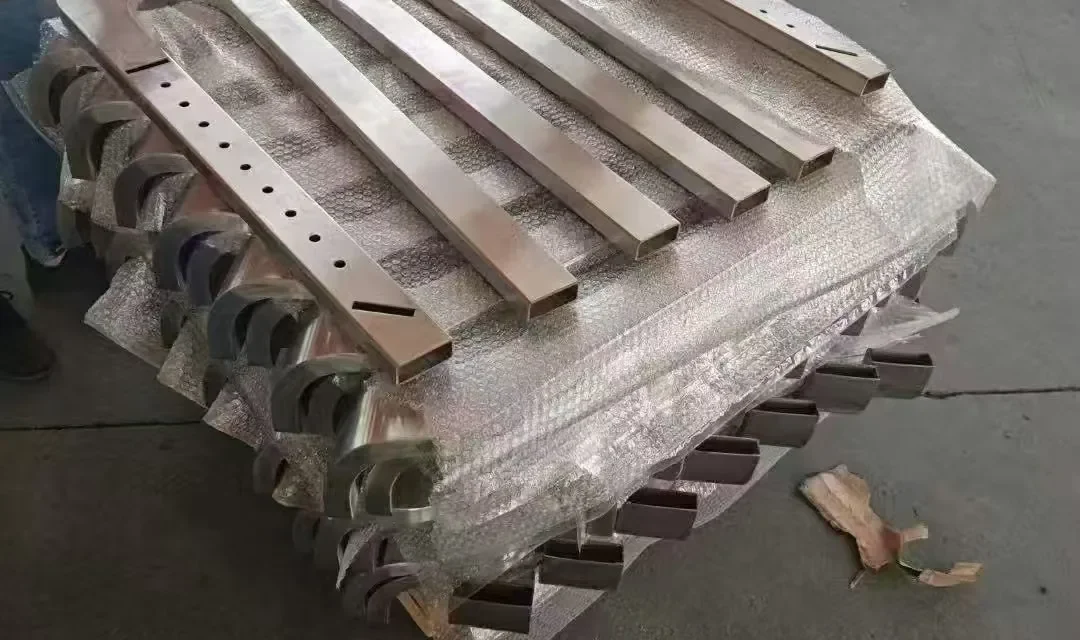
If a stainless steel railing post lot fails an agreed inspection, hold the affected population and record what failed before arranging reinspection. Identify which pieces were screened, corrected, replaced or excluded. Agree the acceptance decision and inspection scope for the resubmitted lot. Repeating the original sample on the same unchanged population leaves the original rejection unresolved.
Establish exactly which parts are on hold
Use production marks, drawing revisions, work orders and packing labels to identify the original lot. Record the failed characteristic, inspection result and reason for rejection. If pieces from another order share the affected operation or production window, ask quality staff whether the hold must be expanded. State the revised population before inspection resumes.
Specify what happened to each group of posts
| Group | Document | Release check |
|---|---|---|
| Screened original | Piece ID and checked feature | Correct revision and result |
| Reworked post | Approved operation and affected features | Corrected fit and adjacent conditions |
| Replacement | New identity and records | Same applicable requirements |
| Excluded piece | Reason and physical segregation | Absent from released shipment |
The NIST guidance on rectifying inspection describes rectifying inspection as a sampling approach in which a rejected lot is subject to complete inspection or screening. Use the contract’s agreed disposition and the responsible quality decision for the actual lot. Safety critical or drawing specific checks may require a different response from a cosmetic issue. Define which affected features must be screened and what an accepted screen means.
Distinguish rework from replacement
A correctly measured replacement part still needs a traceable revision, material record and applicable finish approval. A reworked part can require a different follow-up check. For example, correcting a cover fit may leave a visible change or alter another mating surface. List related characteristics that can be affected by the corrective action in the reinspection plan.
Example: the carton labels stay the same
A lot fails because some hole patterns do not match the approved plate detail. The supplier screens and separates the affected parts, then provides a new group of verified originals plus replacements. The buyer asks for a cross-reference to the original cartons and a count of accepted, replaced and quarantined pieces. The approved resubmission is identifiable at receiving even though it is packed into boxes of the same type.
Close the hold with a record that matches the packing list
The closure should identify the original rejection, the agreed disposition and the exact parts eligible for release. Retain the failed inspection, evidence of correction or screening, and reinspection results. If a substitute or exception is accepted, link the written approval to the relevant parts and communicate it to the receiving and installation teams.
What if a piece has lost its identity?
Keep it outside the resubmitted population until quality staff can establish the necessary identity and acceptance evidence. A corrected lot should have a clear boundary.
Use the related procurement guide alongside the square tube glass balustrade post. Send the released drawing and relevant check records for a project quotation.




