
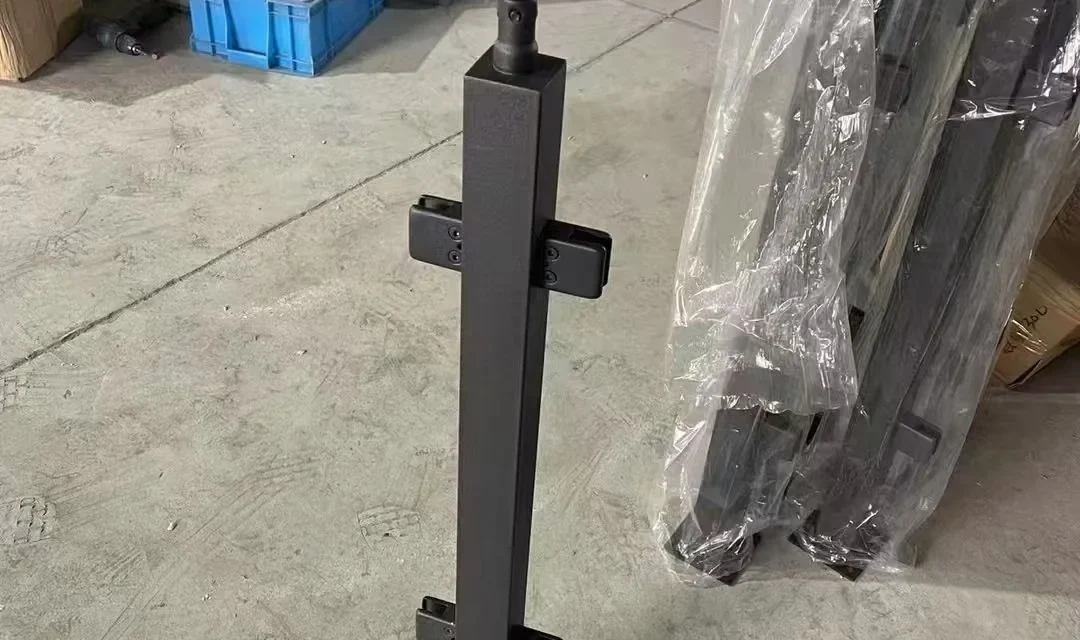
Specify a glass clamp securing pin or support device by the exact clamp model and its approved glass arrangement, not by appearance or a generic accessory name. Confirm whether the device is required, how it interfaces with the glass, and whether it is included in the order. Never substitute an ordinary screw, omit a required device or transfer another manufacturer’s instructions to an unverified clamp.
What is the buyer actually trying to prevent?
The purchasing risk is an incomplete or incompatible clamp assembly. A quotation may identify the visible clamp body while leaving its inserts, securing devices and installation requirements unclear. The package can therefore look correct when opened but still lack a component specified for the intended configuration. A photograph rarely establishes the complete supply scope.
This article concerns the procurement of model-specific securing components for glass railing clamps. It does not provide a universal design for retaining glass. The railing designer and the actual component manufacturer must establish the applicable configuration and evidence. A small accessory can have a defined role that cannot be judged from its size or cost.
BalusterPost manufactures stainless steel railing posts and coordinates glass clamps through qualified specialist manufacturing resources. It is not presented here as the manufacturer of those clamps or as a supplier of every accessory discussed. Availability, compatibility and documentation must be confirmed for the actual enquiry.
Are securing pins and support plates interchangeable?
Do not assume so. Different names may describe different physical arrangements, and two catalogues may use similar language for different components. Identify the part by its manufacturer reference, drawing and associated clamp model. Ask which glass arrangement it is intended for and how that arrangement is documented.
As a concrete manufacturer example, Bohle’s BO8900001 securing-pin page identifies compatible clamp forms and states an anti-slip-device requirement when its clamps are used with laminated safety glass. That statement belongs to the described Bohle products. It is not a universal specification for every clamp, a BalusterPost product claim or proof that another pin fits.
The lesson for purchasing is to preserve the connection between the small component and the manufacturer’s complete system information. Do not copy dimensions or quantities from that example into an unrelated order. A description such as safety pin included still needs an identifiable component and the conditions under which it is used.
Which documents should be requested before ordering?
Request the exact clamp reference, current installation instructions and the documentation supporting the intended glass arrangement. Ask the supplier to identify the securing component in an assembly drawing or parts list. If the instructions refer to an option, establish whether that option is required for this particular project before accepting the quotation.
Record the glass construction as well as its nominal thickness. The specified panel and interlayer arrangement, when applicable, belong to the approved design information. A verbal statement that the clamp accepts thick glass does not establish compatibility with the proposed panel. The relevant designer should resolve any mismatch between the glass schedule and the component documentation.
Ask for the permitted relationship between the device and the glass, including any required fabrication detail. This is a request for controlled instructions, not an invitation to improvise hole sizes or edge distances. Keep the glass fabricator in the approval chain where the chosen arrangement affects glass manufacture.
What should the purchase schedule show?
| Record | What to identify | What not to assume |
|---|---|---|
| Clamp | Manufacturer and exact model | Similar shape means identical construction |
| Glass | Approved build-up and panel reference | Nominal thickness explains every requirement |
| Securing device | Part reference and required configuration | Any pin of similar size is suitable |
| Quantity | Required count and package contents | One retail package equals one panel kit |
| Instructions | Applicable document and revision | Another product’s instructions can be reused |
| Responsibility | Who supplies and verifies the component | The installer will obtain it later |
Separate the number of devices required by the approved arrangement from the number sold in a package. Count against the released assembly schedule, not against an assumed rule per panel. Retain the supplier’s written confirmation where package contents or optional accessories are unclear.
How does this affect glass fabrication release?
The clamp and glass package should reach a coordinated decision before affected panels are released for manufacture. If the selected securing arrangement requires a glass feature, that feature belongs on the approved glass drawing. A late change of clamp may change that interface even when the nominal glass thickness remains unchanged.
The glass-fabrication coordination guide addresses that release sequence in more detail. Here the additional purchasing check is whether the securing device that drove the detail is actually included, identified and supplied with the correct clamp. Drawing approval and physical completeness are separate checks.
Where information is missing, hold the affected release and obtain clarification. Do not direct a glass processor or installer to make an undocumented modification so that an unexpected accessory can be fitted. The proposed change needs the appropriate technical review before it becomes part of the supply package.
What should a sample review include?
Review an identified complete sample assembly, including the relevant inserts and securing components, rather than the clamp body alone. Compare the supplied parts with the manufacturer’s list and the project schedule. Record missing items, unexplained differences and any uncertainty about which model was supplied.
A sample review can establish identity, completeness and the information available for further approval. It should not be described as a load test or certification. Physical fit by itself does not verify the performance of the completed railing. Keep those claims tied to the evidence that actually supports them.
Use the clamp sample approval checklist to connect the accepted sample reference with the order. Retain a clear record when a sample is accepted only for appearance, since that is a narrower approval than acceptance of the complete technical configuration.
How should receiving staff handle small components?
Give the receiving team a parts list that names the accessory, shows its reference and identifies the relevant carton or kit. Small loose parts can be overlooked when inspection focuses on the visible clamp bodies. Record shortages before the kits are distributed to different installation locations.
Keep accessories with their identified assemblies or in a controlled store. Avoid mixing visually similar pins from different models in an unlabelled container. If a part’s identity becomes uncertain, obtain confirmation before issuing it for installation. A photograph of the loose part may support an enquiry but should not replace the traceable reference.
When replacement devices are needed, refer to the original clamp and approved configuration. Do not assume a current catalogue item supersedes an older part simply because the dimensions appear similar. Obtain the manufacturer’s or responsible supplier’s documented compatibility confirmation.
Frequently asked buyer questions
Does every glass clamp require the same securing pin?
No universal pin can be specified from the words glass clamp. The required components depend on the exact model, intended glass arrangement and applicable design information.
Can an ordinary bolt replace a missing securing component?
Do not make that substitution without explicit approved documentation for the actual assembly. Similar appearance or approximate size does not establish equivalent function.
Is a pin automatically included when a clamp is quoted?
Confirm the scope. The quotation should distinguish the clamp body, inserts, securing device and any other required parts, together with their quantities and references.
Does this guide certify a glass railing?
No. It helps buyers obtain a complete, identifiable supply package. The project design, component evidence and installation requirements remain separate responsibilities.
For a coordinated enquiry, review the stainless steel railing post range and send Ryan Liang the clamp reference, glass schedule and required parts list. Mark any unresolved accessory requirements explicitly so that quotation and production do not proceed on different assumptions.




