
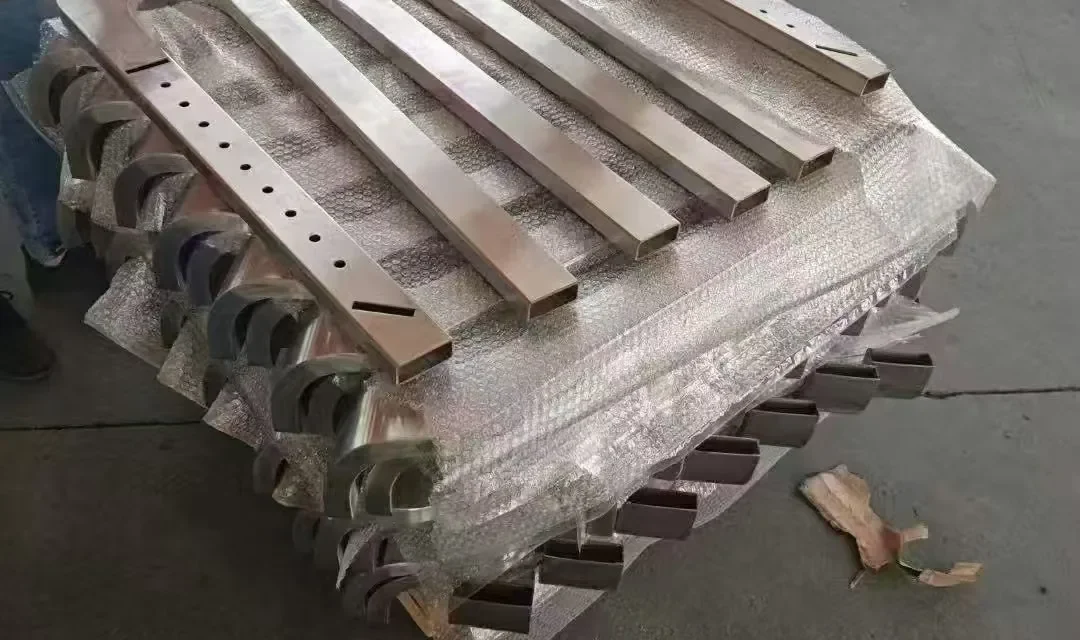
A railing post anchor template transfers the approved hole pattern to the installation team. Release it with the post mark, plate drawing revision, orientation and at least two check dimensions. For cast-in anchors, coordinate the template before the pour. For existing anchors, compare measured coordinates with the plate and fastening detail before ordering posts. A template supports fit checking. Anchor approval remains a separate project decision.
Choose the deliverable that matches the work
For this decision, the concrete scan and anchor conflict workflow shows what to document before releasing the order.
“Send a template” can mean a printed layout, a physical jig or a plate used for trial fitting. The purchasing decision is what the installer needs to locate or verify, and at which point the dimensions become final. For a post supplied to an existing structure, an accurate survey and approved plate drawing may matter more than a jig. For cast-in work, the responsible team must agree how the anchor pattern is held and surveyed before concrete placement.
Hilti’s anchor design checklist requests the base material, anchor arrangement and base plate information together. The template carries the arrangement from that coordinated information. Any plate or anchor change belongs with the connection designer, particularly near edges or on an unfamiliar substrate.
Define which side of the pattern is shown
Mark the template view from above or below, and show an arrow toward the glass line, building edge or other fixed project reference. If the plate has an offset post body or an asymmetric fixing pattern, include that feature as an orientation check. Four symmetric holes alone may fit in more than one rotation while putting the post or glass connection on the wrong side.
| Template information | Independent check | Release decision |
|---|---|---|
| Post mark, plate revision and orientation arrow | Compare with the approved setting-out plan | Hold if the handed version is unclear |
| Hole centre positions from two named reference axes | Measure one overall spacing in each direction | Investigate scale or pattern errors |
| Anchor projection and fastener assembly | Review with plate, washer, nut and cover section | Confirm assembly and tool clearance |
| Physical jig or printed sheet | Identify intended use and control method | Keep setting-out and approval records together |
How should a full-size print be checked?
Use the approved drawing dimensions to check the print on both axes. Page scaling, clipping and a print service’s fit-to-page setting can change the physical size. For a hypothetical pattern shown as 100 mm by 60 mm, a print measuring 95 mm by 57 mm has the right shape and the wrong size. A single diagonal cannot identify which axis or alignment caused a mismatch. Use the marked dimensions and coordinate origin for the release comparison.
For existing anchors, have the site team record the actual centres, projection and condition against a stable datum. Separate measurements from proposed fixes. If the two diagonals disagree with the drawing, show the individual coordinates so the designer can distinguish translation, rotation and a distorted pattern. The slotted base plate guide explains why a slot must also be reviewed with the washer and tightening detail.
Build the template into the purchasing sequence
- Identify who owns the anchor layout and who owns the plate drawing.
- Issue both records with a matching revision and an explicit status for pricing or fabrication.
- Agree how the installer will verify the transferred pattern and how discrepancies will be escalated.
- Where a trial fit is specified, keep the jig, sample and release record tied to the same post mark.
For a drawing-based square stainless steel post, send the plate detail and site datum through the project enquiry page. BalusterPost manufactures stainless steel posts. The quotation should state whether a template or jig is included, along with its intended use and deliverable format.
Buyer questions
Can a plate serve as a template?
It can be considered where the project team approves the method. Confirm the view, actual hole geometry and how the plate will be held. Its suitability for setting out does not settle anchor design.
Can a site team enlarge holes after a trial fit fails?
Record the mismatch and obtain disposition from the responsible designer. Changes can affect hole geometry, edge distances and the fastening assembly.
What should be on the RFQ?
Include a post schedule, current plate detail, surveyed or planned anchor positions, installation reference axes and the exact template deliverable requested.




