
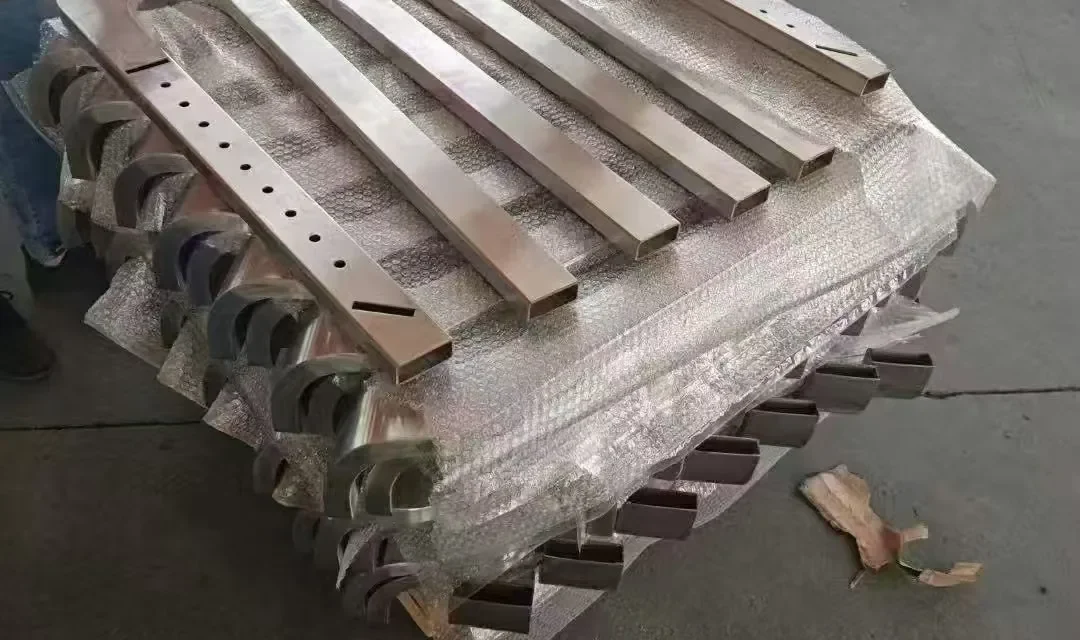
Specify slotted base-plate holes only as part of an approved stainless steel railing post connection. A slot can provide geometric adjustment, but its direction, dimensions, fastening arrangement and final restraint must be reviewed together. Do not change round holes to slots to solve a site mismatch without design approval. The purchase drawing should identify the permitted detail and how the delivered plate will be inspected.
When does a slotted hole become a purchasing issue?
For a separate setting-out deliverable, see the railing post anchor template guide before issuing the approved plate pattern to site.
A contractor may request adjustment because surveyed anchor positions differ from the original drawing, or because the intended fixing route needs coordination with the structure. The fabricator then receives a brief instruction to make the holes longer. That instruction leaves important questions unanswered: which holes, in which direction, with which fastening hardware, and under whose design responsibility?
This guide addresses that change-control problem for buyers of stainless steel railing posts. It does not provide an anchor design or establish a universally acceptable slot size. The responsible designer and the selected fastening system’s requirements must govern the connection. A production quotation should describe a reviewed detail rather than promise that any slot will solve an installation problem.
Does a slot automatically provide usable adjustment?
No. Available space in the plate is not the same as approved movement of the complete connection. The anchor arrangement, base material and final restraint may limit how the detail can be used. In an official Hilti response to a specific slotted-hole enquiry, the team explains that the anchor arrangement and concrete dimensions affect the proposed solution and that filling requirements may remove the intended adjustment.
That response concerns a particular bracket enquiry; its numerical layout and conclusions should not be copied into a railing post drawing. Its useful lesson for procurement is narrower: a slot request needs connection-specific review. A supplier’s ability to cut an opening does not establish the suitability of the resulting assembly.
Keep two decisions separate. First, the designer approves the connection. Second, the manufacturer confirms whether the approved plate geometry can be supplied and inspected. Approval of one decision should not be represented as approval of the other.
Which information belongs on the revised drawing?
Show the complete hole pattern relative to clear plate datums. Identify the slot direction, end geometry, width and length using the drawing convention accepted by the project. Make clear whether a stated length describes the overall opening or another geometric feature. An ambiguous dimension can produce a correctly measured plate that still differs from the designer’s intention.
Also show the plate outline, thickness, post position and orientation. A slot pointing toward a wall in one view may point along the railing in another if the component has been rotated. Use a plan or connection detail that removes this ambiguity. Identify left-hand and right-hand variants where they actually differ.
| Review field | Buyer should provide | Approval question |
|---|---|---|
| Reason for change | Survey, clash or coordination record | Is the proposed remedy appropriate? |
| Slot geometry | Dimensioned direction and opening shape | Which exact detail is approved? |
| Fastening package | Identified anchors and associated hardware | Does the package match the design? |
| Structure | Relevant substrate and location information | Have site conditions been considered? |
| Final condition | Required restraint and installation detail | What remains adjustable, if anything? |
| Inspection | Datums, dimensions and acceptance basis | How will conformity be recorded? |
Why must washers and other fastening details remain linked?
Do not reduce the purchase description to plate geometry while leaving the associated fastening components unspecified. The approved detail may require particular hardware or treatment of the opening. Confirm what the post supplier includes, what the anchor supplier provides and what the installer must obtain. A general note saying fixings by others does not resolve an unidentified component.
Ask for the fastening details to be identified in the same approved package as the opening. If several suppliers are involved, assign responsibility for reconciling their documents. A buyer should be able to determine which component list applies to which plate revision without interpreting informal messages. Resolve missing information before the package is released to purchasing or installation.
If an installer proposes a hardware substitution, refer it through the same approval route as the original connection. Do not assume that a visually larger washer or a different bolt automatically preserves the reviewed condition. Record the approved identification in the order documents so receiving staff can check the correct supply scope.
Can an existing round-hole plate be modified on site?
Treat a proposed site modification as a change request. Supply the actual plate drawing, photographs, measured mismatch and intended remedy to the responsible reviewer. Do not authorise cutting merely because the post otherwise appears to fit. The reviewer must decide whether modification, replacement or a different approved solution is appropriate.
If a modification is accepted, obtain the revised geometry, work responsibility and inspection requirements before proceeding. The instruction should address the condition of the finished component, not just the removal of material. This article intentionally gives no cutting procedure, weld repair method or acceptance dimensions.
For a new order, resolving the detail before fabrication gives the buyer a clearer basis for inspection and responsibility. It also avoids turning an installation discrepancy into an undocumented product variation that later repeat orders might accidentally reproduce.
How should quotations describe the requirement?
Reference the approved drawing number and revision, then identify which post marks use the slotted plate. State quantities by variant rather than applying an informal slot note to the entire order. A round-hole version and a slotted version may look similar in a product photograph, so the order schedule needs a more precise distinction.
Ask the manufacturer to confirm the offered scope and any unresolved manufacturing questions. Any price or timing effect must be quoted for the actual design; this guide does not claim that slots are a standard option or promise a particular production capability. BalusterPost’s core manufacturing scope is stainless steel baluster posts and railing posts, coordinated from Taizhou, Jiangsu, China.
Use the base-plate specification guide for the wider component schedule and the substrate information guide for the project inputs. This article focuses specifically on controlling a slotted-hole proposal and its final approved condition.
What should receiving inspection verify?
Before production release, reconcile the plate drawing with any separate anchor setting-out drawing. If they show different coordinates, identify which document requires correction through the authorised review process. Do not average the positions or rely on the apparent extra room in a slot. The purpose of the coordinated drawing set is to give fabrication and installation the same approved reference.
Compare the delivered post mark and drawing revision with the order before measuring. Check the identified slot dimensions, location and orientation against the agreed datums and acceptance criteria. Keep the inspection record tied to the part or batch, so a result from one variant is not mistakenly applied to another.
A dimensional report establishes only the features it checks. It does not replace the connection design or verify site installation. If the delivered geometry differs, record the discrepancy and obtain disposition before acceptance; do not turn a nonconformance into a new tolerance by informal agreement on site.
Frequently asked questions
Are slotted holes always better for installation?
No. Their usefulness depends on the approved connection and the actual reason adjustment is needed. Review the complete detail rather than choosing slots as a default.
Does approving the plate drawing approve the anchors?
Only the explicitly reviewed scope is approved. Keep structural design, fastening selection, fabrication and installation responsibilities clear in the project records.
What should accompany a request for slotted post plates?
Send the reviewed connection drawing, post schedule, site context and supply split to Ryan Liang, Export Manager. For the stainless steel railing post range, confirm feasibility against the specific design rather than assuming a catalogue image establishes the available hole arrangement.




