
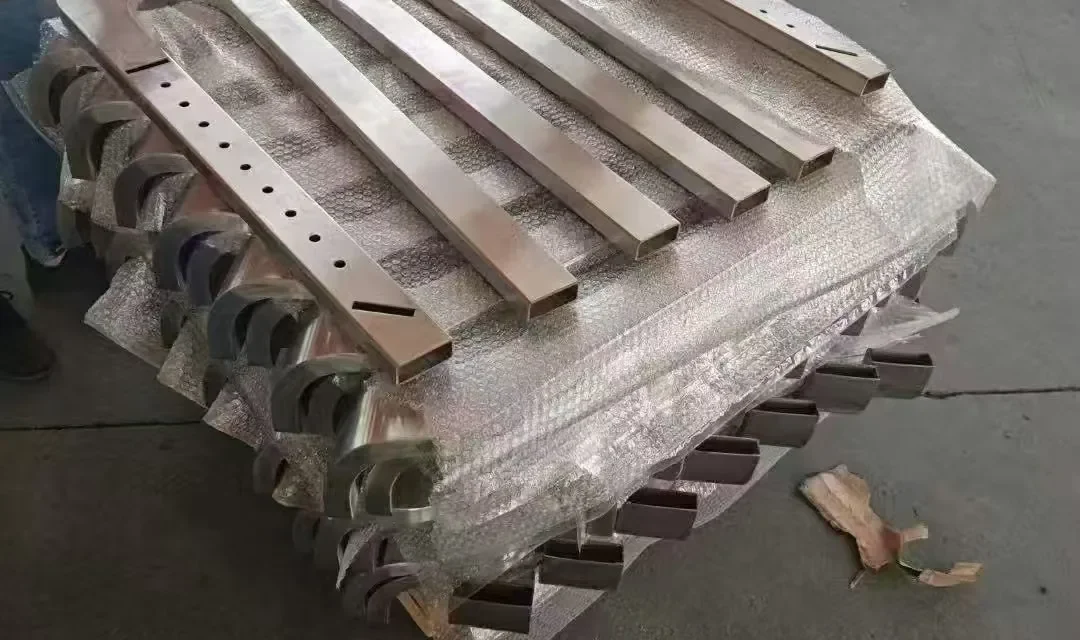
When stainless steel railing posts arrive damaged or with an unclear identity, keep the affected items separate and record their condition before installation or repair. Match each post to its purchase order, drawing revision and packing mark, then ask the responsible supplier or project approver for a documented disposition. Receiving inspection establishes what arrived; it does not replace fabrication inspection or approve the completed railing system.
What should a receiving inspection actually decide?
The receiving team needs to decide whether the delivered items can enter normal project stock, require further inspection, or must remain on hold. Those decisions should follow agreed purchasing requirements. A quick count of cartons is useful, but it cannot establish that the correct post variants, finishes and associated records have arrived.
This guide addresses the handover from delivery to project storage. It is different from choosing export packaging or approving a first article at the factory. A sound receiving record ties the physical goods to the documents and preserves evidence when a discrepancy is found. Buyers should agree the inspection scope, reporting route and acceptance authority before delivery.
BalusterPost manufactures stainless steel baluster posts and railing posts, coordinated from Taizhou, Jiangsu, China. Glass clamps and other accessories may be supplied through qualified specialist manufacturing partners. Receiving records should identify those separate line items even when they travel in one shipment.
What should be photographed before opening the packaging?
Photograph the shipment identification, overall package condition and any visible impact, puncture, moisture or displaced restraint. Include enough surrounding context to show which package is involved. A close-up of a scratch without the carton mark or part identity is difficult to reconcile with a claim or inspection report later.
Record the actual receipt date, delivery reference and person making the observations. Follow the carrier and purchase contract’s reporting procedure where applicable; this guide does not prescribe a universal claim deadline. Preserve relevant packaging until the discrepancy has been reviewed. Do not write that transit caused damage merely because it was first noticed on arrival.
Check whether the package can be opened and handled without causing further damage. Use the agreed unloading and handling method. If a package is unstable or visibly compromised, have the responsible site staff assess it before opening. Document observations rather than attempting to infer internal condition from the outside alone.
How do you confirm the correct posts arrived?
Start with the order line, part number, drawing revision and quantity. Then identify the visible configuration: body type, mounting arrangement, attachment direction and handrail support. Two square glass railing posts can share a body profile while having different connection details. A matching total quantity can conceal an incorrect mix of end, line and corner assemblies.
Reconcile the packing list with the actual marked items. If a label is missing, use the approved drawings and inspection records to establish identity rather than assigning a convenient part number. Unidentified goods should remain controlled until the responsible person resolves their status. Do not mix them with an earlier approved delivery.
Separate quantities ordered, delivered, inspected and accepted in the record. A statement that a shipment contains a certain number of posts does not mean that every post has been inspected. Where an agreed sampling plan is used, record that scope clearly and apply the agreed escalation rule if a discrepancy appears.
Which surface observations need a hold?
Compare the actual surface with the approved finish reference and agreed viewing conditions. Record scratches, dents, stains, damaged edges and differences in appearance without immediately assigning a cause. Protective wrapping can conceal defects, while adhesive residue or dirt may resemble a finish problem. Any cleaning used for inspection should follow an agreed method and preserve the evidence needed for review.
The British Stainless Steel Association explains that iron contamination can cause rust staining and identifies mixed-metal tools, handling equipment and grinding debris as possible sources. This supports keeping stainless parts away from carbon-steel contamination during storage and handling. It does not prove the cause of an individual stain.
A photograph of brown staining is not a material-grade test. Avoid declaring that a post is the wrong grade from appearance alone. Refer material concerns to the agreed verification procedure and competent personnel. The existing material verification guide distinguishes identification evidence from unsupported visual conclusions.
What should a discrepancy report contain?
| Record | Useful information | Decision supported |
|---|---|---|
| Identity | Order, shipment, carton, part and drawing revision | Which goods are affected? |
| Observation | Measured or visible condition, location and photographs | What was actually found? |
| Inspection scope | Quantity checked and quantity showing the issue | How far does the evidence extend? |
| Control status | Storage location, hold label and installation restriction | Can the items be used? |
| Disposition | Named approver, action and verification record | How is the issue closed? |
Use factual descriptions such as “dent visible on the outer face near the base” or “packing mark differs from the approved schedule.” Avoid speculative conclusions such as “weak steel” unless suitable evidence establishes that finding. If a dimension is disputed, state the datum, measuring method, instrument and applicable drawing requirement.
Attach the current drawing or identify its revision precisely. A measurement compared with a superseded drawing can create a false rejection. If the order records conflict, resolve the document status before asking the receiving team to decide conformity. The same rule applies when a distributor supplies a project under a different customer part number.
Who can release a held item?
The purchase agreement and project responsibilities should identify who can accept, reject, authorize repair or approve a deviation. A warehouse employee’s decision to move an item should not silently become technical acceptance. Keep the goods visibly identified while the review is open and record any transfer between storage locations.
Do not straighten, drill, grind or refinish a disputed post just to make it usable. Such work can change dimensions, interfaces or the agreed appearance and can destroy evidence. Obtain written instructions from the responsible party. Where a deviation could affect the installed guard’s design, refer it to the project designer rather than treating it as a purely cosmetic purchasing decision.
For an approved repair, record the instruction, who performed it and the verification required before release. For replacement, preserve the link to the rejected part number and drawing revision. Closing a commercial claim and approving a technical disposition are related but separate decisions; record both where they apply.
How should accepted posts be stored?
Follow the supplier’s handling instructions and project storage plan. Keep the finish protected, retain identification and avoid contact with dirty or mixed-metal surfaces. Check the condition of wrapping where moisture or damage is observed. Do not assume leaving a wet or damaged package unopened preserves the product.
Keep partner-sourced fittings and their records identifiable. A clamp delivered with the posts should not be substituted with a similar-looking item from general stock without an interface review. Refer to the post packaging guide when agreeing how labels and protective materials will support receiving and subsequent handling.
Receiving inspection FAQ
Does a clean appearance prove the post is ready to install?
No. Identity, configuration, required records and any agreed dimensional checks still matter. Installation also depends on the approved project design and site conditions.
Can the whole shipment be rejected from one damaged item?
The evidence, agreed acceptance procedure and extent of the issue determine the disposition. Record what was inspected and seek the authorized decision instead of applying a universal rule.
What should I send to the supplier?
Contact Ryan Liang, Export Manager, with the shipment and part references, drawing revision, quantities affected and contextual photographs. State whether the goods remain on hold and what decision is needed. That gives the review a clear starting point without prejudging the cause.




