Short answer: specify stainless steel railing post packaging at three levels: protect each finished post, immobilise the posts inside a labelled shipping unit, and secure those units inside the cargo transport unit. Define finish protection, support for projecting fittings, moisture control, package mass and dimensions, lifting points, wood-treatment requirements, labels, packing records and arrival-inspection rules before quotation.
Why should packaging be part of the railing post specification?
A stainless steel post can pass dimensional and finish inspection at the factory and still arrive scratched, bent, mixed with the wrong variant or contaminated. Packaging is therefore part of product delivery, not an informal decision made after production.
The buyer should state the distribution route: factory to project, factory to distributor warehouse, or repeated parcel shipment after arrival. Containerised ocean transport, air freight, truck delivery and courier handling create different package sizes, handling events and moisture exposure. There is no universal carton, crate or desiccant quantity for every order.
What damage modes should packaging prevent?
| Risk | Typical cause | Packaging control to define |
|---|---|---|
| Finish scratching | Post-to-post contact, grit or a strap rubbing the surface | Clean separators, sleeves, protected strap paths and movement control |
| Dents or bending | Point loading, unsupported length, impact or poor stacking | Rigid support, load distribution and package stacking limits |
| Broken fittings | Glass adapters, saddles or tabs carrying package loads | Clearance blocks, guards and orientation that keeps loads off projections |
| Rust staining or contamination | Wet packing, trapped salts, carbon-steel contact or dirty materials | Clean dry packaging, compatible materials and contamination control |
| Mixed variants | Unclear labels or combined straight, stair, corner and handed posts | Part-level identification, package manifest and colour or code system |
| Lost accessories | Loose fasteners or untraceable hardware bags | Sealed labelled kits linked to package and post numbers |
What are the three packaging levels?
Level 1: individual product protection. Each post needs protection appropriate to its visible finish, edges, base plate, glass fittings and handrail support. The material touching the post should be clean, non-abrasive and compatible with the finish.
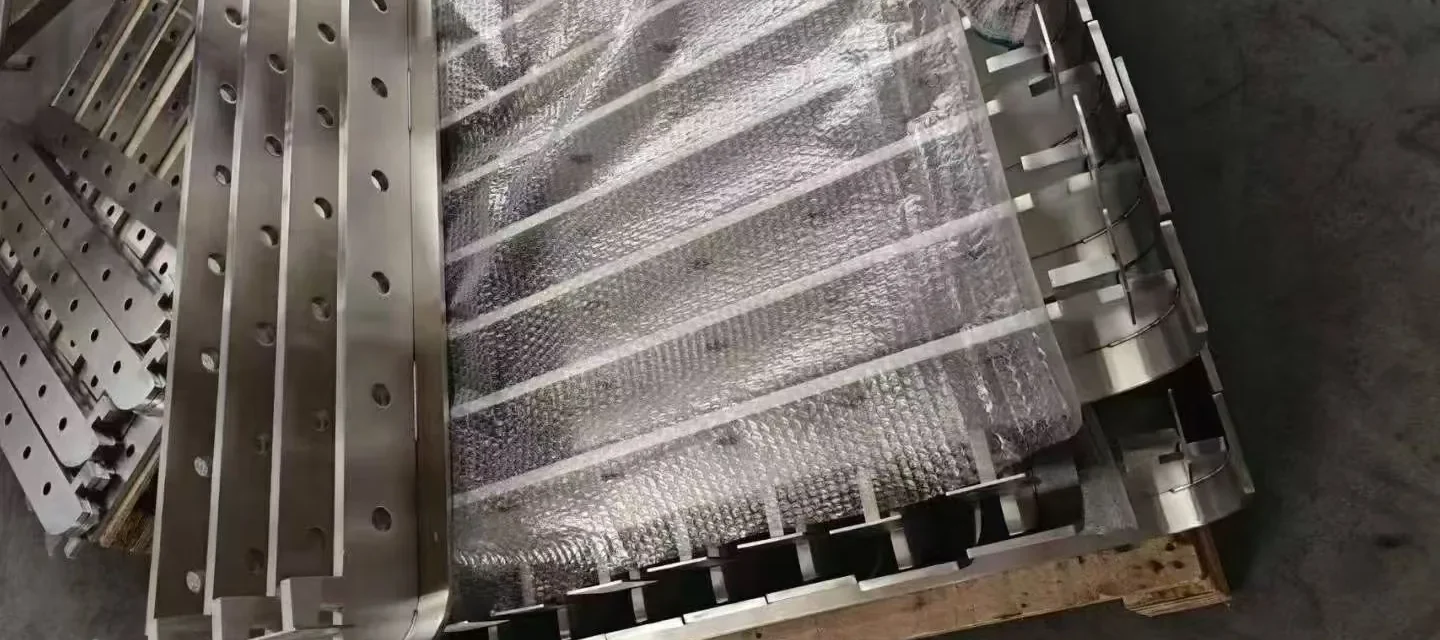
Level 2: shipping-unit protection. Cartons, bundles, pallets or crates must hold the protected posts without movement or concentrated loads. The unit needs labels, handling information, known mass and dimensions, and a safe way to lift or open it.
Level 3: transport-unit securing. Pallets or crates must be distributed and secured inside the container, vehicle or other cargo transport unit. A strong crate can still move, overturn or damage neighbouring cargo if it is not blocked, braced or lashed for the route.
How should a brushed or polished finish be protected?
Pack only after the final surface is clean, dry and accepted. Remove loose abrasive particles and workshop debris before adding film, foam or sleeves. Otherwise the protection can trap the material that scratches the finish.
Define visible faces and permitted contact points. Use separators between posts and prevent direct contact between stainless steel and bare carbon-steel straps, frames or tools. Do not tighten strapping directly over an architectural surface without load-spreading protection.
Temporary protective film can be useful, but its adhesive, application surface, storage temperature, sunlight exposure and removal period must suit the project. A buyer should not assume that every film is appropriate for long outdoor storage or every brushed finish. Approve the protection on a representative finished sample.
The stainless steel railing post finish guide explains why the accepted grain, gloss and visible faces should be defined before packaging is designed.
How should projecting fittings be protected?
Glass adapters, clamps, welded tabs, handrail saddles and anchor studs should not carry the weight of adjacent posts or upper package layers. Use clearance blocks, shaped inserts or an orientation that creates a protected void around projections.
Decide whether removable fittings ship installed or in labelled kits. Factory installation can confirm fit and orientation, while separate packing can reduce impact risk. The correct choice depends on the drawing, risk of loss, installation sequence and buyer preference.
Adjustable heads should be placed in a defined transport position and protected against rotation. Threads, machined faces and exposed fasteners may need caps or sealed bags. Do not use tape adhesive directly on a finished architectural surface unless compatibility and residue removal are approved.
How can a package prevent bending and movement?
Support long posts at sufficient locations for their section, length and package orientation. Keep heavy base plates from creating point loads on neighbouring tubes. Use layers and dividers that transfer stacking force through intended structural areas rather than through fittings.
Internal voids should not allow repeated impact during transport. Blocking and banding must hold the load without crushing hollow sections or marking the finish. Package design should consider lifting by forklift, crane, pallet jack or manual handling and identify prohibited lifting points.
The IMO/ILO/UNECE Code of Practice for Packing of Cargo Transport Units provides guidance on packing, load distribution and securing across sea and land transport. The Code is non-mandatory global guidance and does not replace route-specific law or carrier rules.
Carton, pallet or crate: which is appropriate?
A carton can suit smaller, lighter or individually distributed parts when it has adequate internal support. A palletised bundle can be efficient for repeated posts but needs edge protection, stable stacking and a controlled lifting arrangement. A crate can add rigidity and impact protection for long finished posts or projecting components, but increases mass, volume and unpacking work.
Specify performance and handling needs rather than demanding a material by habit. Ask for proposed external dimensions, gross and net mass, stacking limit, lifting method, unit quantity and loading plan before approval.
See the stainless steel post quotation comparison guide for normalising packaging, freight and scope before comparing unit prices.
When does ISPM 15 matter?
International shipments using regulated solid-wood packaging material may need to comply with ISPM 15 and the destination country’s implementation requirements. Examples can include solid-wood pallets, crates, dunnage and bracing. Processed wood products and exemptions must be assessed under the applicable rules rather than assumed.
The International Plant Protection Convention’s ISPM 15 text defines approved measures and the official mark for compliant wood packaging material. The mark includes the IPPC symbol, country code, producer or treatment-provider code and treatment code.
The buyer or freight specialist should confirm destination requirements. A supplier-created “heat treated” sticker is not a substitute for a valid mark applied under the authorised national system.
How should moisture and condensation risk be handled?
Stainless steel is not a reason to ignore moisture. Wet cardboard, salt contamination, trapped water and condensation can stain surfaces, damage labels or accessories and affect mixed-material assemblies.
Start with dry product and dry packaging. Assess route duration, climate changes, container condition, ventilation, barrier materials and expected storage. Desiccants, vapour barriers or corrosion-inhibiting materials should be sized and checked for compatibility by a competent packaging plan; arbitrary sachet counts are not a specification.
Keep chloride-bearing cleaners, dirty reused materials and untreated wet timber away from finished posts. If sealed wrapping is used, define how trapped moisture is prevented and how the package should be stored after arrival.
What labels and packing records should be required?
Each shipping unit should be traceable without opening every layer. Depending on the order, a label can include:
- Buyer order and project reference.
- Package number and total package count.
- Post part numbers, revisions and quantities.
- Straight, stair, corner, end, left-hand or right-hand variant.
- Net and gross mass and external dimensions.
- Handling orientation, stacking and lifting instructions.
- Accessory-kit references and installation-document location.
- Required wood packaging mark where applicable.
Request a packing list and loading photographs showing product protection, closed packages, labels, package arrangement and final securing.
What should be approved before the full order is packed?
Use a packaging first article for a new post design, premium finish or unfamiliar route. Pack representative straight and variant posts with their real fittings and accessory kits. Verify fit, contact points, movement, lifting, label readability and safe unpacking.
Record approved changes to material, layer quantity, package size or unit quantity. The first article approval checklist provides the revision-control framework.
Arrival inspection and claim evidence
Before unpacking, photograph the container or vehicle, seals where relevant, external package condition, labels, water marks, displacement and securing. If damage is visible, preserve the packaging and follow the carrier and insurance notice requirements promptly.
Open packages in a controlled area using tools that will not cut or scratch the posts. Compare quantities and variants with the packing list. Record representative finish, dimensional or fitting damage by package and part number rather than reporting only “some posts damaged.”
Packaging checklist for the RFQ
- State the route, transport modes, destination and expected storage.
- Define visible finishes, individual protection and prohibited contact materials.
- Identify projections, removable fittings and accessory-kit rules.
- Set package type, unit quantity, mass, dimensions and stacking limits.
- Define lifting, handling, blocking, bracing and container-securing responsibility.
- Confirm moisture-control and material-compatibility requirements.
- Specify ISPM 15 treatment and marking where regulated wood is used.
- Approve labels, packing list, photographs and traceability.
- Define first-package review or transport testing when risk justifies it.
- State arrival inspection, damage reporting and evidence retention.
Add these requirements to the OEM stainless steel railing post RFQ checklist rather than relying on “export packing” as the complete instruction.
How BalusterPost handles packaging discussions
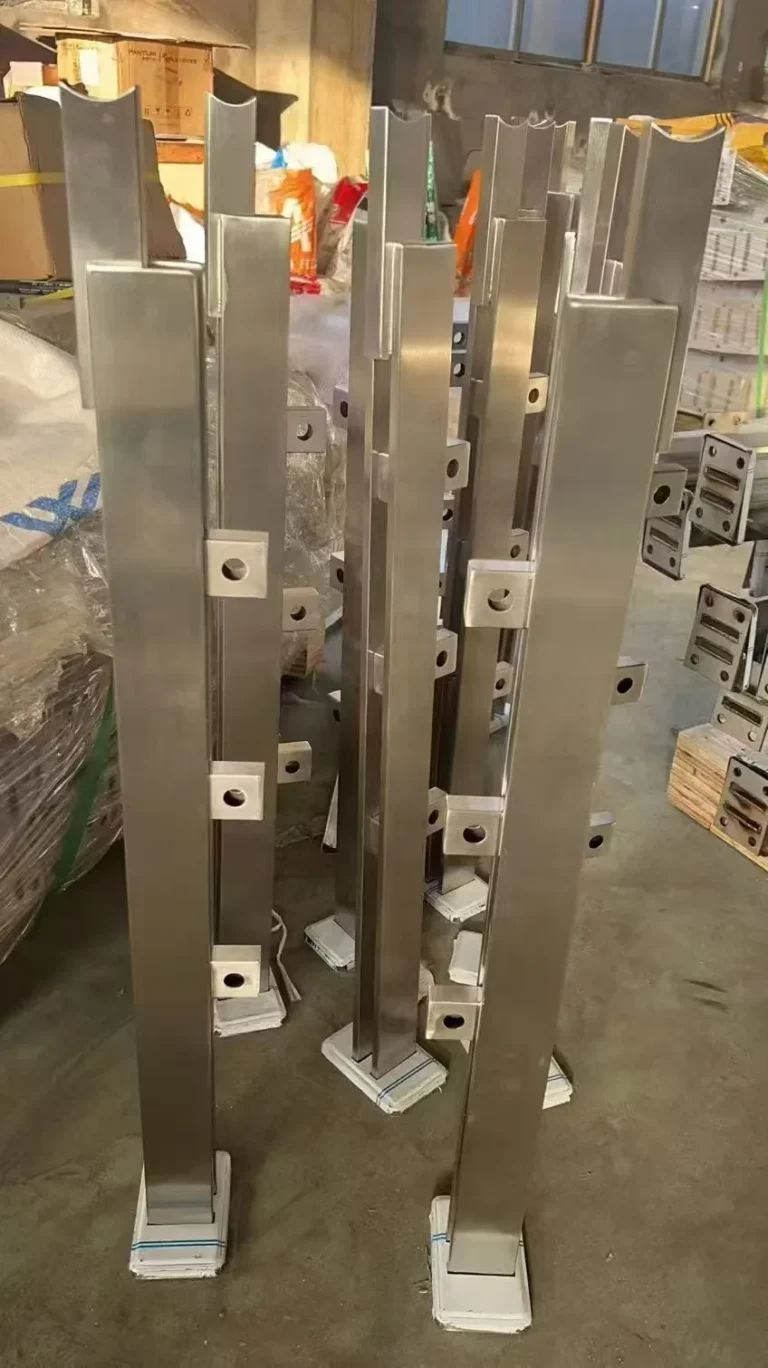
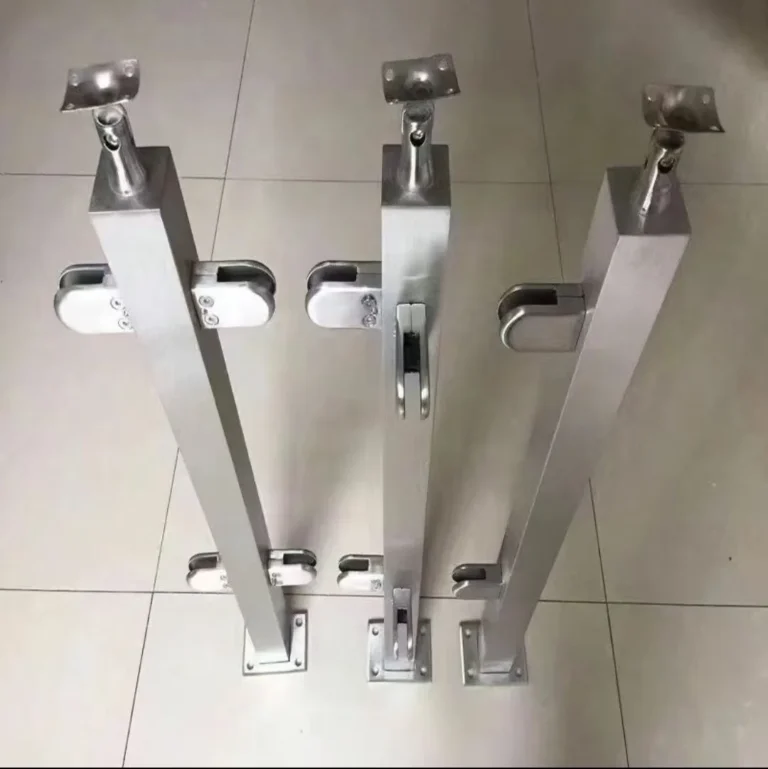
BalusterPost focuses on drawing-based stainless steel baluster posts and stainless steel railing posts, coordinated from Taizhou, Jiangsu, China. A representative square tube glass balustrade post may include visible brushed faces, base plates, glass fittings and an adjustable top support, each requiring deliberate contact and clearance protection.
For a packaging quotation, send the post schedule, destination, transport mode, distribution plan, storage conditions, package-size limits, lifting equipment, label template and required records. Contact Ryan Liang, Export Manager, before production when the order needs buyer-specific crates, accessory kits or loading documentation.
Frequently asked questions
Is protective film enough for a brushed railing post?
No. Film does not prevent bending, impact, post-to-post movement or damage to projecting fittings. It must also be compatible with the finish and storage conditions.
Should glass clamps ship installed?
Either installed or separately labelled packing can work. Decide from impact risk, orientation control, installation sequence and risk of loss, then state the method in the order.
Does every wooden crate need an ISPM 15 mark?
Requirements depend on the wood packaging material and destination implementation. Confirm the applicable rules and exemptions rather than assuming all wood products are treated alike.
How many posts should be placed in one crate?
There is no universal quantity. It depends on post size, finish, fittings, crate design, safe mass, handling equipment, stacking and route conditions.
What photos should the supplier provide?
Request individual protection, internal layers, accessory kits, closed packages, labels, package dimensions, loading arrangement and final securing, linked to package numbers.