
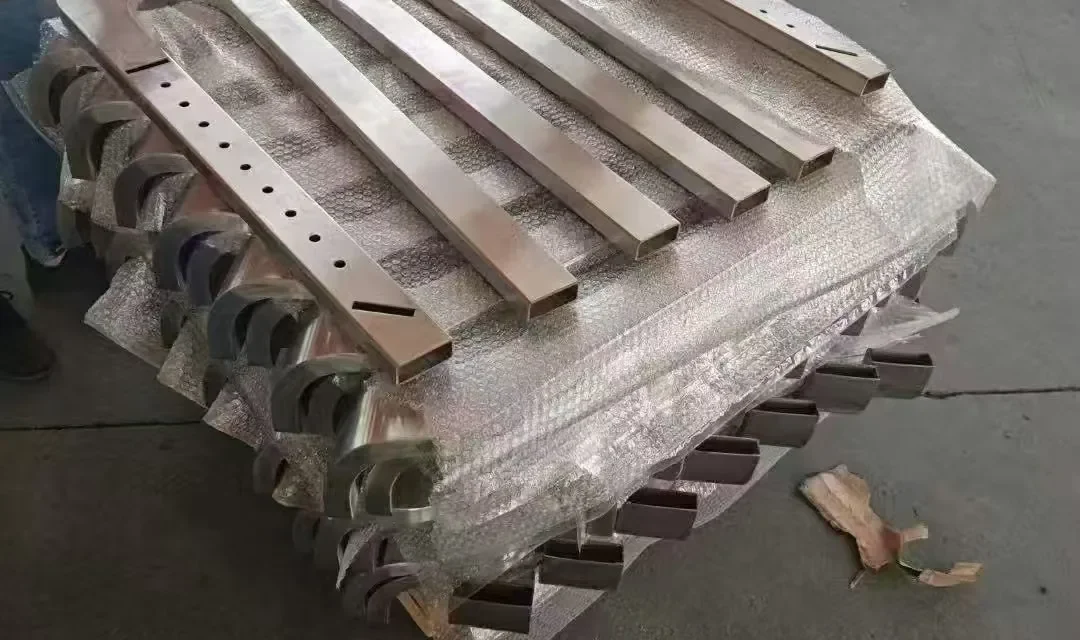
Do not treat site welding of a stainless steel railing post as a routine fitting adjustment. Before ordering, identify every planned site weld and agree its design, execution, inspection and finish-restoration responsibilities. If an unexpected mismatch appears after delivery, obtain an approved repair or replacement decision before modification. A factory-finished post and a post altered on site do not have the same acceptance history.
When does this question arise?
A contractor may propose welding an attachment after the post reaches site because the final location was uncertain. Another proposal may arise when a supplied part does not align with the supporting structure. These are different situations: planned site fabrication can be defined before purchase, while an unplanned alteration is a response to a discrepancy. Both need clear technical responsibility.
This guide helps buyers define the scope and approval path. It does not provide welding parameters, a repair design or permission to modify a safety-related railing. The competent project professionals must determine the applicable requirements for the actual material, connection and installation. A purchasing note saying weld as necessary is not an adequate technical instruction.
BalusterPost manufactures stainless steel baluster posts and railing posts. The approved order should identify the delivered condition and any work expressly left to others. This article does not claim that site welding, repair supervision or a particular welding certification is included in BalusterPost’s supply scope.
What is the difference between a planned joint and an improvised repair?
A planned site joint appears in the released drawings and work scope. Its location, mating components, responsibilities and acceptance requirements can be reviewed before the posts are made. Procurement can then coordinate the delivered surfaces, access and sequence with the party carrying out the work.
An improvised repair begins with a problem that was not included in that release. The first task is to establish the actual discrepancy and its cause. Welding on a tab, moving an attachment or filling a hole changes the supplied part. Do not let the apparent convenience of a local fix bypass the decision on whether repair is appropriate.
Retain a clear distinction between a supplier’s suggestion and a project-approved instruction. The person authorised to approve a structural or interface change may not be the person who approved the original appearance sample. Record the decision through the project’s agreed technical process.
Why does post-weld surface work belong in the scope?
BSSA’s post-weld cleaning guidance explains the significance of heat tint and post-fabrication cleaning for stainless steel. A neat-looking weld does not eliminate the need to address the relevant surface condition. The approved method must suit the material, service environment and required finish.
The UK Health and Safety Executive’s guidance on pickling pastes also describes serious chemical hazards and the need for appropriate controls. That is a reason to assign this work to competent people using applicable procedures, not to add an informal cleaning step for an installer. No acid recipe or treatment duration is specified here.
Procurement should ask who owns the complete result: joint execution, inspection, cleaning and appearance restoration. If the quotation covers only welding, identify who provides the remaining operations and how their acceptance is recorded. A gap between contractors can otherwise leave the final condition undefined.
Which decisions must be made before ordering?
| Decision | Required project information | Owner to identify |
|---|---|---|
| Joint design | Released geometry and connection requirements | Responsible designer |
| Delivered condition | Finished and unfinished zones, if specified | Buyer and manufacturer |
| Site execution | Applicable procedure and competence requirements | Executing contractor |
| Inspection | Method, acceptance criteria and hold points | Designated inspection responsibility |
| Surface restoration | Approved cleaning and finish requirements | Competent finishing contractor |
| Final release | Records needed before the assembly is accepted | Project acceptance authority |
The table identifies decisions rather than prescribing one certification scheme. The governing requirements depend on the contract, jurisdiction and application. Ask the project team to name the applicable documents instead of copying an old standard number from a generic internet guide.
How should the RFQ identify planned site work?
Mark the exact locations on the post drawing and identify the mating parts. State who supplies each item and which parts arrive finished. Include access constraints that affect the agreed sequence, such as whether glass or adjacent finishes will already be installed. Do not assume the factory can infer the site sequence from an elevation alone.
Define the intended final appearance with the appropriate sample or finish reference, but keep that separate from joint acceptance. Blending a weld into a brushed surface is an appearance operation; it should not conceal unresolved fabrication or inspection issues. The existing weld finishing and inspection guide addresses those distinct acceptance questions.
Where the design allows more than one approach, ask for separate proposals rather than an undocumented substitution. A factory-completed connection and a site-completed connection may involve different coordination and inspection work even if their final outline is similar. Compare the complete scope before choosing.
What should happen when a delivered post does not fit?
Record the post reference, drawing revision and location. Photograph the mismatch and measure it against the approved references. Distinguish the supplied geometry from the site condition and the position of mating parts. A single image of a gap does not establish which item is incorrect.
Keep the affected part identifiable and refer the discrepancy for review before modifying it. The review may lead to a replacement, a revised site detail or an approved repair. Purchasing should obtain a clear decision and retain the evidence rather than directing the installer to make the part fit at any cost.
The receiving inspection checklist provides a starting point for documenting discrepancies. Add the proposed alteration and its approval record to that file so the final installed condition remains traceable to a deliberate decision.
How can buyers avoid hidden costs?
Compare the delivered post price with the complete installation scope, including any specified site inspection and finish restoration. A lower manufacturing price is not a lower completed cost if essential operations have simply moved to another contractor. Ask bidders to identify exclusions in plain language.
Do not invent a standard allowance for site welding or assume a fixed repair turnaround. Obtain project-specific proposals after the technical scope is defined. Access, adjacent construction and the accepted finishing method can affect how the work is organised, and these conditions are not established by the post quantity alone.
Clarify responsibility for damage to nearby work and for protecting completed surfaces as part of the contractor’s method and scope. This guide does not replace the site’s safety arrangements. It identifies information that should be agreed before a commercial decision leaves work unassigned.
Which records should follow the modified assembly?
Retain the approved change, affected part references, execution and inspection records required by the project, and the final acceptance status. Update the as-built information where the accepted configuration differs from the original drawing. Keep an unmodified replacement order from being based accidentally on an obsolete detail.
When only one location is modified, do not apply that change to all future posts without a separate instruction. A repair for a particular site discrepancy is not automatically a new standard design. The distinction matters when the distributor later orders spares or a second project phase.
Frequently asked questions
Can an installer weld a new glass attachment onto a post?
Only under the project’s approved design and execution requirements. A general ability to weld stainless steel does not establish approval of the new attachment or its effect on the assembly.
Does polishing the repair complete acceptance?
No. Appearance, joint quality, dimensional conformity and the specified surface condition are separate matters. The agreed inspection and release requirements still apply.
What should I send before buying posts for planned site welding?
Identify the post configuration, released joint detail and division of work. Contact Ryan Liang, Export Manager, with those documents and the required delivered condition so the quotation reflects the actual manufacturing scope.




