
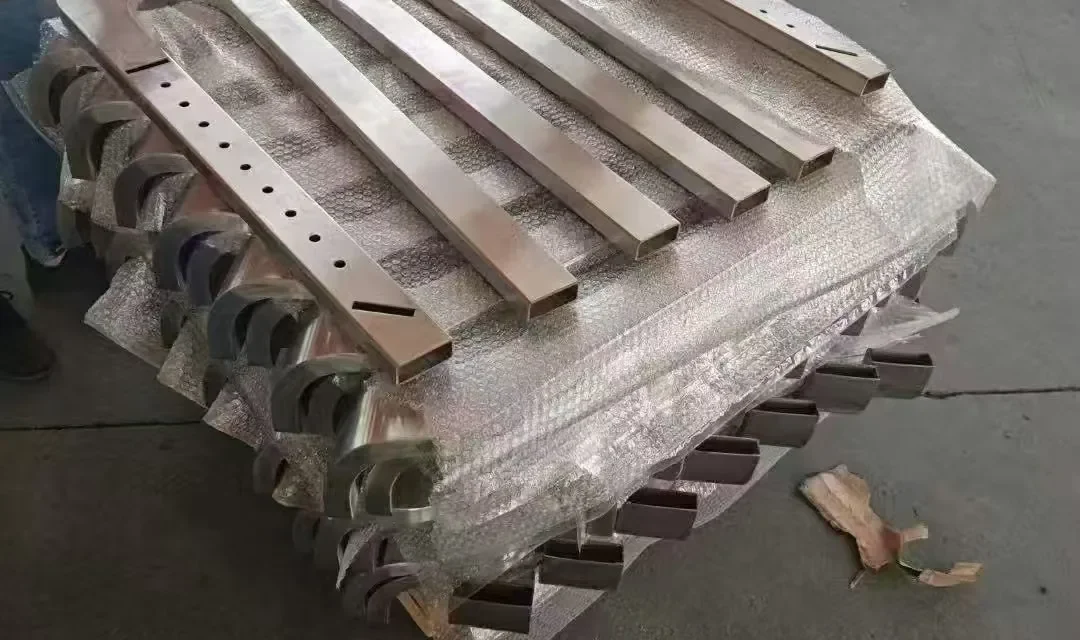
When a stainless steel railing post uses welded tube, record whether the tube seam needs a defined orientation or appearance treatment before approving the post. Distinguish the tube manufacturing seam from welds joining a base plate, adapter or handrail support. Identify the visible faces and attachment locations on the drawing, then agree the inspection evidence. A polished outside surface alone does not establish the tube’s manufacturing route or the acceptance of its seam.
Which weld is the enquiry referring to?
A tube seam belongs to the manufacture of the tube itself. Assembly welds join that tube to other post components. A buyer asking for invisible welds may be referring to one, both or only the most visible connection. Replace that ambiguous request with marked photographs or drawings identifying each area.
This guide addresses purchasing coordination for posts specified with welded tube. It does not claim that every BalusterPost product uses the same tube-making process or that a particular seam location is structurally suitable. State the material form and ordered specification for the actual post instead of assuming the manufacturing route from a catalogue photograph.
What does a tubing standard establish?
The ASTM A554-15 official abstract describes welded stainless steel mechanical tubing and its automatic welding process. That source establishes the scope of the cited edition, not a current mandatory purchasing specification for every railing. The contract must identify its required tube standard and edition separately.
A tube purchase specification also does not replace the drawing for the completed post assembly. Keep the tube requirements, attachment weld requirements and architectural appearance criteria identifiable. If a supplier proposes a different product form or standard, review it as a documented alternative rather than accepting it because the grade name is unchanged.
Why should buyers identify visible faces?
Different faces of a post can be viewed from different locations. A face hidden in a general photograph may be visible from a stair, adjacent balcony or approach corridor. Mark the project-facing surfaces on the post schedule rather than describing one face as the back without a viewing direction.
Where the specification controls seam visibility, connect the requirement to those face references. A statement such as seam on the rear face is incomplete until the drawing defines rear for each handed or corner variant. The supplier should confirm whether the requested orientation is included in the offered fabrication scope.
Square posts: identify faces without confusing finish direction
For a square tube glass balustrade post, the section gives useful face references, but those references still need to match the assembly drawing. Show the glass connection faces, handrail direction and mounting orientation together. Use the same face labels when reviewing the tube seam and the finished appearance.
Seam position and brushed grain direction are separate attributes. A longitudinal brushed finish does not identify which face contains a seam, and an agreed seam face does not settle the acceptable surface appearance. Record both requirements where they matter, with a representative finish reference rather than an unsupported promise that every feature will disappear.
Round posts: use a declared viewing reference
A circular section has no obvious front until its fittings or drawing establish one. If seam orientation is controlled, relate it to an identified fitting face, glass direction or other drawing reference. The reviewer should be able to reproduce the orientation from the drawing without relying on a technician’s memory.
Do not invent a universal angle or exclusion distance for the seam. The relevant relationship depends on the ordered tube, post design, attachment details and acceptance requirements. Where the relationship has design consequences, refer it to the responsible designer before recording the post as approved.
Coordinate attachment locations without prescribing an unverified rule
Ask the fabricator to identify where holes, threaded connections and welded fittings sit relative to the specified tube features. The purpose is to expose the actual arrangement for review. It is not an instruction to move a connection into an unapproved position or a claim that any attachment near a seam is automatically acceptable or unacceptable.
Keep the design requirement separate from the manufacturing proposal. A supplier may need clarification if the requested seam orientation conflicts with another drawing requirement. Record that conflict explicitly and resolve the full assembly detail rather than approving a shop-floor adjustment without a revised reference.
A drawing note should answer four different questions
| Question | Useful record | What it does not establish |
|---|---|---|
| What tube is ordered? | Grade, product form and agreed specification | Acceptance of every assembly weld |
| Does orientation matter? | Face or rotational reference on the drawing | A universal structural seam-location rule |
| What appearance is accepted? | Identified surfaces and representative sample | Seam integrity from a photograph alone |
| How is conformity reviewed? | Agreed inspection stage and relevant records | Certification that was not specified or supplied |
How should the first article be reviewed?
Use a representative post carrying the relevant connections and finish. Record its post mark, tube reference and drawing revision. Compare the seam orientation with the drawing and the visible finish with the agreed sample. Keep any dimensional or fabrication findings separate from the appearance decision.
The post weld finishing and inspection guide addresses assembly weld review. Use it alongside the tube seam requirement rather than treating one photograph as evidence for both. Any required testing or examination should be defined by the applicable specification; this guide does not supply a universal testing programme.
Example: a mirrored stair post changes what the viewer sees
Imagine an illustrative order containing left-hand and right-hand stair posts. The buyer approves a sample using only one orientation, then describes the remaining posts as mirrored. If appearance references do not account for the mirrored view, a face previously treated as hidden may become visible on the other side.
Review both variants against the declared viewing direction and connection arrangement. Record whether the same appearance requirement applies and whether the offered manufacturing arrangement satisfies it. This is a purchasing example, not a customer case or an assertion that a specified tube can always be reoriented without affecting other details.
What should distributors keep for repeat orders?
Retain the approved post drawing, sample reference, material form and any agreed seam note with the product record. A repeat order should reference those records explicitly. If the tube source, section or finish route changes, ask whether the previous appearance and orientation approval remains applicable before treating the new offer as identical.
Do not rely on the external sales photograph as the only repeat-order reference. It may show one selected view under one lighting condition. The production requirement should remain understandable even when the photograph does not show the seam or every connection.
How to send a clear BalusterPost enquiry
BalusterPost’s core manufactured products are stainless steel baluster posts and stainless steel railing posts, coordinated from Taizhou, Jiangsu, China. Identify the post model, material form, quantities, visible faces, finish reference and the specific seam or assembly-weld concern. Related glass clamps are supplied through qualified specialist manufacturing resources.
Send marked drawings through the BalusterPost enquiry page. For reference control, use the post drawing coordination guide. The enquiry response should distinguish confirmed scope, proposed alternatives and unresolved requirements.
Frequently asked questions
Does an invisible seam prove that the tube is seamless?
No. Appearance alone does not establish the manufacturing route. Use the ordered product specification and appropriate supporting records.
Is there one correct seam position for every railing post?
No universal position is given here. The actual post drawing and responsible project review must resolve the requirement.
Can surface polishing replace fabrication inspection?
No. Keep appearance approval and fabrication acceptance as distinct decisions supported by the specified evidence.




