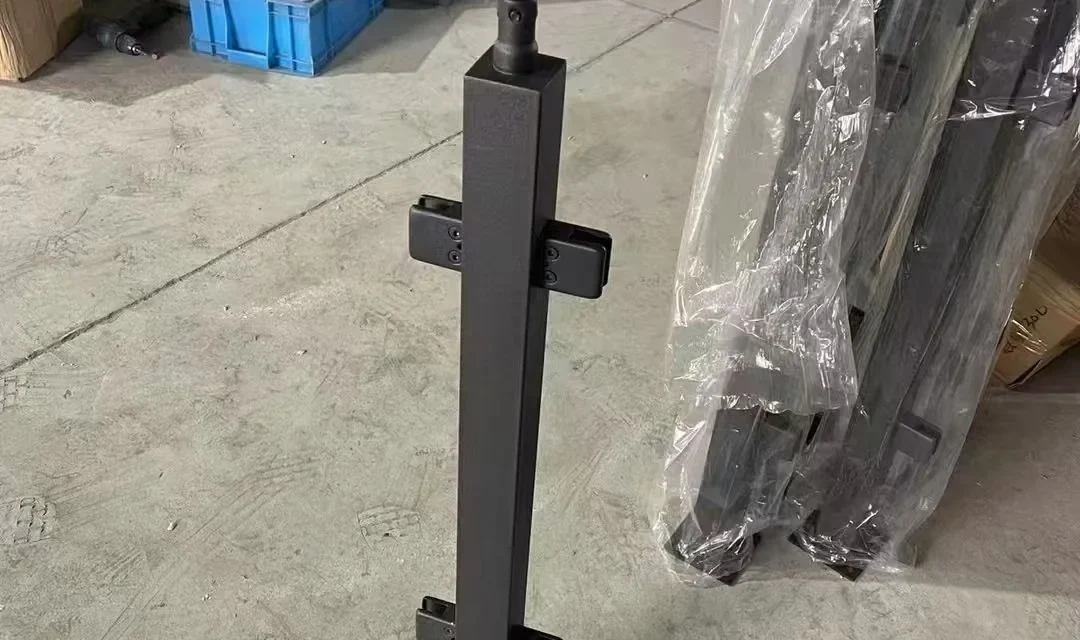
For bevelled glass near a railing clamp, show the finished edge section beside the exact insert contact footprint before releasing the pane. Confirm where the glass retains its full section and where the profile slopes or curves. Nominal pane thickness and visible insertion depth alone do not describe the contact geometry of a shaped edge.
Describe the edge with a section
Ask the glass fabricator for the edge profile, bevel width, remaining edge geometry and applicable fabrication tolerances. Use the intended pane construction and identify each external face. An elevation labelled polished edge can leave the actual cross-section unclear.
National Glass’s edgework and processing reference illustrates that bevelled edges are distinct manufactured profiles. It provides fabrication background and does not approve a particular shaped pane in a glass railing clamp. Obtain the actual fabricator’s drawing for the proposed glass.
Overlay the supplier’s real contact footprint
Request the contact area of the insert on each face from the clamp source. Place it on the glass section at the accepted insertion position. Review the positions that may occur within the agreed glass, hardware and assembly tolerances.
Identify any location where the insert would contact a bevel, cross its transition or sit on an undefined surface. Ask the hardware source and system reviewer to provide the accepted configuration or a revised glass detail. Do not derive a universal permitted bevel width from the visible clamp cover.
Keep the relevant dimensions separate
| Check | Record | Decision |
|---|---|---|
| Edge | Finished profile and tolerances | Identify the available contact face |
| Insert | Exact footprint at accepted insertion | Review profile overlap |
| Release | Glass and hardware revision | Order the same accepted configuration |
The engagement and rear-clearance guide addresses dimensions measured along insertion. Add the shaped face section so a correct insertion distance does not conceal a different bearing surface.
Example: a decorative border is added late
An illustrative panel has been coordinated with plain edges. The architect adds a wide bevel to create a decorative border. The nominal glass thickness remains the same, but the new section crosses part of the insert footprint.
Reopen the contact review before fabrication. The team might consider revising the decorative profile or another accepted detail, subject to the project design. The old sample should remain identified as the plain-edge configuration rather than becoming evidence for the revised profile.
Release both glass and hardware to one detail
Put the accepted profile, insert reference and contact positions on the same drawing revision. Coordinate edge processing with the glass fabricator’s heat-treatment and manufacturing sequence. Reworking finished heat-treated glass requires its own professional review and cannot be assumed a site adjustment.
For B04AF clamp enquiries, send the section with the post interface through the project contact. Ask the specialist clamp source to confirm the assembly without interpreting a catalogue thickness label as profile approval.
What should the sample prove?
Use a representative finished edge and the identified inserts to inspect the agreed fit. Record the sample profile and its limits. Keep the technical acceptance for the railing assembly connected to the final detail and applicable evidence.