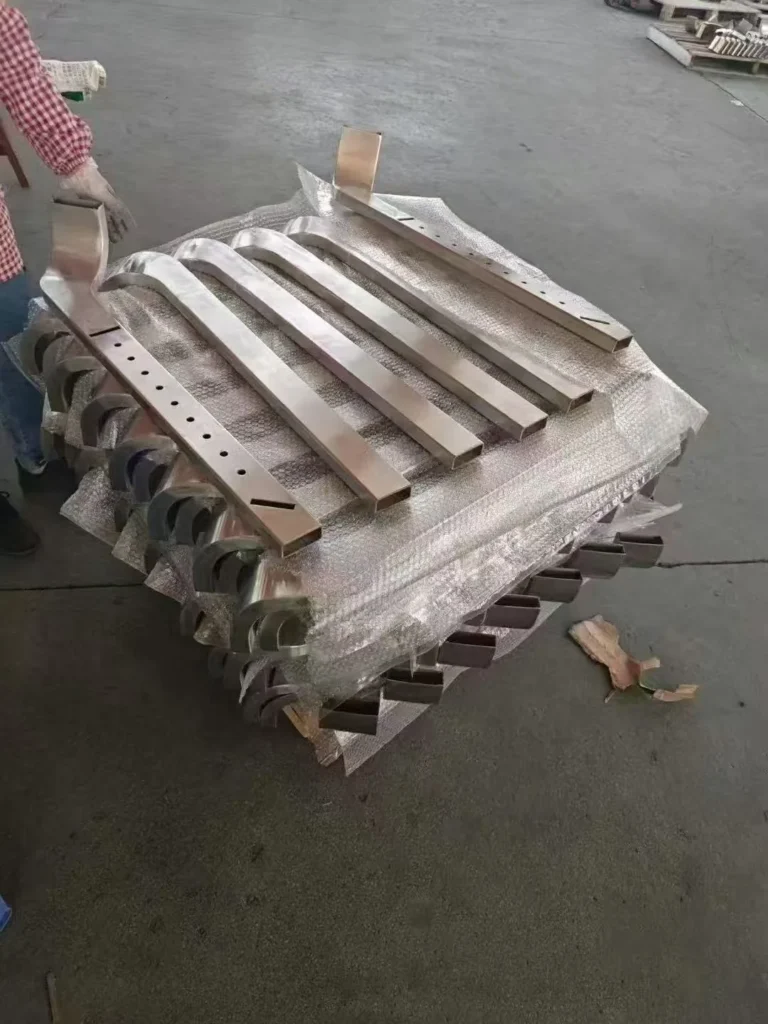
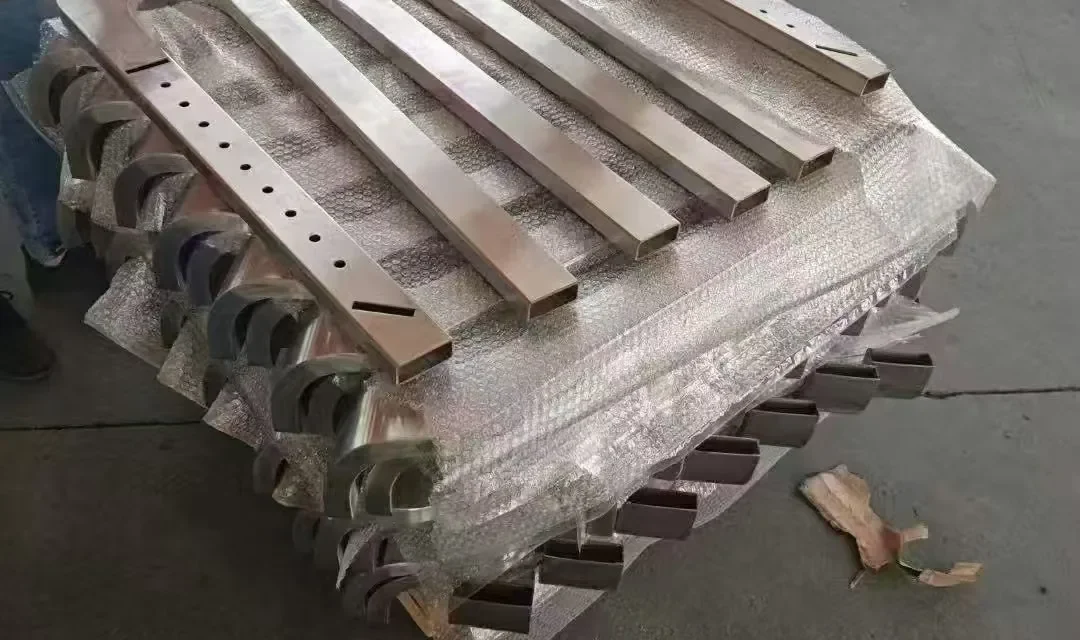
Specify the visible grain direction on each stainless steel railing post face, identify the approved appearance sample and state how joined components should relate visually. A general brushed-finish description does not identify direction, local blending or the appearance of a completed assembly. Review a representative fabricated post before releasing a visually sensitive order, rather than approving a flat swatch alone.
What does grain direction mean in a post enquiry?
For this related purchasing decision, see how to decide whether a scratched brushed post can be refinished.
In this guide, grain direction means the visible direction of a mechanically finished surface, not the metallurgical grain structure inside the steel. Buyers should use that distinction when communicating with a fabricator. An instruction about the appearance of brushing should not accidentally become an unsupported material-property requirement.
Outokumpu’s stainless steel overview describes grinding and brushing among surface preparation processes. The purchasing question addressed here is narrower: how to communicate the intended appearance on a fabricated railing post. This article does not equate a visual direction with a particular roughness value or corrosion performance.
BalusterPost manufactures stainless steel baluster posts and railing posts. Business coordination is based in Taizhou, Jiangsu, China. Surface options and their feasibility must be confirmed for the actual post construction. An illustrated finish is not a promise that every shape can be supplied with every requested appearance.
Why is a flat finish sample not always enough?
A flat swatch shows a limited area under particular viewing conditions. A completed post also has edges, corners, holes, attachments and areas around fabricated joints. Ask whether the approval sample represents those features. Otherwise, the buyer may approve one surface while the supplier believes the approval covers the complete component.
For a square stainless steel post, identify which faces remain visible after installation. A front elevation alone may omit side faces that are prominent when a person approaches the railing. Mark the intended viewing faces on the drawing instead of relying on the phrase exposed side.
Where an attachment interrupts the surface, agree what appearance is expected immediately around it. Do not assume that a small sample cut from an unfinished tube demonstrates the finished area around a welded support. Request a representative feature or a clear statement of what the sample excludes.
How should the drawing show the direction?
Use a named face or view and a simple direction indication tied to that face. State whether the instruction applies to the post body, base cover, support or another visible component. The reference should remain understandable when the component is rotated for manufacturing or packed horizontally for transport.
Avoid instructions such as brush upwards without defining the installed orientation. A workshop operator and an inspector may look at opposite ends of the same component. A direction relative to an identified drawing axis or installed face gives both people the same reference.
| Appearance field | Information to record | Approval question |
|---|---|---|
| Visible face | Drawing face or view reference | Which surface is being judged? |
| Direction | Arrow linked to installed orientation | Is the intended direction unambiguous? |
| Reference sample | Sample identity and approved scope | Does it represent the fabricated feature? |
| Local blending | Areas requiring separate agreement | What variation is acceptable? |
| Adjacent components | Items reviewed together | Is visual coordination required? |
How should weld areas and attachments be reviewed?
Ask the fabricator to identify areas where construction affects the visible finishing operation. The answer should describe the proposed result and any limitation, rather than merely repeating brushed finish. For a prominent attachment, a representative sample can make an otherwise ambiguous written requirement easier to review.
Keep appearance acceptance separate from weld-quality acceptance. An attractive blend does not establish the structural adequacy of a connection. Conversely, a drawing that defines the connection does not necessarily describe the desired visible texture. Record the relevant criteria in their own parts of the order.
The first-article inspection guide provides a framework for recording observations. For this specific check, identify the viewed face, sample reference and agreed appearance decision. A photograph without those references can be difficult to interpret later.
How can samples be compared fairly?
Agree practical viewing conditions with the supplier and customer before making a release decision. Use the same orientation when comparing the reference and proposed part. Record the arrangement so a later disagreement can return to the agreed comparison rather than a different photograph taken under unrelated lighting.
Do not use a phone image as an exact appearance measurement. Camera exposure, reflections and display settings can affect how a surface is perceived. Photographs are useful records of a comparison, but the parties should decide whether physical samples are necessary for their particular order.
If an instrument-based appearance requirement is proposed, identify the method, instrument and acceptance criterion separately. This guide supplies no universal gloss, roughness or colour tolerance. A numerical requirement should come from the actual specification and an agreed method, not be added retrospectively to reject an otherwise approved sample.
What changes when several post batches are ordered?
Retain a clearly identified reference for repeat comparison. Record whether approval applies to one batch, one model or a wider family of parts. A sample accepted for an indoor demonstration should not silently become the appearance standard for a different exterior project with different components.
When the post geometry changes, review whether the old sample still represents the visible features. A new support location or cover can introduce an area that was absent from the original sample. The repeat-order revision guide explains how to connect that decision to the production baseline.
Agree how a damaged or unavailable master sample will be replaced. Keep the replacement approval visible in the record. An inspector should not unknowingly compare production against a different swatch simply because the original was misplaced.
How should the order deal with an appearance difference?
Identify the affected parts and describe the difference against the accepted reference. Separate an incorrect direction from a local blending difference or damage introduced after finishing. Those observations may require different responses, and grouping them under poor finish can obscure the actual decision needed.
Request an agreed disposition before instructing local refinishing. The supplier and responsible project parties should confirm whether the proposed work is suitable and how its result will be accepted. Do not assume an installer can reproduce the original appearance using whatever abrasive happens to be available.
For example, a post body and its base cover may each meet their individual finish descriptions while their visible directions differ. The buyer should decide whether that combination is acceptable before production. Mark the accepted relationship on the sample record so receiving inspection evaluates the agreed assembly rather than a new preference introduced at delivery.
Brushed post direction FAQ
Does a grit description define the whole appearance?
Do not treat it as a complete visual specification. Identify the actual sample, direction and fabricated features that the order must match.
Should every face have identical visible direction?
That is an appearance decision to agree for the actual design. Name the relevant faces and obtain confirmation of the feasible result.
Can a clamp sample approve the post finish?
No. It may help compare adjacent components, but the post needs its own approved reference and scope. Partner-sourced fittings can use a different production route.
What should I send with the RFQ?
Send Ryan Liang the post drawing with visible faces and direction marked, plus the appearance reference and any areas needing a representative sample. State which decisions are provisional before asking for final production confirmation.