
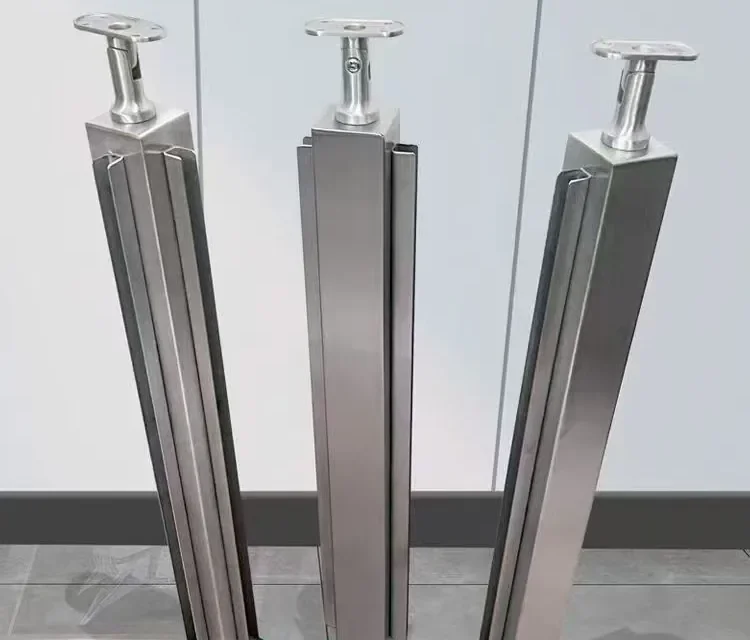
Buy stainless steel railing posts and glass clamps together when one coordinated bill of materials and a verified fit will reduce purchasing and installation risk. Name the post manufacturer, the specialist source of any clamps, and the party responsible for checking the interface. A single quotation is useful only if drawings, material and finish requirements, quantities, inspection evidence and remedy for mismatched parts remain clear for each line item.
What does “one supplier” actually mean for a railing package?
A buyer may place one commercial order for several products without every item coming from the same factory. BalusterPost manufactures stainless steel baluster posts and railing posts, with business coordination based in Taizhou, Jiangsu, China. Glass clamps and other related hardware, when included, are coordinated through qualified specialist manufacturing partners. The quotation and technical submittal should say which parts BalusterPost manufactures and which parts are partner-sourced. A bundled invoice is not evidence that every component has the same maker, material batch or inspection route.
The BP-SQ01 square-tube post shows one type of fabricated post with glass-interface details. Its photographs illustrate a configuration; they do not establish a universal clamp size or prove that an unrelated clamp will fit. The glass-clamp category is a related procurement option, not a claim that BalusterPost manufactures the clamps itself. Start with a project drawing and a component schedule rather than selecting parts solely from catalogue photographs.
This guide addresses the sourcing decision and accountability at the post-to-clamp interface. Our separate glass-clamp selection guide deals with clamp styles and specification questions. Neither guide substitutes for structural design, glass design, anchor selection or local approvals.
When is a coordinated order preferable to separate purchases?
A coordinated order can simplify communication when the post and clamp must be checked together, the project has several post variants, or the buyer needs one packing list that maps hardware to locations. It may also give the buyer one place to resolve an interface discrepancy before dispatch. These are possible process advantages, not a promise of lower price or guaranteed compatibility. They exist only when the seller takes a defined coordination role and the buyer approves the actual assembly detail.
Separate purchasing can be reasonable when a distributor already holds an approved clamp, the engineer has locked its drawing, or the site requires a named component source. In that case, provide the clamp drawing or a physical approved sample to the post manufacturer and agree who checks fit. Do not ask a post supplier to warrant the dimensions of an unidentified third-party clamp, or assume the clamp supplier has assessed the strength of a custom welded post.
Compare the two routes on total scope, evidence and responsibility. A cheaper line-item price may exclude sampling, fit checks, spare parts, freight consolidation or a remedy for mismatched interfaces. Conversely, a bundled price can hide an accessory substitution unless each item is identified. The decision should follow the project’s controlled specifications and the buyer’s ability to manage multiple sources.
Which interface details must be frozen before quoting?
The post drawing should locate every clamp attachment relative to a stated datum. For a square post, identify the face, hole centres, thread or welded boss, projection and vertical positions. For a round post, add an angular reference. The clamp drawing should state its mounting method, mating dimensions, glass thickness range, setting material and orientation as supplied. Identify whether fasteners, gaskets, cover pieces and tools are included. A drawing that simply says “clamp to suit” transfers an unresolved design choice into production.
Specify the glass type and thickness selected by the responsible designer, but do not infer a safe glass build-up from a clamp catalogue. The completed railing also depends on post spacing, glass configuration, supports, anchors and substrate. Buyers should have the project engineer approve these design matters and the required verification evidence. A dimensional fit check between a post and a clamp is necessary for coordinated supply; it is not a structural approval.
Confirm handedness, corner and stair variants before issuing the purchase order. A clamp orientation that works on a straight run may obstruct a handrail support or point the wrong way on a landing. Label each variant in the post schedule and match the accessory quantity to it. The railing-post bill of materials guide shows how to assign line items and revision identifiers across a project package.
How should material and finish be specified across different makers?
State the required stainless grade and finish separately for posts, clamps and fasteners. A material document for the post tube does not certify a partner-sourced clamp, and a polished clamp does not establish its alloy. Ask what documentary evidence will accompany each item and how batch identification will be retained. Also agree whether a visible finish match is judged against a physical sample, a written description or an approved photograph under stated viewing conditions. Different shapes and fabrication routes can appear different even when their broad finish label is similar.
For exterior projects, give both sources the site exposure and maintenance assumptions. The British Stainless Steel Association’s external-application guidance says location, local microclimate, surface finish, design and cleaning access matter to grade selection. That guidance supports a project-specific material review; it does not establish that one grade or finish is suitable for every railing or every accessory. The project designer should decide the required materials, including any concerns at dissimilar-metal interfaces.
Make the visible finish and cleaning responsibility explicit. A post may be brushed in one direction while a small cast or machined clamp has a different texture. If visual matching matters, request a paired sample. The buyer should approve the pair before repeat production, and the inspection plan should retain that sample or its controlled record. Do not treat a marketing image as a finish acceptance standard.
Who owns the fit check and a mismatch?
Put interface responsibility in the quotation and purchase order. If BalusterPost coordinates both posts and partner-sourced clamps, identify the drawing revision used for each and the agreed check before dispatch. If the buyer nominates a clamp from elsewhere, identify who supplies its technical data and whether a physical mating sample will be made available. Record the person authorized to accept a deviation or revised component. This is a practical procurement recommendation, not a claim that one party has assumed an unstated engineering or legal warranty.
The ISO 9001 Auditing Practices Group guidance on external providers discusses how organizations can control and verify externally supplied products and services. We use it as process guidance for defining checks on partner-sourced items. It does not mean BalusterPost or any partner has an ISO certification, and it does not certify a railing component.
Choose a proportionate fit check for the order. At minimum, match the approved post and clamp identifiers, mount the approved mating parts in the intended orientation, verify hole or boss alignment and fastener access, and record any interference. If the full glass assembly is needed to verify clearances, arrange it with the responsible project team. A successful workshop fit should be recorded by part and drawing revision, not generalized to every untested variant.
What belongs in the RFQ and comparison sheet?
| RFQ item | Buyer should state | Supplier should return |
|---|---|---|
| Post | Part marks, drawing revisions, profile, grade, mounting and finish | Manufactured scope and any design questions |
| Clamp and hardware | Approved part or functional drawing, quantity, glass interface and inclusion list | Specialist source, exact offered item and substitutions for approval |
| Mating interface | Datums, hole or boss pattern, orientation and sample requirement | Fit-check method, records and exceptions |
| Evidence | Material, inspection, finish and packaging records required by item | Which records accompany each line and when they are available |
| Commercial scope | Delivery location, packing, spares and responsibility for shortages | Separate prices or a clear bundle breakdown, exclusions and remedy route |
A comparable quote states the same technical scope and acceptance points for every offer. Ask suppliers to identify alternatives in a separate column rather than silently replacing a clamp, fastener or grade. If the buyer has an approved brand or model, do not substitute it without the designated approver. If there is no approved model yet, compare offered items against the same interface drawing and evidence requirements.
Before releasing a repeat order, inspect the first assembled post-and-clamp combination for each genuinely different configuration. Photograph the orientation, record the component marks and note any approved adjustments. The first-article inspection guide explains how to link the sample to a controlled drawing and approval decision. A visual fit is one check within the project acceptance plan, not a substitute for specified tests or engineering calculations.
What should the buyer decide before placing the order?
Decide whether the buying team wants one party to coordinate the post and accessory package, or will manage separate sources and a shared interface drawing. Name the owner of the design, sample, fit test, accessory evidence, deviation approval and site issue response. Then send the post schedule, clamp requirements, glass information provided by the designer, finish reference, exposure conditions, quantities and destination. Ask each bidder to return questions rather than assume missing dimensions.
BalusterPost can discuss drawing-based stainless steel railing-post manufacture and coordinate specified related hardware from qualified specialist manufacturing partners. Send the drawing package and RFQ to Ryan Liang, Export Manager. Approval of the full railing and its site installation remains with the responsible project professionals.
Frequently asked questions
Does buying posts and clamps on one invoice mean one factory made both?
No. The seller should identify the manufacturing source and responsibility for each item. BalusterPost manufactures stainless steel posts; related clamps are sourced through specialist partners when included.
Will any clamp fit a post of the same nominal size?
No. Check the actual mounting interface, orientation, fasteners, glass specification and approved mating sample or drawing. Nominal tube size alone is insufficient.
Can a successful workshop fit test approve the installed railing?
No. It confirms the tested component interface under the stated conditions. The project designer must define structural, glass, anchor and site acceptance requirements.




