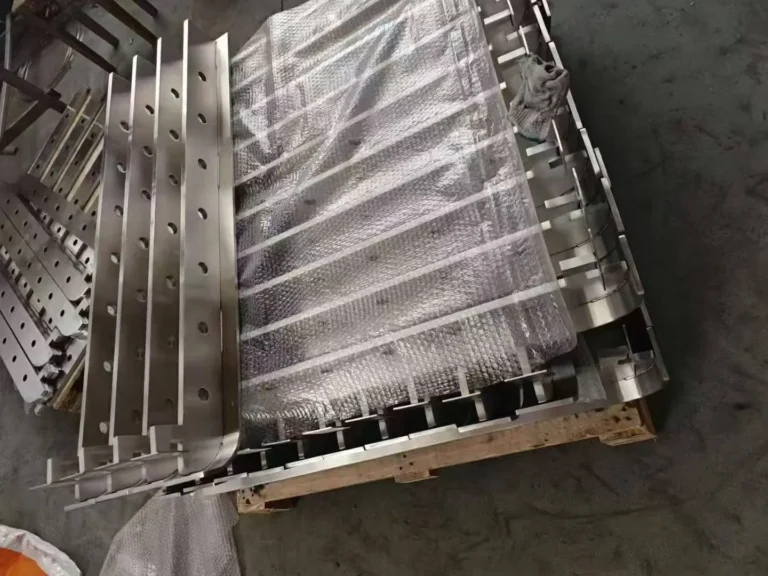
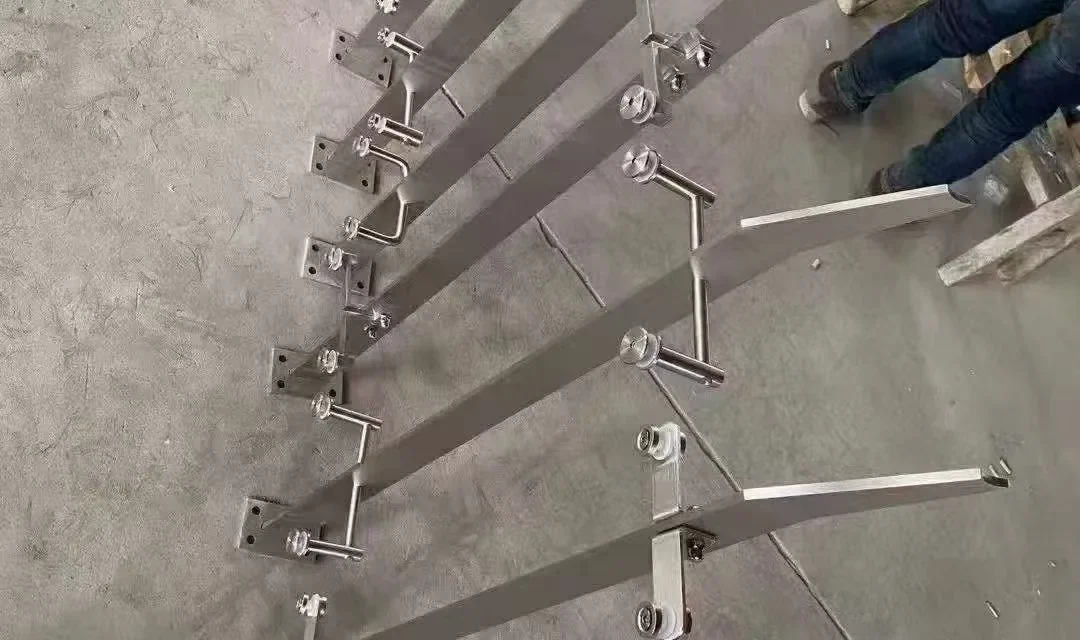
Short answer: compare stainless steel baluster post quotations only after every supplier is priced against the same released drawing, steel grade, section size, wall or bar thickness, mounting method, glass and handrail interfaces, surface finish, inspection scope, packaging and Incoterms® rule with a named place. The lowest unit price is not the best offer when important work, evidence or delivery costs are excluded.
Why stainless steel baluster post quotations are difficult to compare
A railing post quotation compresses many decisions into one number. A square tube post, twin flat-bar post and side-mounted stair post can differ in raw material, machining time, welding, finish restoration, base plates, adapters, fasteners, inspection and protective packing. Even quotations using the same product name may include different work.
The purchasing question is not “Which supplier has the lowest price?” It is “Which offer delivers the approved product and evidence at a comparable cost and acceptable risk?” Begin with the same stainless steel railing post RFQ package for every bidder.
Use one technical baseline for every quotation
Issue one drawing revision and a written specification before comparison. If a supplier proposes an alternative, keep it in a separate column rather than silently replacing the baseline. This preserves a clean comparison between a compliant base offer and a value-engineered option.
| Comparison field | What must be identical or clearly stated | Common source of mismatch |
|---|---|---|
| Post identity | Drawing number, revision, straight or stair location, left/right orientation | Older drawing or standard model substituted |
| Geometry | Overall height, tube or bar section, thickness, base plate, hole centres | Nominal description without actual dimensions |
| Material | Specified grade for post body, plates and welded accessories | “Stainless steel” written without grade |
| Interfaces | Glass thickness, clamp or adapter positions, handrail connection, anchors | Accessories shown but excluded from price |
| Finish | Finish type, direction, visible faces, approved sample and protection film | Generic “satin” with no reference |
| Inspection | Dimensions, appearance, material evidence, sampling and report format | Inspection assumed but evidence not included |
| Packing | Individual protection, carton or crate, labels and pallet requirements | Domestic packing quoted for export shipment |
| Commercial basis | Quantity, currency, taxes, tooling, samples, Incoterms® rule and named place | EXW compared directly with a delivered price |
1. Confirm exactly which post configuration is priced
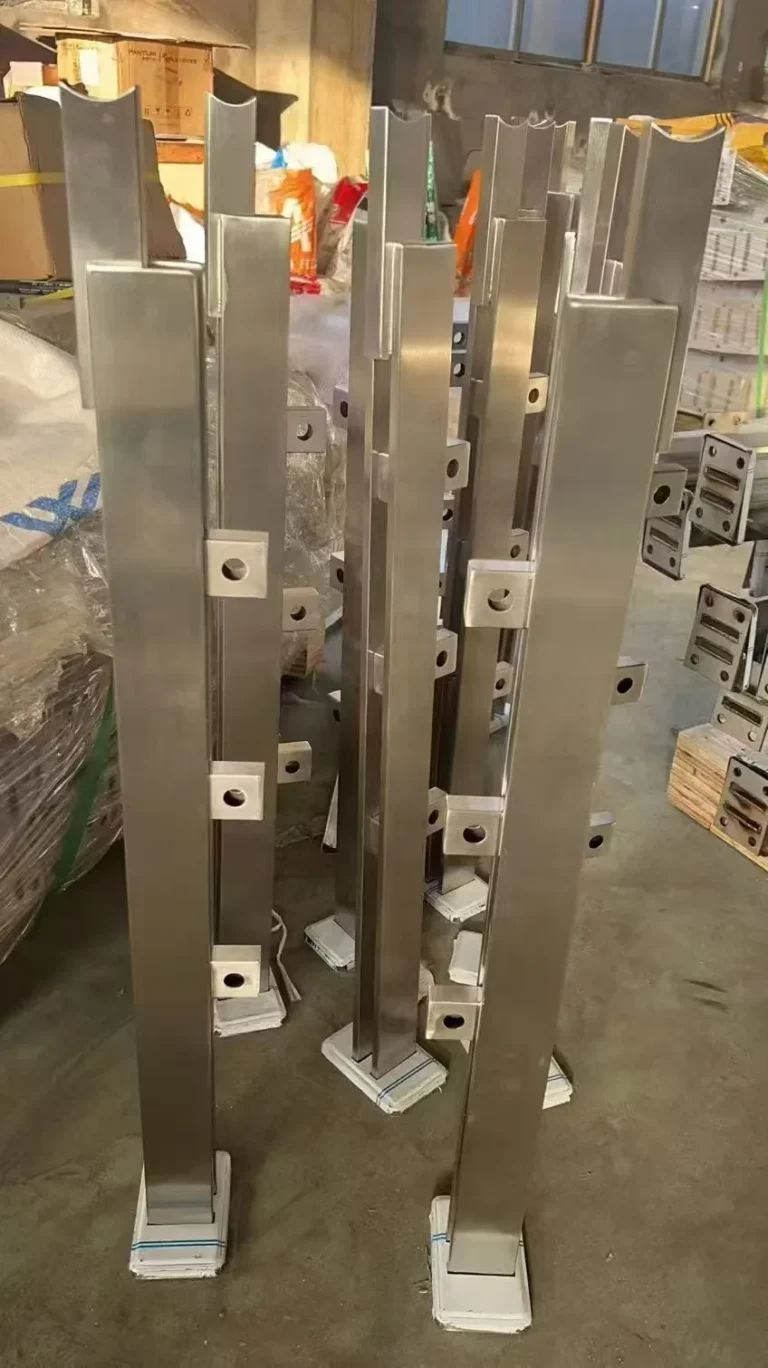
Start with the bill of components, not the product photograph. A quotation should identify the post body, mounting plate or fascia bracket, glass fittings, handrail support, caps, covers, gaskets and fasteners. Mark each item as included, excluded, optional or buyer-supplied.
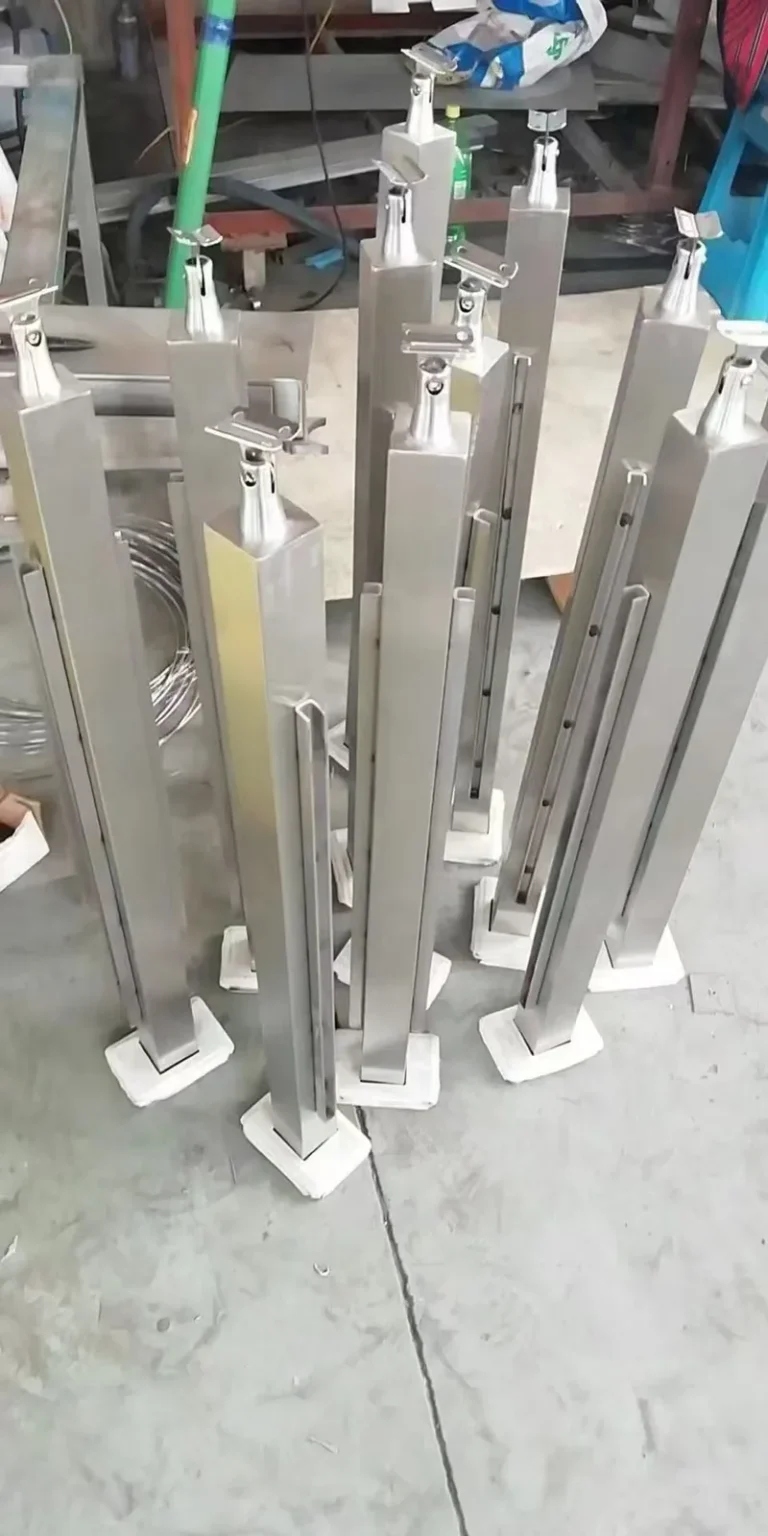
Check whether the price covers a complete fabricated post or only the main metal body. For example, an adjustable twin flat-bar balustrade post may appear simple in a thumbnail, yet its adjustable holders, mounting plates, finish and orientation determine the actual scope. Ask for a labelled drawing or exploded list when the boundary is unclear.
2. Normalize material grade, product form and thickness
Do not treat SUS304, 304L, SUS316 or 316L as interchangeable price descriptions. Confirm the project-selected grade and the material required for the body, base plate and welded parts. Environmental suitability remains a project decision: the BSSA notes that even 316 types are not corrosion-proof in every seawater condition and that exposure factors matter. See its guidance on 304 and 316 selection for seawater applications.
For tube posts, record shape, outside dimensions and actual specified wall thickness. ASTM’s current A554-26 specification page describes welded stainless steel mechanical tubing in round, square, rectangular and special shapes, and notes that optional supplementary requirements must be stated in the order. A standard reference does not replace the project drawing; it identifies the material product basis that the parties intend to use.
For flat-bar posts, compare bar width and thickness. Any thickness, grade or section alternative needs its own technical review and price line.
3. Separate fabrication scope from surface-finish scope
Ask what happens before the post reaches final packing: cutting, drilling, tapping, machining, welding, distortion correction, weld cleaning, blending and final surface finishing. A low offer may omit a process that another supplier has included.
Finish terms such as brushed, satin or mirror are not complete acceptance criteria by themselves. Compare the reference sample, abrasive direction, visible faces, acceptable shade variation, treatment around welds and protection method. The railing post finish selection guide explains how to convert a visual description into a reviewable requirement.
4. Freeze the drawing revision and quantify variants
A quotation based on a sketch cannot be compared directly with one based on a released fabrication drawing. List the drawing number and revision in the comparison sheet. Confirm quantities by post type: straight run, corner, end, stair, left-hand, right-hand, top-mounted and fascia-mounted pieces may have different operations.
If the project is not frozen, request separate prices for defined variants. Identify which changes trigger requotation, sample approval or new tooling.
5. Price inspection and evidence as part of the product
“Quality checked” is not a measurable quotation line. State which characteristics are inspected, the sampling approach, the record required and who supplies it. Typical buyer-defined checks can include drawing dimensions, hole centres, mounting orientation, finish appearance, component count, labels and packing condition.
Material certificates, inspection reports, first-article records, finish samples and pre-shipment photographs should be marked included, optional or unavailable. Do not infer structural compliance from a material document or appearance photograph. Our weld finishing and inspection guide separates fabrication and cosmetic acceptance.
6. Compare sampling, tooling and setup on the same quantity basis
Custom posts may involve samples, fixtures, templates, programming or setup. Mark these as one-time, recurring or included in unit price. Amortize only genuinely one-time costs across the same planned quantity.
Compare the immediate order first, then create a second scenario for credible repeat volumes. Keep minimum order and price-break quantities visible.
7. Make export packaging a defined line item
Finished stainless surfaces can be damaged by post-to-post contact, loose hardware, moisture or unsuitable handling. Compare individual wrapping, surface protection, separators, cartons or crates, palletization, labels and packing-list detail. Confirm whether protruding glass adapters and handrail brackets receive additional protection.
Record estimated package count, gross weight and dimensions as provisional until packing is approved. Include potential repacking, damage replacement or site sorting in the risk review.
8. Put the Incoterms® rule and named place beside every price
Never compare EXW, FCA, FOB, CIF or DAP figures as if the letters mean the same cost coverage. The International Chamber of Commerce explains that Incoterms® 2020 allocates obligations, costs and risks between buyer and seller. Use the agreed rule, its version and a precise named place or port.
Then add buyer-borne items outside each quotation to a separate landed-cost worksheet. Depending on the chosen term and route, these may include origin handling, main freight, insurance, destination handling, customs brokerage, duties, taxes and inland delivery. Obtain those figures from the responsible logistics and customs professionals; a post manufacturer’s product quotation is not a substitute for destination import advice.
A practical quotation-normalization formula
Comparable product subtotal = compliant post quantity × normalized unit price + required samples + applicable one-time tooling + required inspection/evidence + specified export packing.
Comparison-to-destination estimate = comparable product subtotal + all buyer-borne transport, insurance, clearance, duty, tax and delivery items for the selected Incoterms® rule.
Keep product cost, logistics estimate, tax and risk allowance in separate columns. This makes later updates auditable and prevents a change in freight from being mistaken for a change in manufacturing price.
Quotation red flags that require clarification
- The description says only “stainless steel post” without drawing revision, grade or thickness.
- The supplier changes material, section or finish but presents the offer as fully compliant.
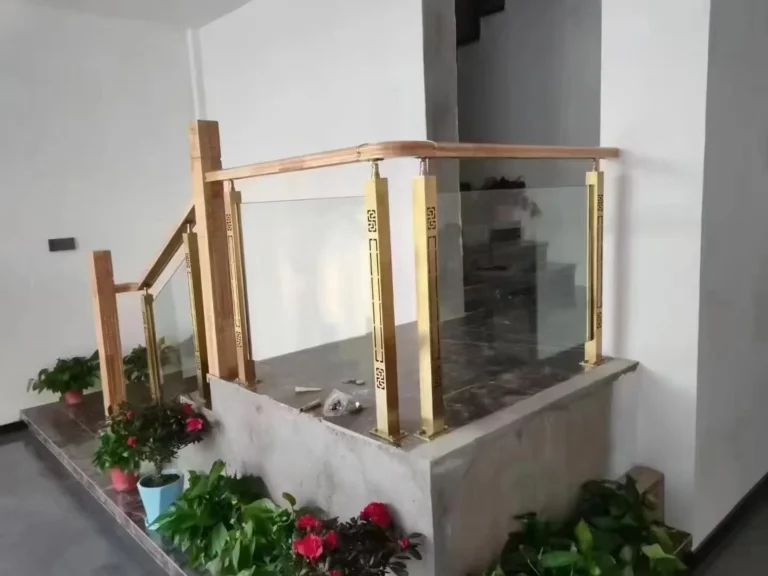
- Glass fittings, mounting hardware or handrail supports appear in the image but not in the scope.
- Inspection reports, samples, tooling or export packing have no inclusion status.
- The trade term has no named place, port or Incoterms® version.
- Quantity breaks are compared using different volumes.
- Lead-time wording has no clear starting event, such as drawing or sample approval.
- A certificate is offered as proof of every design, fabrication and project requirement.
Questions to send before selecting a supplier
- Which drawing revision and quantity schedule does your price use?
- Please list every included post component and every exclusion.
- What grade, product form and specified thickness are priced for each stainless part?
- What finish reference, visible-face scope and protective packing are included?
- Which inspection records and material documents will accompany the order?
- Are sample, tooling or setup charges one-time or recurring?
- Which Incoterms® 2020 rule and exact named place apply?
- What approval event starts the stated production lead time?
How BalusterPost supports a comparable quotation
BalusterPost focuses on drawing-based stainless steel baluster posts and stainless steel railing posts, coordinated from Taizhou, Jiangsu, China. Related railing hardware can be coordinated through qualified specialist manufacturing resources when it is part of the requested package; it should not be assumed to be BalusterPost-manufactured.
For a reviewable offer, send the drawing revision, quantity by post type, material and finish requirement, interface details, inspection expectations, packing needs and requested trade term. If information is missing, keep assumptions visible rather than allowing them to disappear into the unit price. Send your railing post package to Ryan Liang, Export Manager, for a drawing-based quotation review.
Frequently asked questions
How do I compare stainless steel baluster post quotations?
Normalize every offer to the same drawing revision, quantity, grade, geometry, finish, component scope, inspection, packing and Incoterms® rule. Separate compliant base offers from alternatives, then compare product subtotal and buyer-borne logistics in distinct columns.
Is the lowest stainless steel railing post unit price usually best?
No. A lower figure may exclude accessories, finish work, inspection evidence, export packing or transport obligations. Select against the complete approved scope, commercial basis and acceptable risk, not unit price alone.
Can I compare a 304 quote directly with a 316L quote?
Not as equivalent offers. Grade selection must follow the project environment and specification. Price the required grade as the baseline and present any proposed alternative separately for technical approval.
What should a custom railing post quotation include?
It should identify the drawing revision, post variants, material grade and section, included fittings, finish, inspection and documents, packaging, quantity, currency, tooling or sample charges, validity, lead-time basis, and Incoterms® rule with named place.
Do Incoterms® define the complete landed cost?
No single quoted product price should be assumed to represent every destination cost. Use the selected Incoterms® 2020 rule to identify responsibilities, then obtain the remaining freight, clearance, duty, tax and delivery inputs from the responsible professionals.