Short answer: choose a stainless steel railing post finish by balancing appearance, exposure, cleaning access, fabrication details and the way adjacent parts must match. “Brushed,” “satin” and “mirror” are useful starting descriptions, but they are not complete purchase specifications. For repeatable results, define the visible faces, grain direction, reference sample, acceptance method and protection required through fabrication, packing and installation.
This guide focuses on the finish decision for stainless steel baluster posts, glass railing posts and associated handrail components. It does not replace the project designer’s material-grade selection or the fabricator’s process qualification. Finish and alloy work together: a highly polished surface cannot compensate for a grade that is unsuitable for the actual environment.
Why surface finish matters on railing posts
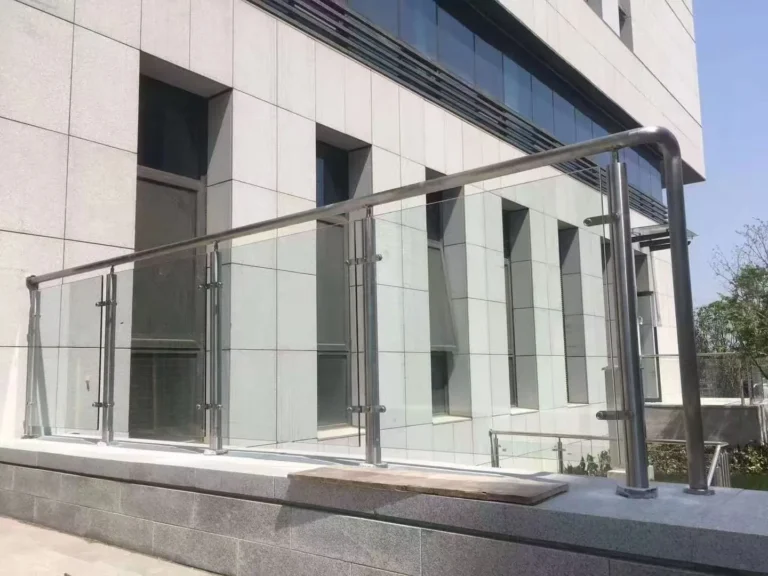
A railing post is viewed at close range and under changing light. Long vertical faces reveal grain changes, waviness, scratches and weld blending more easily than a small concealed bracket. Glass can reflect the post, while handrails, base covers and clamps place several finished parts side by side. A finish decision therefore affects visual consistency, cleaning, fabrication effort, inspection and packaging.
The worldstainless surface-treatment guide distinguishes common mill, brushed, satin, bright-polished and electropolished finishes. It also links ASTM and EN descriptions. These designations are valuable, but a finished railing assembly may include tube, plate, cast or machined components from different production routes. The project still needs an agreed appearance standard for the assembled product.
Brushed, satin, mirror and decorative finishes compared
| Finish family | Typical visual character | Where it can work well | What the RFQ must control |
|---|---|---|---|
| Brushed / directional | Visible linear grain and moderate reflectivity | Contemporary interior or exterior railings where a consistent direction is desired | Reference sample, grain direction, visible faces and weld-restoration standard |
| Satin / low-reflective polish | Softer appearance with less pronounced reflection | Projects seeking a quieter metallic surface | Approved sample, texture consistency and component-to-component match |
| Mirror / bright polish | Highly reflective surface with high image clarity | Feature interiors or designs that intentionally use reflection | Reflection quality, distortion expectations, handling protection and final inspection lighting |
| Bead-blasted or other non-directional texture | Diffuse, relatively uniform texture | Designs that need a non-directional visual effect | Blast media/process agreement, sample approval, cleanability review and contamination control |
| Decorative colour / PVD-style finish | Coloured metallic appearance over a prepared substrate | Statement stairs, hospitality and coordinated interiors | Substrate preparation, colour and gloss sample, batch consistency, visible faces and protection |
Names can be misleading across suppliers. For example, worldstainless describes No. 4 / 1J–2J as a general-purpose brushed or polished finish, No. 6 / 1K–2K as a softer satin finish, and No. 8 / 1P–2P as a bright mirror-polished finish. Those references describe finish families; they do not guarantee that two independently produced posts will look identical under project lighting.
Start with the environment and cleaning plan
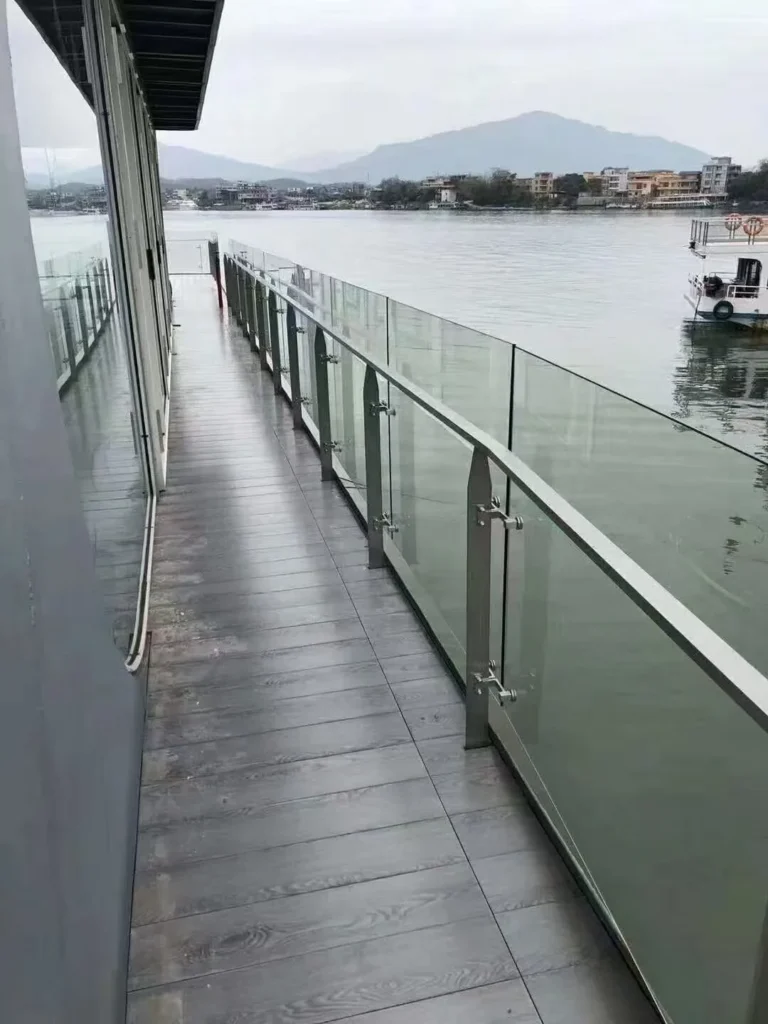
Before choosing gloss or grain, define whether the railing is indoors, outdoors, sheltered, coastal, close to a pool, exposed to de-icing salts, or near industrial contamination. Also define how often the surface can be reached and cleaned. The choice of stainless grade should be reviewed separately against that exposure; see the 304 vs 316L stainless steel post guide.
Surface condition influences how deposits are retained and how visible they become. A directional finish can disguise some handling marks but must be cleaned with attention to the grain. A bright finish can be easier to wipe visually clean in some applications, yet fingerprints and distortion may be more noticeable. A textured or decorative surface may hide light marks but can require a finish-specific cleaning method. Do not select a finish from a showroom image without considering real maintenance access.
Specify the finish as a controlled assembly
A post drawing should identify every visible face and the required grain direction. This matters at corners, stairs and transitions where two posts may be rotated relative to each other. The handrail, base cover, glass clamps and welded adapters should be reviewed as one visual assembly rather than as independent catalogue items.
For directional finishes, state whether the grain runs vertically on the post and longitudinally on the handrail. At a welded saddle or adapter, define how the surrounding finish should be restored and where a visual transition is acceptable. If the design uses mixed finishes, label each component clearly so production and site teams do not assume they should match.
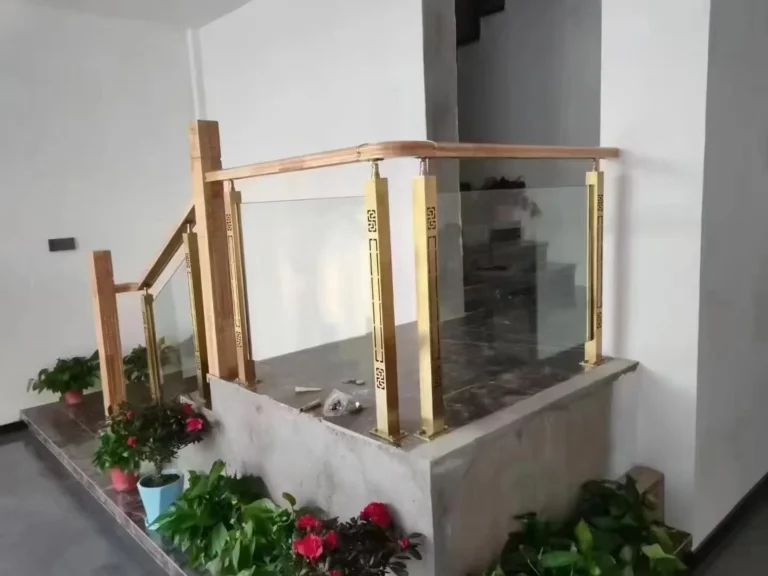
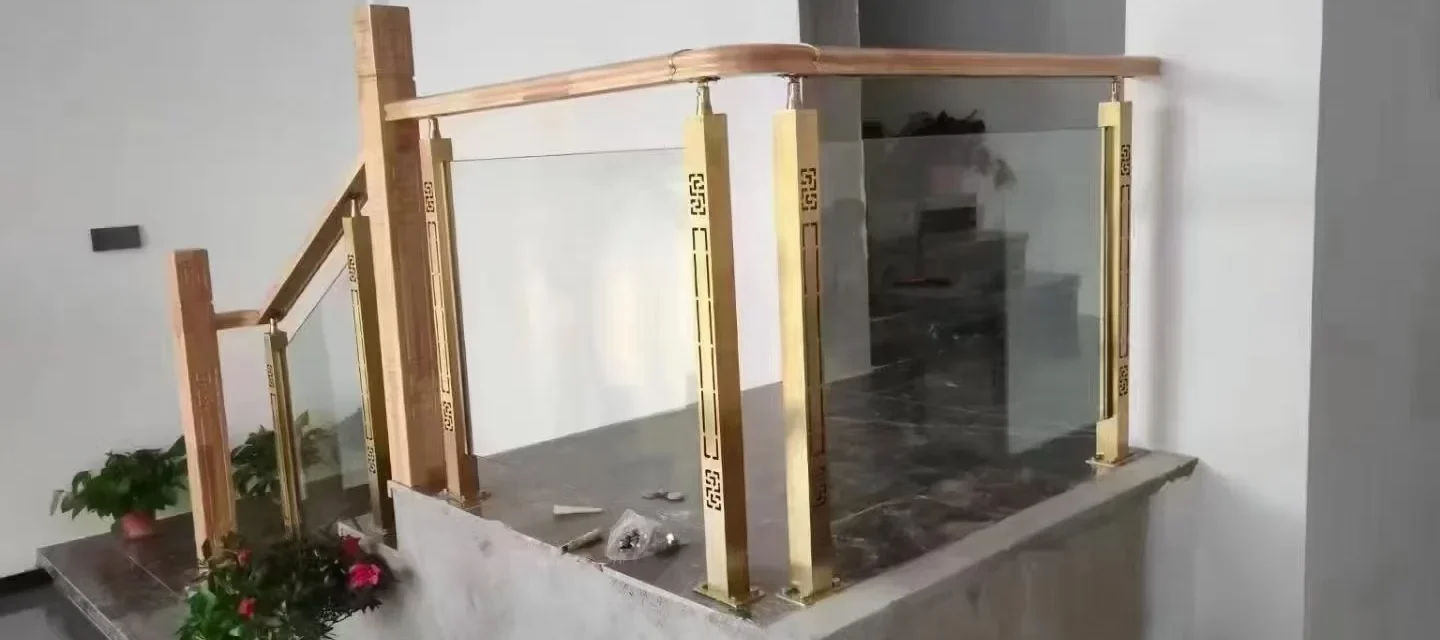
BalusterPost’s BP-GD01 gold decorative post and BP-BK01 black PVD square post illustrate coloured architectural directions. Product photography communicates the design idea, but colour, gloss and texture for an order should be approved from a physical sample tied to the substrate and production route.
Use a physical sample and a first article
An approved sample is the most practical common reference for buyer, designer, fabricator and inspector. Record a sample identifier, material, process description, date and approved visible face. Keep the physical sample protected; a photograph is useful for records but cannot reproduce gloss, texture or colour reliably across screens.
For a custom railing package, approve a first article that includes the difficult features: a representative weld, base transition, clamp or adapter, and the actual finish on the intended profile. Review it under lighting similar to the installation where practical. The first article should be linked to the current drawing revision. If geometry changes after approval, confirm whether the finish sample still represents the new fabrication route.
Define an inspection method before production
“Good finish” is not an auditable requirement. A useful inspection plan states what is examined, at what distance and lighting, against which approved sample, and which faces are critical. It may include checks for grain direction, obvious scratches, local over-polishing, colour consistency, weld blending, staining and protective-film condition.
Do not invent a roughness number simply because it appears objective. If surface roughness is functionally important, the responsible specification should define the parameter, measurement direction, instrument method and acceptance limit. The worldstainless architectural stainless steel resources emphasize that routine cleaning helps preserve appearance and corrosion performance; finish-specific requirements should still be agreed between purchaser and manufacturer.
Protect the finish after it is made
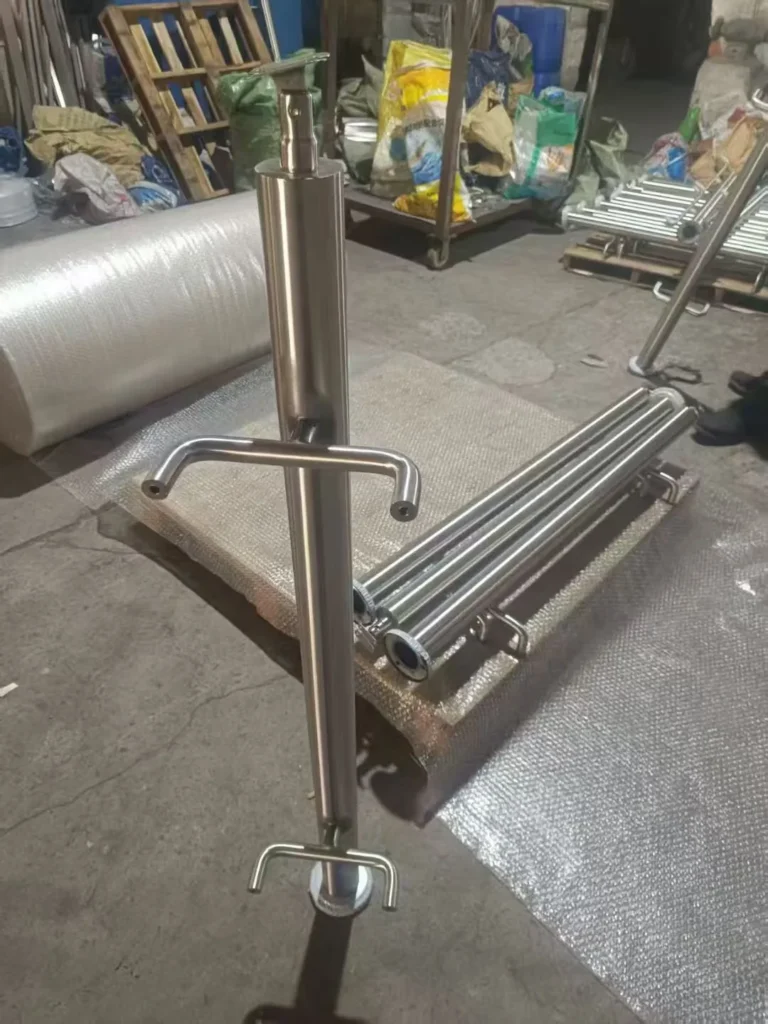
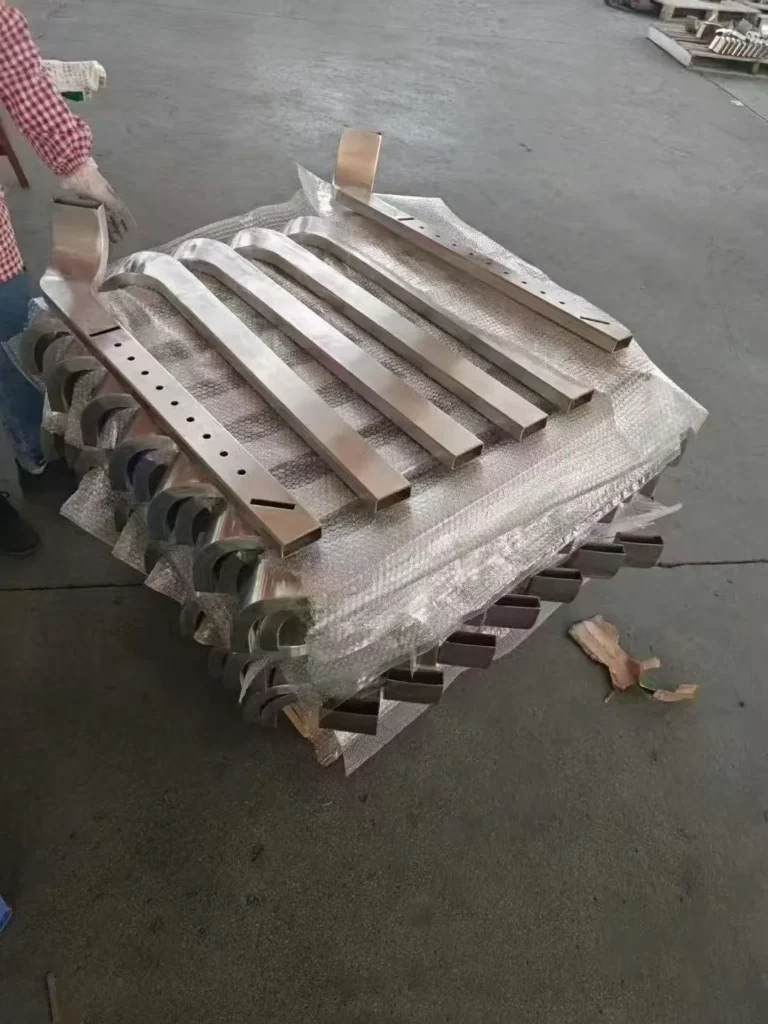
Many finish problems occur after polishing or coating. Posts can be damaged by metal-to-metal contact, dirty gloves, loose fittings, abrasive labels, moisture trapped in packaging or site grinding debris. Packing should separate finished faces, restrain projecting components and preserve part identification without placing aggressive adhesive on the primary visible surface.
Installation teams should keep carbon-steel grinding dust and unsuitable tools away from stainless surfaces. Protective film should be compatible with the finish and removed according to the agreed installation plan; leaving temporary protection exposed longer than intended can make removal difficult. Any site cleaning method should first be tested on a small inconspicuous area or an approved sample.
Cleaning and maintenance basics
Routine care should match the environment and finish. Start with the least aggressive method: clean water and a soft cloth, then a mild detergent when needed, followed by rinsing and drying. Work with the grain on directional finishes. Avoid carbon-steel wool, contaminated tools and cleaners containing chlorides unless a qualified finish supplier has specifically approved the method.
A maintenance plan should identify cleaning frequency by exposure, responsible party, approved products and how staining or damage is escalated. Stainless steel is corrosion resistant, not maintenance free. Regular removal of deposits helps preserve both appearance and the conditions that allow the passive surface to perform.
Finish information to include in an RFQ
- Stainless grade and product form for post, base, fittings and handrail
- Finish designation plus a plain-language visual description
- Approved physical sample identifier and acceptable component matching
- Visible faces and grain direction on every post type
- Required treatment around welds, edges, holes and machined areas
- Colour and gloss reference for decorative finishes
- First-article and production inspection method
- Protective film, separators, labels and packing sequence
- Site cleaning and maintenance constraints
Finish requirements also affect manufacturing scope and quotation comparisons. The custom railing post cost-driver guide explains why polishing, weld blending, samples, inspection and protective packing should be stated before suppliers price the work.
Frequently asked questions
Is brushed stainless steel the same as satin stainless steel?
Not necessarily. The terms are used differently in the market. Use the relevant finish designation, but also approve a physical sample and define grain direction and visible faces.
Is mirror finish always better for corrosion resistance?
No single appearance is automatically correct for every exposure. Grade, surface condition, fabrication quality, contamination control and maintenance all matter. Select the system for the real environment.
Can a photograph be used to approve a PVD colour?
A photograph can communicate intent, but screen colour and lighting are unreliable. Approve a physical sample linked to the specified substrate, preparation and production batch expectations.
What should a buyer send for a finish review?
Send the post schedule, drawings, material requirement, installation environment, finish reference, visible-face and grain-direction notes, and any inspection or packing requirements through the BalusterPost contact page.