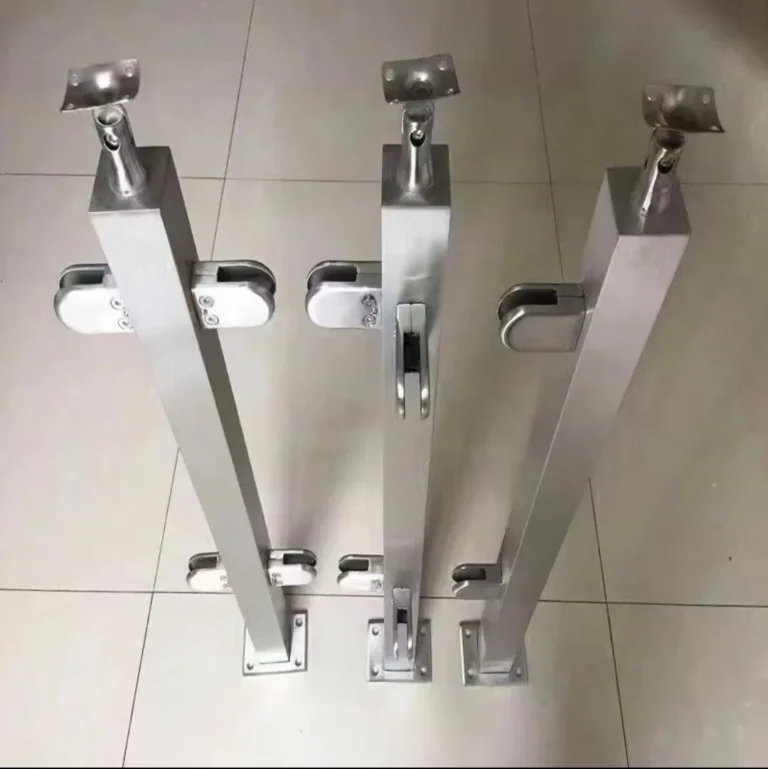
An EN 1090-1 certificate should not be accepted as automatic proof that a stainless steel railing post or balustrade may carry a CE mark. In March 2026, Poland’s construction regulator clarified that ordinary fall-protection balustrades generally do not perform the structural role addressed by that standard. Buyers must check the marketed product’s intended function, the applicable EU route and the destination country’s rules before requesting a declaration or marking.
What did the 2026 Polish clarification actually say?
On 17 March 2026, Poland’s General Office of Building Control (GUNB) published a regulatory interpretation concerning steel balustrades and PN-EN 1090. It considered a manufacturer with a notified-body factory-production-control certificate and asked whether that alone allowed steel balustrades to be placed on the market under EN 1090. GUNB’s answer was that ordinary balustrades intended to protect people from falling generally are not structural components of the building and cannot be CE marked on the basis of EN 1090-1. The regulator also explains the Polish national declaration and construction-marking route for products within the relevant national product group.
This is a Polish authority’s interpretation of a particular intended use and national market route. It is not a newly issued EU-wide prohibition on all CE marking of railing products, nor is it an assessment of any BalusterPost article or customer project. GUNB distinguishes guard-only balustrades from products that support the building structure. The purchasing lesson is to describe the intended structural function before asking for an EN 1090 certificate or rejecting one.
BalusterPost manufactures stainless steel baluster posts and railing posts, with business coordination in Taizhou, Jiangsu, China. It does not claim that its posts are EN 1090 certified, CE marked under that standard, or approved for a particular EU project. Glass clamps and other related accessories may be coordinated from qualified specialist manufacturing partners and need their own scope and evidence review.
Why is fall protection different from supporting the building?
A guard or balustrade is safety-critical for people, but that does not automatically make it a load-bearing component of the building’s primary structure. The Polish regulator explains the distinction through the role of the product: an ordinary railing prevents a fall, while a structural component supports the construction work or a part of it. The fact that a guard must resist specified forces does not by itself answer whether it supports the structure for the purpose of EN 1090-1.
The distinction has a practical limit. A product with a genuine structural role in the construction work may require a different assessment from an ordinary guard. Its intended use, design responsibility, harmonised technical specification and destination-market obligations must be established by the responsible project and compliance professionals. Buyers should not settle this from a photograph or from the word “stainless.” GUNB’s interpretation concerns steel balustrades in Poland; it should not be copied as a complete compliance decision for another EU member state.
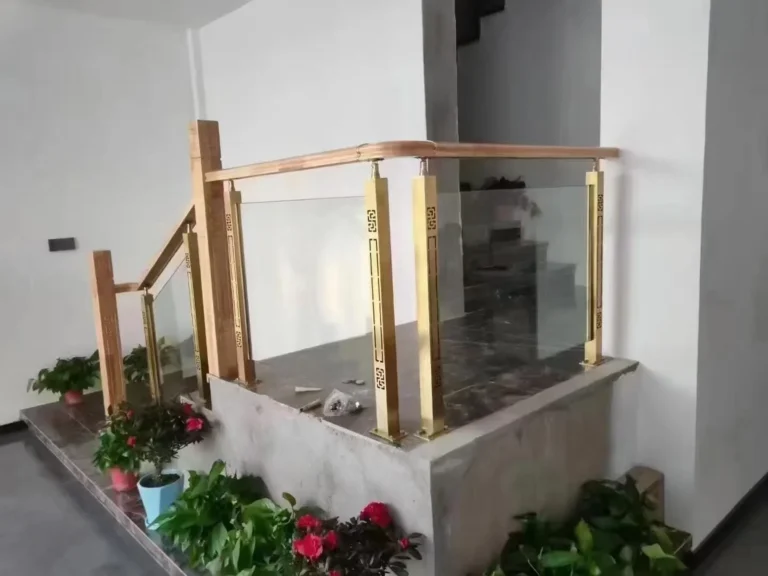
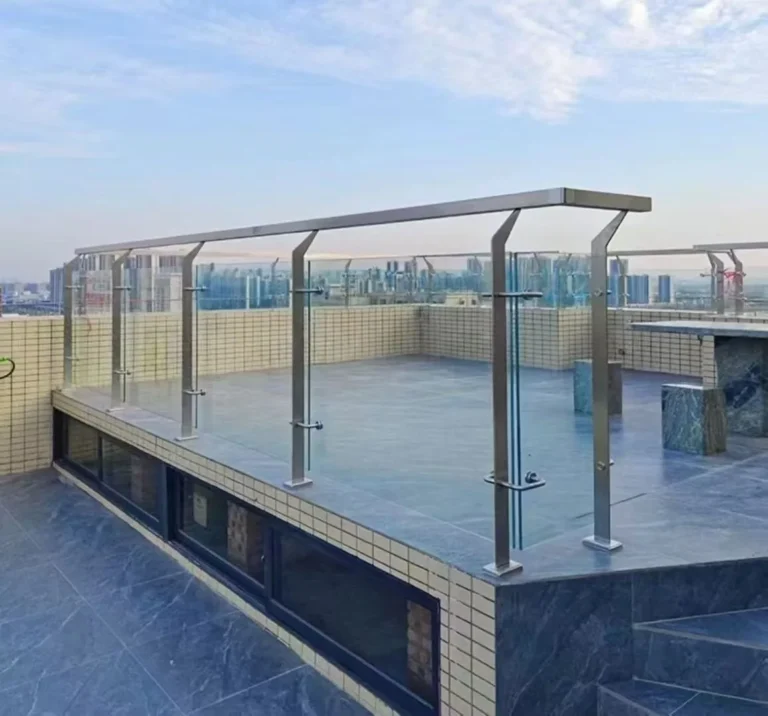
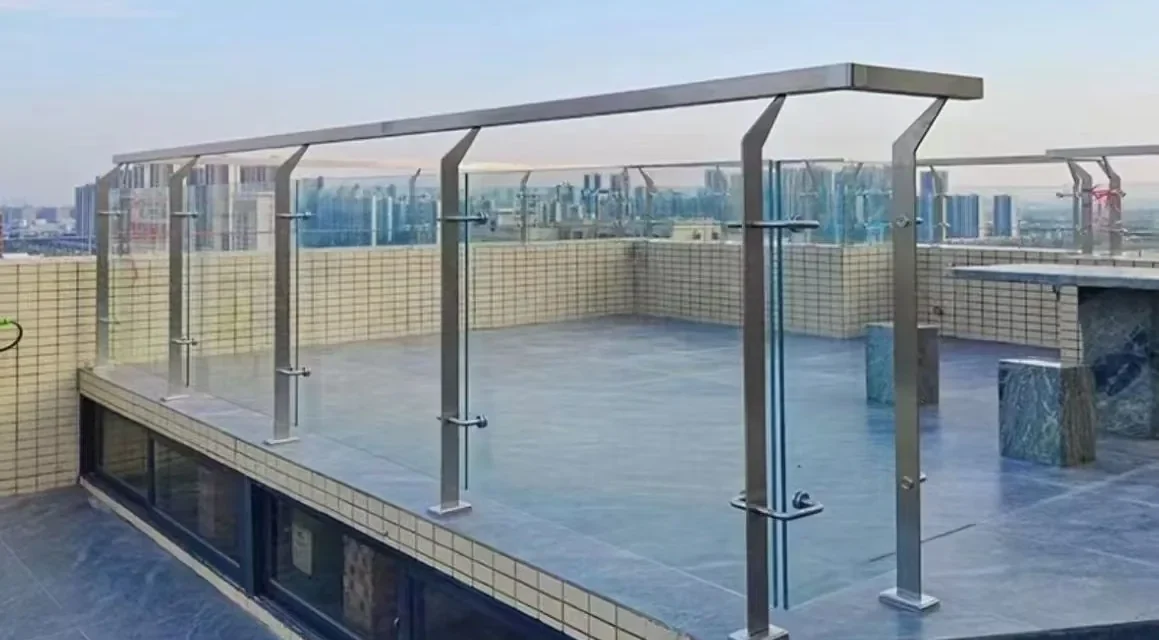
Our BP-BL01 balcony glass railing-post system illustrates a post-and-glass arrangement. The image shows a product configuration, not its regulatory classification, load rating, national approval or CE-marking route. An installed-looking photo is useful for discussing interfaces and finish, but it cannot define the legal intended use of a future order.
Does the new EU Construction Products Regulation change the answer automatically?
The European Commission’s Construction Products Regulation overview says Regulation (EU) 2024/3110 has applied in full since January 2026 while the old and new frameworks coexist during a product-family transition. It also says that a broad definition of “construction product” does not make all CPR obligations automatically applicable to every such item. The relevant harmonised standard or European assessment document and its Official Journal citation must be checked for the product and route in question.
Therefore, a buyer should not reason “2026 CPR exists, so every railing post now needs a CPR digital product passport, CE mark and EN 1090 declaration.” Nor should a buyer conclude that no documentation is needed because a typical guard is outside EN 1090-1. The EU framework and destination-country construction rules address different questions. The Commission notes that EU member states determine conditions for use and installation through their building rules. Ask the importer’s compliance adviser or the destination-country product contact point which market route and project requirements apply.
The previous CPR digital-product-passport readiness guide addresses data preparation without treating a passport as an immediate universal obligation. This article has the narrower purchasing question: whether a requested EN 1090-1 document is relevant to the intended railing product in the first place.
Which questions should an EU buyer ask before accepting an EN 1090 claim?
First, define what will be placed on the market: a loose stainless post, a post-and-fittings kit, or a complete balustrade package. Identify the intended use, destination country and party responsible for design. A certificate belonging to a factory is not automatically a declaration for the exact item on the purchase order. The buyer must be able to connect any claimed standard, document and product marking to a named product and intended function.
Second, ask whether the product actually performs a structural role in supporting the construction work, rather than only preventing a fall. Require the project designer or competent adviser to state the basis for that classification. If an EN 1090-1 route is proposed, request the specific product scope, the cited harmonised version and the applicable declaration and notified-body evidence. If that route does not apply, ask which national product rules, performance evidence and installation requirements do apply in the destination country. Do not simply replace a missing EN 1090 file with an unsupported “CE compliant” statement.
Third, separate material and fabrication evidence from regulatory status. A mill certificate can support the stated grade of tube or plate; an inspection record can show dimensions and finish against a drawing; neither document establishes the right to place a CE mark on a finished guard. The railing compliance document guide explains this wider chain of project law, design, standards, approved drawings and production evidence.
What should the RFQ and document register contain?
| Buyer question | Information to record | Decision owner |
|---|---|---|
| What is supplied? | Post, fittings, kit or complete railing; part marks and drawing revisions | Buyer and supplier |
| Where and how is it used? | Destination country, project type, guard function and any claimed structural role | Project designer and importer |
| Which market route applies? | Relevant harmonised specification or assessment route; national requirements where relevant | Importer or competent compliance adviser |
| Which evidence is offered? | Exact product scope of any declaration, certificate, test or marking; issuing body and revision | Supplier, checked by buyer |
| How will production be checked? | Approved drawing, material traceability, first article and batch inspection records | Manufacturer and designated approver |
Use the register to request an answer to each open question rather than to pre-fill a compliance claim. If a buyer sends a post drawing without the intended application or destination, a manufacturer may be able to price fabrication but cannot determine the whole installed railing’s legal or engineering approval from that drawing alone. If the buyer nominates partner-sourced fittings, list their identity and evidence separately from the stainless post.
For an ordinary fall-protection balustrade offered in Poland, GUNB’s 2026 interpretation points to national construction-product requirements for covered product groups. That national statement should be checked for the exact supply form and current Polish rules. For another EU destination, ask that country’s competent authority or adviser rather than importing the Polish marking answer into the quotation. For a potentially structural application, obtain a written intended-use and design decision before selecting any EN 1090-1 route.
How should a buyer handle a supplier’s certificate or a “CE ready” claim?
Ask for the document itself and read its scope, holder, issuing body, version and covered product family. Compare those entries with the offered post, kit or complete system. A factory production control certificate can be relevant to the process it covers, but a buyer should not infer from its existence that a guard-only balustrade falls within EN 1090-1. Conversely, the absence of that certificate does not waive the destination’s safety, performance or documentation requirements. Record the gap and obtain the correct route before shipment.
Do not put “CE mark required” in every stainless-post RFQ as a generic quality checkbox. It may invite irrelevant paperwork or an improper mark. A clearer request is: “Identify the applicable product and market route for the stated intended use and destination; provide the declaration, marking and supporting evidence required for that route, or explain why a particular standard is not applicable.” The buyer’s compliance adviser should review the response.
BalusterPost can manufacture posts to approved drawings and discuss material, finish and dimensional records within the agreed order scope. Send the intended-use brief and drawings to Ryan Liang, Export Manager. We do not claim that a supplier quotation replaces the importer’s legal review or the engineer’s assessment of the installed railing.
Frequently asked questions
Does an EN 1090 factory production control certificate prove that every railing post can be CE marked?
No. The standard’s scope and the marketed product’s intended structural function must be checked. Poland’s regulator explicitly cautioned against treating a certificate alone as authority for ordinary fall-protection balustrades.
Are ordinary balustrades exempt from safety requirements?
No. “Outside EN 1090-1 for this intended use” is not the same as “unregulated” or “safe without verification.” Applicable national product and building rules, project design and installation requirements still need review.
Can a Polish 2026 interpretation decide an order for another EU country?
It is useful evidence of the scope distinction, but it does not replace a destination-country compliance check. The EU CPR framework and national conditions for use must be considered for the actual product and market.