Short answer: no single certificate proves that a stainless steel railing system complies with every project requirement. The applicable law comes from the authority having jurisdiction; the project specification and engineering documents translate that law into a design; material and product standards control defined inputs; approved drawings control fabrication; and inspection records show what was supplied. Buyers should build a document chain instead of asking for a generic “compliance certificate.”
This 2026 update is written for buyers and specifiers of stainless steel baluster posts, glass railing posts and related hardware. It explains document roles without prescribing loads, heights, glass thicknesses, anchors or code sections. Those requirements vary by location, occupancy, geometry and adopted rules and must be confirmed by the responsible project professionals.
Why the word “compliant” causes procurement risk
“Code compliant,” “certified stainless steel” and “tested railing” sound reassuring, but each statement is incomplete without scope. Compliant with which code edition, adopted by which jurisdiction, including which amendments? Certified material for which component and grade? Tested as a complete system or only as a fitting, panel or anchor under specified conditions?
The International Code Council explains that its I-Codes are model codes and that an authority having jurisdiction adopts a code through law, often with amendments. Its code adoption resources show why a model-code edition on a website is not automatically the legally applicable edition for a project. The first compliance question should therefore be: what has the project jurisdiction actually adopted?
The five-layer railing document chain
| Layer | Primary purpose | Typical owner | What it does not prove alone |
|---|---|---|---|
| 1. Adopted law and code | Sets enforceable safety requirements in the jurisdiction | Authority having jurisdiction | The exact manufactured post matches the design |
| 2. Project design and specification | Defines project-specific performance, geometry and materials | Designer/engineer/specifier | Production followed the approved documents |
| 3. Material and product standards | Controls the stated scope for tube, plate, fasteners, glass or tests | Standards body and purchaser | Complete guard-system compliance outside that scope |
| 4. Approved manufacturing drawings | Translates design into post types, dimensions and interfaces | Fabricator with project approval | The delivered batch was inspected and accepted |
| 5. Production and inspection evidence | Links supplied items to drawings, materials and checks | Manufacturer/inspector | Suitability of the original engineering assumptions |
Layer 1: identify the adopted code and authority
Record the country, state or province, city, project type and approving authority. Ask the project designer to identify the adopted code edition, local amendments and any owner or insurer requirements. Do this before requesting a post supplier to quote “to IBC,” “to EN” or “to Australian code” without further detail.
Model codes change on publication cycles, while jurisdictions adopt them on different schedules. A project may also have accessibility, workplace, pool, glazing or heritage rules outside the main building code. The fabricator needs the resulting project requirements, not an instruction to search every possible regulation and choose one.
Layer 2: convert code requirements into a project design
The design team establishes the railing geometry, design actions, deflection criteria, post spacing, glass configuration, support structure and anchor strategy. Those decisions depend on the actual installation. A catalogue post image cannot show slab strength, edge distance, waterproofing, occupancy or the effect of corners and stairs.
The post RFQ should state the project-controlled inputs while keeping design responsibility clear. The OEM railing post RFQ checklist provides a field-by-field format for material, geometry, interfaces, tolerances, evidence and packing. If a supplier proposes an alternative, require a documented deviation for review rather than treating silence as approval.
Layer 3: use standards only for their actual scope
A standard can define a material, tube, fastener, glass product, test method, fabrication process or complete system test. These are not interchangeable. A material certificate can support alloy identity, but it does not prove the post spacing, anchor capacity or installed guard height. Likewise, a test report for one configuration should not be assumed to cover different posts, fasteners, glass, spans or substrates.
As of September 2026, the official ASTM steel standards index lists A554-26 for welded stainless steel mechanical tubing and A1134/A1134M-26 for cold-formed welded stainless steel structural tubing. Their coexistence reinforces the need to select a standard by intended scope, not by familiarity. For a focused comparison, see ASTM A1134 vs A554 for railing tubes.
When a standard is specified, record the full designation, edition and required options. Do not assume every clause, supplementary requirement or inspection document is included by default. The purchase order should make the required deliverables explicit.
Layer 4: approved drawings control custom posts
The manufacturing drawing should identify each post type, material, profile, wall or section thickness, finished height, base condition, hole pattern, glass fitting, handrail interface, finish and critical tolerance. It should also show the datum for dimensions and the revision used for production.
End, middle, corner and stair posts may look similar but differ in handed clamps, adapter centres or saddle angles. A position schedule links the drawing to quantities and installation zones. The railing post mounting guide explains why top, fascia and core conditions require different interface information.
Approval status matters as much as the drawing itself. “For information,” “for review” and “approved for production” should not be treated as equivalent. Record the approver and date, retain superseded revisions, and issue changes through a controlled process that identifies affected quantities.
Layer 5: evidence must connect to the supplied item
Useful evidence has an identity link. A material record should connect to a batch or item as required by the project. A dimensional report should name the post type and drawing revision. A finish approval should reference the physical sample. Photographs should show an item or batch label, not only an anonymous factory scene.
Evidence should be planned before production. If batch traceability, first-article inspection or witnessed testing is required, define the hold point and acceptance route in the purchase order. Asking for traceability after parts have been mixed, finished and packed may be too late.
The railing hardware procurement documentation guide describes a lean document set for drawings, materials, finishes, inspection and packing. The goal is not maximum paperwork; it is enough controlled evidence to address the actual project risks.
What a certificate can and cannot demonstrate
| Document | Potentially useful evidence | Required scope check |
|---|---|---|
| Material certificate | Material description and reported test information | Does it link to the correct component or batch? |
| Supplier declaration | Supplier’s stated conformity to listed requirements | Which exact requirements, items and limitations are included? |
| Test report | Results for a defined specimen and method | Does the tested configuration match the proposed system? |
| Inspection report | Recorded checks against drawings or criteria | Who inspected, what sample, what revision and what method? |
| Approved drawing | Accepted fabrication geometry and interfaces | Was the delivered post made and checked to that revision? |
Do not confuse component evidence with system approval
A railing includes posts, bases, anchors, fittings, glass or other infill, handrail connections and the supporting structure. Evidence for one component does not automatically transfer to the whole assembly. Changing the post spacing, base plate, anchor, substrate, glass or handrail can change the system behaviour.
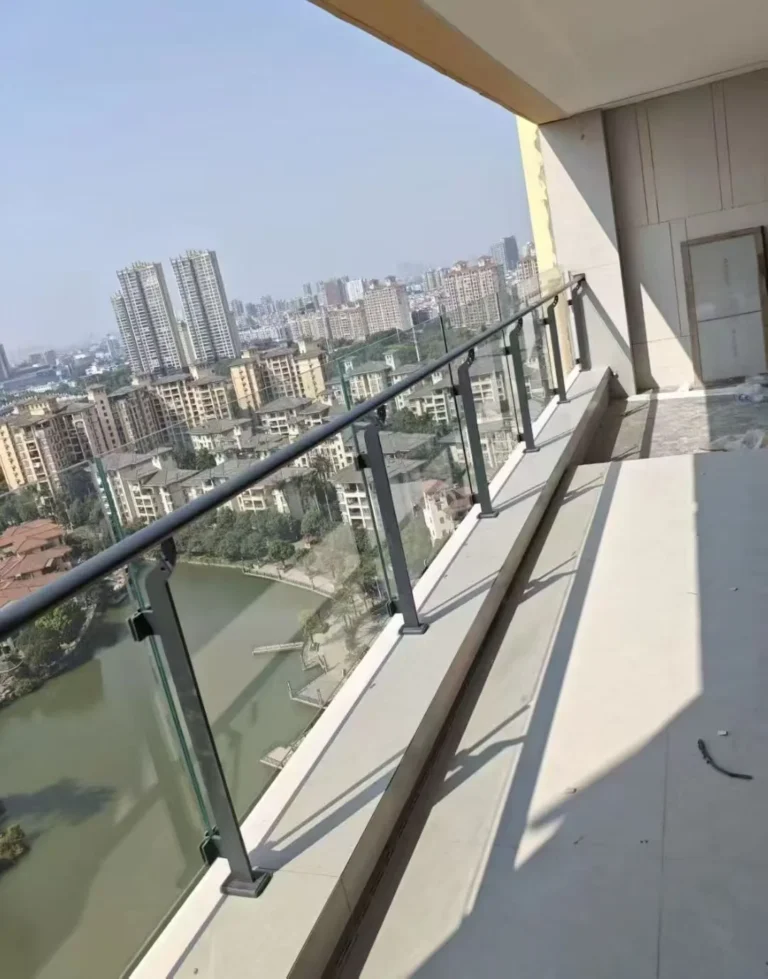
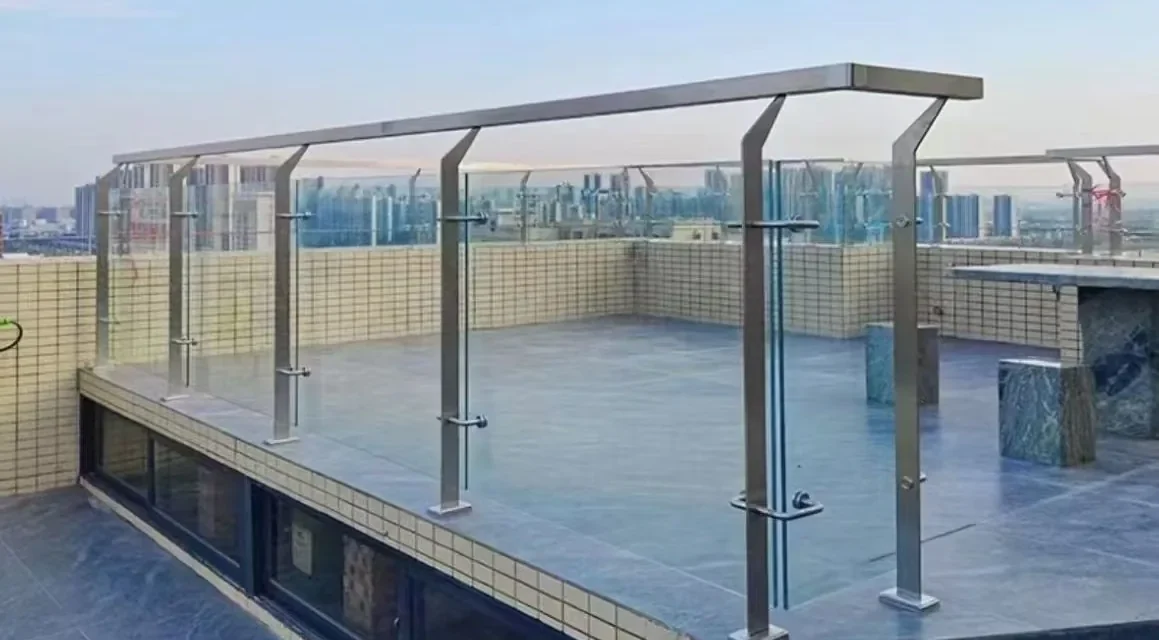
BalusterPost’s BP-BL01 balcony glass post system illustrates an installed post, glass and handrail arrangement. The photograph is useful for understanding configuration, but it is not evidence that the same arrangement is suitable for another site. Project dimensions and interfaces should be reviewed from approved drawings.
A practical compliance matrix for buyers
Create one row for every requirement and five columns: source, requirement, responsible party, evidence and approval status. For example, the design engineer may source a mounting requirement from the structural design; the fabricator responds with an approved base drawing; inspection evidence records the critical dimensions; and the project reviewer closes the item.
Use exact references rather than vague notes. “Material: 316L per approved specification; evidence: named record linked to batch” is more useful than “marine grade certificate.” “Post base per drawing R3; building-side anchor by project engineer” is clearer than “heavy-duty base.” Avoid performance adjectives that have no acceptance method.
Questions to resolve before purchase order
- Which authority, adopted code edition and amendments govern the project?
- Who owns the system design, glass design, anchor design and supporting structure?
- Which material or product standards apply to each component, and which editions?
- Which post drawings are approved for production?
- Which dimensions and interfaces are critical, and how will they be inspected?
- Which certificate, declaration, test or inspection records are contract deliverables?
- How does each record connect to the supplied batch, post type and drawing revision?
- What changes require design review or a new test/assessment?
For a custom post review, send the project specification, post schedule, controlled drawings and required evidence list through the BalusterPost contact page. The project team should retain responsibility for local-code interpretation and final system approval.
Frequently asked questions
Does a material certificate make a railing code compliant?
No. It can support material identity within its stated scope. System compliance also depends on design, geometry, connections, anchors, glass or infill, installation and the adopted project requirements.
Is the latest model code automatically the project code?
No. A model code becomes enforceable through adoption by the relevant authority, which may select an edition and add amendments. Confirm the project jurisdiction’s actual requirements.
Can a test report cover a modified railing configuration?
Only a qualified reviewer can determine whether the report’s scope covers the proposed changes. Compare the tested specimen, materials, dimensions, connections, supports and loading method before relying on it.
What is the best way to organize compliance documents?
Use a requirement matrix that links each project requirement to its source, responsible party, controlled drawing or product specification, evidence and approval status.