
Short answer: EU construction-product rules now provide a legal framework for Digital Product Passports, but buyers should not assume that every stainless steel railing post already needs one. In September 2026, the practical step is to prepare controlled product data while confirming the post’s regulatory route, the applicable technical specification and the future product-specific DPP rules.
What changed under the new EU Construction Products Regulation?
Regulation (EU) 2024/3110, the revised Construction Products Regulation (CPR), entered into force on 7 January 2025. It creates the legal basis for a construction Digital Product Passport (DPP) system and requires the European Commission to establish that system through delegated acts.
This distinction matters. The regulation establishes the framework, but the detailed DPP requirements still depend on implementing steps, including the rules for the construction-product system and the requirements applicable to particular product families. A statement such as “all railing posts must carry an EU DPP now” is therefore too broad.
Does the CPR apply to every stainless steel railing post?
Not automatically from the product name alone. CPR scope depends on whether the item is placed on the EU market as a construction product, its intended use, and the route created by an applicable harmonised technical specification or European Assessment Document. A component sold for incorporation into a permanent railing system may raise CPR questions, but the exact route must be checked for the actual product and market claim.
Buyers should ask the manufacturer, importer and project compliance adviser to identify the applicable specification before requesting a Declaration of Performance and Conformity, CE marking or DPP. The railing compliance document guide explains why project codes, product conformity and supplier quality evidence should not be merged into one unsupported certificate request.
When will a construction-product DPP become mandatory?
The answer is product-specific and still developing. Article 75 of Regulation (EU) 2024/3110 says the Commission shall adopt delegated acts to establish the construction DPP system. The Commission’s current Digital Product Passport implementation timeline shows the DPP registry becoming operational on 20 July 2026 and indicates a delegated act for construction-product DPP requirements in the second quarter of 2027.
That roadmap is useful for planning, but it is not a universal compliance date for every railing post. Procurement teams must monitor the adopted delegated act, relevant standards and any product-family measures rather than treating a roadmap milestone as a finished product rule.
| Status in September 2026 | What it means for a railing-post buyer |
|---|---|
| Confirmed: revised CPR is in force | The DPP framework exists in EU law and suppliers should prepare for structured digital information. |
| Confirmed: Article 75 requires delegated acts | Detailed system requirements do not come from a supplier’s QR-code design or private declaration. |
| Confirmed: EU DPP registry is operational | The shared infrastructure is advancing, but registry availability alone does not settle a product’s obligation. |
| Still to confirm: construction DPP delegated act | Check the final rules, service-provider requirements and effective dates after adoption. |
| Still to confirm: product-specific route | Identify the applicable harmonised specification, assessment route and product-family requirements. |
What information can a construction DPP contain?
Article 76 of the revised CPR says a DPP can include the Declaration of Performance and Conformity, product information, instructions for use, safety information, technical documentation, labels, unique identifiers and other documentation required by EU law. Access must follow defined rights, and the information must be accurate, complete and up to date.
For a drawing-based stainless steel railing post, this points to a controlled data set rather than a marketing page. A buyer should be able to connect the digital identity to a product type, drawing revision, material and finish specification, intended use, responsible economic operator and the relevant evidence. Project-specific engineering and installation decisions remain separate.
Is a DPP the same as CE marking, an EPD or a QR code?
No. These items can interact, but they serve different purposes.
| Item | Primary purpose | What it does not prove by itself |
|---|---|---|
| Construction DPP | Provides structured, controlled digital access to required product information | It does not automatically prove structural suitability for a project. |
| CE marking and DoPC | Communicate conformity and declared performance where the applicable CPR route requires them | They are not a complete project design approval. |
| EPD | Reports verified environmental information within a stated programme and scope | It is not a universal legal passport or product safety certificate. |
| BIM object | Supports digital design and asset information workflows | It does not replace regulated conformity documents. |
| QR code | Acts as one possible data carrier or link | A code alone is not a compliant DPP. |
The stainless steel railing post EPD guide shows how environmental declarations should be checked for product coverage and validity. A DPP may make relevant documents easier to retrieve, but it does not turn unrelated or expired evidence into valid evidence.
What data should buyers ask suppliers to organise now?
A practical readiness file should start with information already needed for disciplined purchasing. Do not demand a fictional “DPP certificate.” Ask for controlled fields, their source and the party responsible for keeping them current.
- Product identity: buyer and supplier part numbers, product type, drawing number and revision.
- Intended use: how the post is placed on the market and the application represented in product documents.
- Economic operators: manufacturer identity and, where applicable, importer or authorised representative information.
- Technical definition: post geometry, mounting method, grade, finish, fittings and agreed tolerances.
- Applicable conformity route: the harmonised specification, EAD or other documented basis confirmed for the product.
- Evidence set: DoPC, CE information, instructions, safety information and technical documents where applicable.
- Environmental information: only verified or traceable data with its scope, date, programme and source stated.
- Version control: who approves a change and how old revisions remain traceable.
- Digital access: persistent identifier, data-carrier link, access permissions and exportable machine-readable fields.
- Retention and correction: responsibility for availability, updates, error correction and backups.
For custom posts, drawing control is especially important because similar-looking variants may have different base plates, hole patterns, saddle angles or glass-fixing interfaces. The drawing and tolerance guide explains how to separate controlled dimensions from reference information before production.
How should product variants be handled?
A DPP data plan needs a clear product-type strategy. If one identifier covers several variants, the shared and variable fields must be explicit. If a change affects declared performance, intended use or required documentation, it may need more than a quiet update to a web page.
During RFQ review, record which options define a new commercial variant and which may affect the regulatory identity. Examples include top versus fascia mounting, square versus flat-bar construction, 304 versus 316L material, base-plate geometry and attachment configuration. The final classification should follow the applicable DPP rules and conformity route, not a convenient catalogue structure.
What should an importer ask about the digital system?
The revised CPR expects an interoperable, machine-readable and secure system with controlled access. Procurement should therefore review data governance as well as document content.
- Who owns the identifier and what happens if the service provider closes?
- Can required data be exported without a proprietary subscription?
- Does the link remain stable when a drawing or document is revised?
- Can public, customer-only and authority-only information have different access rights?
- Are corrections logged without silently erasing the prior record?
- Can the buyer connect delivered units or batches to the correct product type?
A visually attractive QR landing page may fail these tests. Buyers should avoid vendor lock-in and should not scan untrusted links as proof that the underlying information is authentic or compliant.
What belongs in a railing-post RFQ?
Add a digital-information schedule to the ordinary technical RFQ. State the target market, intended use, applicable conformity route if known, required identifiers, documents, data format, language, access rights and update responsibility. Mark unresolved legal fields as “to be confirmed” instead of forcing the supplier to guess.
The OEM railing post RFQ checklist covers drawings, material, finish, interfaces, inspection and packing. A DPP workstream should reference that controlled product definition; it should not replace it.
How BalusterPost can support data readiness
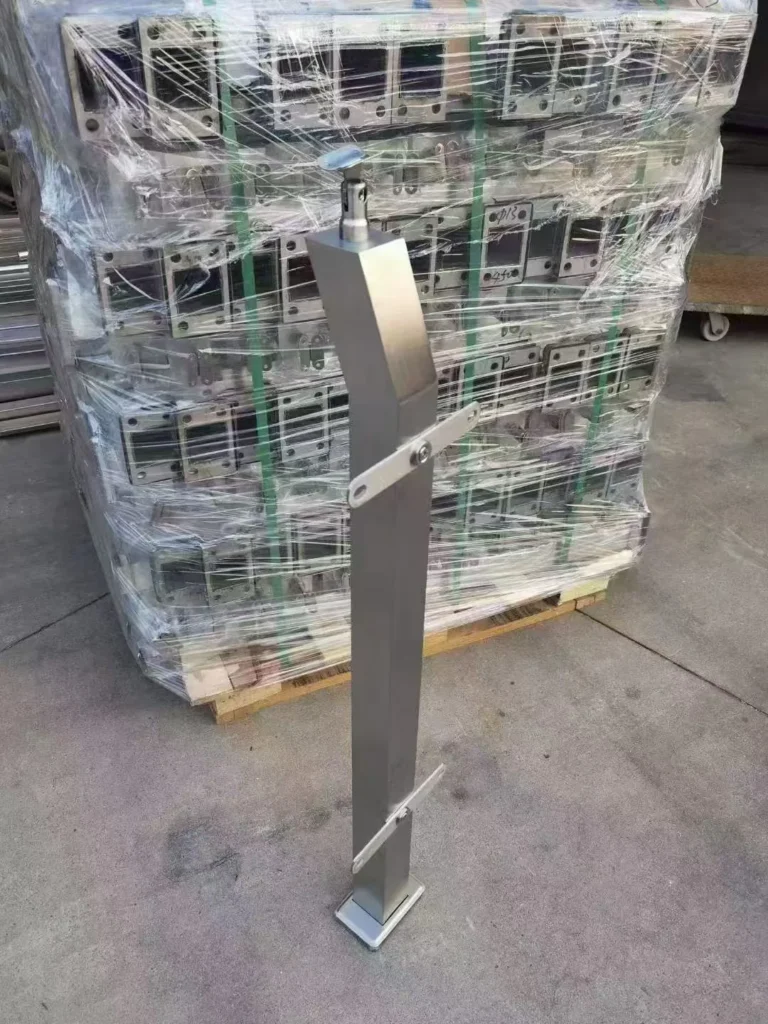
BalusterPost focuses on drawing-based stainless steel baluster posts and stainless steel railing posts, with business coordination from Taizhou, Jiangsu, China. We can organise agreed product identity, drawing revision, material, finish, configuration and inspection records available for an order.
We do not label a post “DPP compliant” before the applicable EU rules, product route and evidence requirements are confirmed. Related glass clamps, fasteners or other accessories may come from qualified specialist manufacturing resources, so their manufacturer identity and document path should remain explicit rather than being presented as BalusterPost manufacturing evidence.
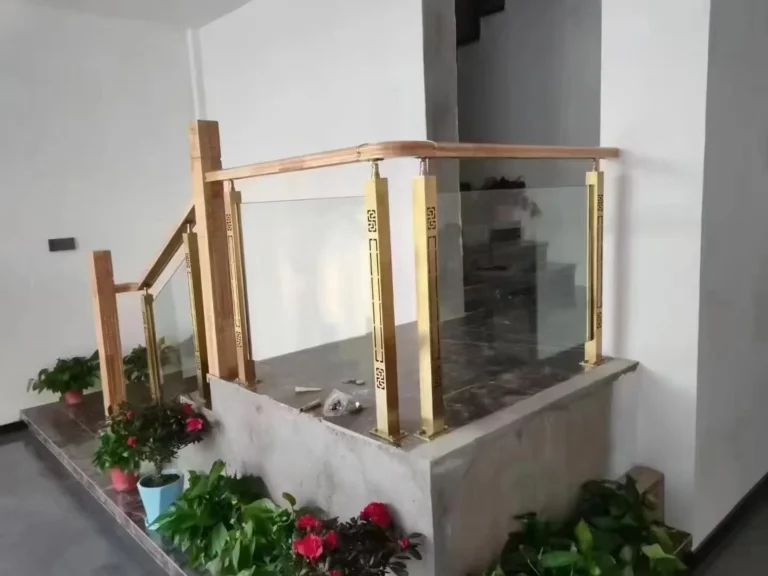
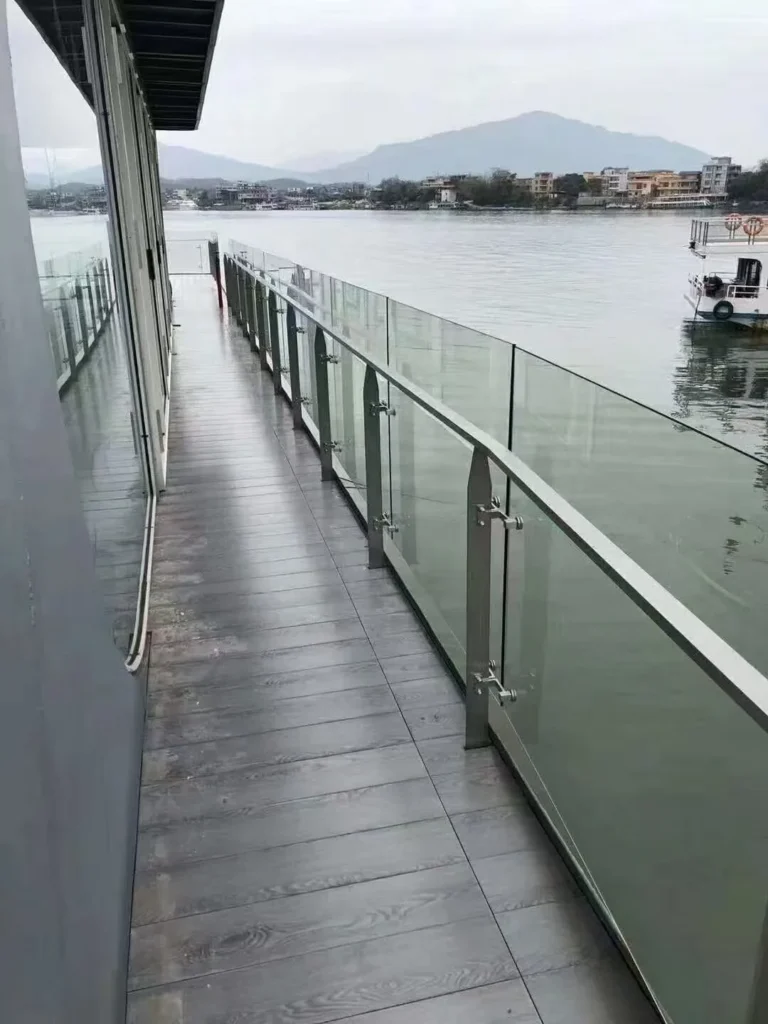
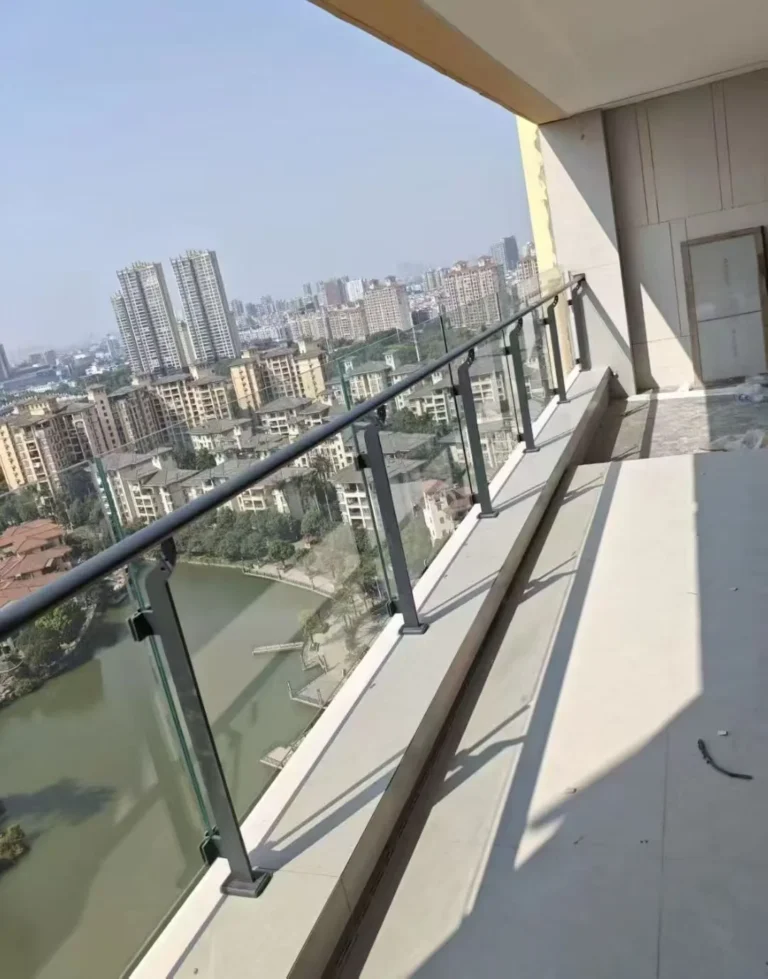
Review a representative square-tube glass balustrade post, then contact Ryan Liang, Export Manager, with your drawing, target market and proposed CPR/DPP data schedule.
Frequently asked questions
Do stainless steel railing posts need a Digital Product Passport in September 2026?
There is no sound basis for a universal yes. Confirm whether the post is within CPR scope, its applicable technical route and the requirements and effective date created by the relevant delegated acts.
Can we create a QR code now?
Yes, a supplier can use a QR code for controlled product information, but it should not be advertised as an EU-compliant DPP unless the applicable requirements are met. Plan for durable links, revision control and data export.
Will a DPP replace the Declaration of Performance and Conformity?
No. The CPR allows the DPP to contain the declaration. Digital delivery changes access to the document; it does not remove the underlying conformity obligation where that obligation applies.
Does a DPP approve the railing design?
No. Structural design, loads, fixing substrate, post spacing, glass specification and local building-code approval remain project responsibilities.
Should every custom drawing receive a new passport?
That cannot be decided by a universal rule today. The manufacturer and importer should define product types and variants according to the final DPP rules and the applicable conformity route.
What is the best action for buyers now?
Confirm the product’s regulatory route, clean up identifiers and revisions, map each required field to reliable evidence, and monitor the Commission’s adopted construction DPP rules. Prepared data is useful even when the final obligation date is still pending.