For a U.S. Federal-aid highway project, do not treat a stainless steel railing post as Buy America-compliant merely because its material grade, welds or dimensions meet the drawing. First confirm that the project is covered, classify the item as delivered to the work site, and obtain origin evidence for the applicable rule. FHWA’s October 1, 2026 manufactured-product phase-in adds a component-cost test, but it does not replace the separate iron-and-steel requirements.
What changed for projects obligated from October 1, 2026?
The Federal Highway Administration (FHWA) ended its former general waiver for manufactured products through a rule effective March 20, 2025. For Federal-aid highway projects obligated on or after October 1, 2025, covered manufactured products permanently incorporated into the project must be manufactured in the United States. For projects obligated on or after October 1, 2026, they must also meet a domestic-component-cost test: the cost of components mined, produced or manufactured in the United States must be greater than 55% of the total component cost. These are FHWA’s stated phase-in dates, not dates for every U.S. railing project. See its Manufactured Products Final Rule Q&A, updated January 5, 2026.
This update matters to buyers of railing assemblies because a post, its fittings and a delivered kit may not all be classified in the same way. The 55% rule is not a general permission to use a foreign-made stainless post. FHWA says its existing iron-and-steel requirements generally continue, with the new rule defining which category applies to an item. Classification is made from the product’s status when it is brought to the work site for incorporation. A project’s recipient and contract authority must decide the actual classification; a supplier’s marketing description cannot settle it.
Does Buy America cover every U.S. stainless railing project?
No. This article concerns FHWA Federal-aid highway projects and the rules that apply to permanently incorporated products under that program. A privately funded balcony, a local project without the relevant Federal assistance, and a different agency’s grant can follow different procurement terms. Also, “Buy America” for Federal assistance is not the same as the federal government’s “Buy American Act” for direct procurement; the Made in America Office explains that distinction.
Before requesting a price, ask the project owner or contract administrator for the funding program, contract Buy America clause, obligation date and State DOT requirements. FHWA notes that recipients may set domestic-content contract provisions at least as restrictive as the federal requirements. Never infer exemption merely because the post will be paid from a non-federal line of the project budget; FHWA’s Federal-aid Q&A, updated January 5, 2026, says permanently incorporated covered products can remain subject to Buy America regardless of which project funding source pays for them.
Is a railing post an iron-and-steel product or a manufactured product?
That is a project-specific classification question, not a choice the exporter can make for convenience. FHWA’s current rule Q&A directs recipients to the definitions in 23 CFR 635.410 and to the item’s condition when it reaches the work site. It explains that a product whose iron-and-steel components cost more than half of all its components is classified as an iron-or-steel product, while other assembled products may be manufactured products. It also discusses kits delivered as separate parts for on-site assembly.
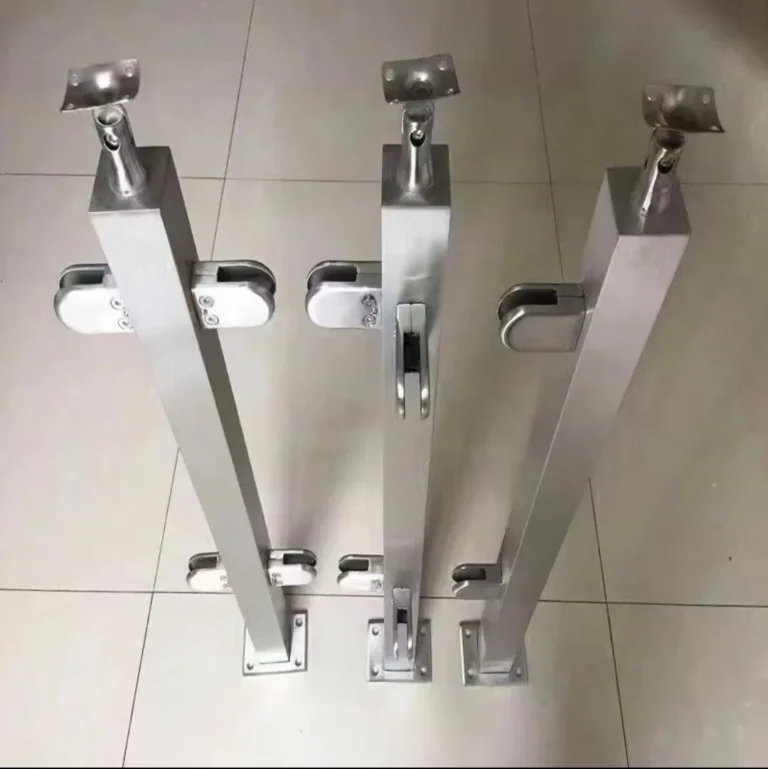
A stainless post body, a post with glass clamps fitted in the factory, and a separately delivered multi-material railing kit need not yield identical classifications. Do not take this as a ruling on any particular BalusterPost item. The buyer should provide a bill of materials, cost and origin information at the level required by the recipient, together with the contract clause, and obtain the recipient’s classification before quoting compliance. Our railing-post BOM checklist helps separate the post body, specialist-sourced fittings and site-supplied anchors so the reviewer can see what is actually being delivered.
| Procurement question | Evidence to request | Decision owner |
|---|---|---|
| Is this a covered Federal-aid highway project? | Funding program, contract clause, obligation date and permanent-use scope | Recipient or project contract administrator |
| What is the article as delivered? | Approved post/assembly drawing, BOM, packing configuration and component description | Recipient applying FHWA classification rules |
| Where did manufacturing occur? | Mill and fabrication process locations, purchase records and supplier declarations matched to the actual item | Supplier provides facts; recipient determines compliance |
| If classified as manufactured, does the 2026 phase apply? | Obligation date, U.S. final-manufacturing evidence and component-cost evidence | Recipient under applicable contract |
| Is an exception documented? | Applicable approved waiver or other contract-recognized basis, not a sales promise | Authorized public agency |
Can final assembly or repackaging in the United States solve the problem?
Not by itself. FHWA’s manufactured-product Q&A says imported goods do not become U.S.-manufactured merely by being labelled, packaged, painted without a qualifying change, or disassembled and reassembled to the original product in the United States. The final manufacturing step must satisfy the actual regulatory definition. For iron-or-steel products, a different domestic-process rule applies. A contractor should not promise compliance based only on a U.S. warehouse address, local distributor invoice or country-of-shipment field.
This is particularly important for BalusterPost, whose core manufactured product is the stainless steel baluster post and whose business coordination is based in Taizhou, Jiangsu, China. A post fabricated in China should be described truthfully as such. BalusterPost does not claim that these posts are U.S.-manufactured or that they qualify for FHWA Buy America projects. Qualified specialist manufacturing partners may provide coordinated fittings, but their sourcing does not alter the origin of the post. Where a buyer’s contract demands domestic content, eligibility must be established by the authorized project parties before an offer is accepted.
What records should a buyer collect before making a compliance claim?
Ask for the contract requirement first, then collect records that trace the actual purchased variant. A grade certificate can establish a material identity claim only to the extent shown on the document; it does not, by itself, prove that every manufacturing process occurred in the United States. Likewise, a finished-post inspection report proves measured characteristics, not domestic origin. Our material-verification guide explains the different jobs of mill certificates, PMI and batch traceability.
For each distinct post or kit, maintain an approved drawing revision, a line-item BOM, supplier and manufacturing locations, applicable mill or component traceability, a description of processing stages, and the recipient’s documented category decision. If the item is classified as a manufactured product under the October 2026 phase, component-cost evidence may be necessary. That cost analysis is separate from an ordinary selling-price breakdown and must use the rule’s component definition. Do not create a percentage estimate from a sales invoice alone.
If the post is an iron-or-steel product, consult the recipient’s FHWA steel process and certification requirements instead of applying the manufactured-product 55% test. FHWA’s Federal-aid Q&A explains that manufacturing of iron-or-steel products generally must occur domestically and that domestic fabrication of foreign steel does not simply turn the original material into compliant domestic steel. Exact record format and approval path should follow the contract and recipient instructions.
What if an imported post is specified on the drawing?
A drawing approval is not a Buy America waiver. If the project is covered and the item does not meet the applicable domestic-content rule, the buyer should not describe it as compliant or install it first and seek approval later. FHWA explains that the recipient administering the Federal-aid project may request a project-specific waiver, subject to the agency’s process and supporting evidence. A supplier can provide factual origin, configuration and availability information, but it cannot grant or assume a waiver. The FHWA waiver page is the appropriate starting point for the current process.
There may be project-specific exceptions or thresholds, but their availability and calculation are not safe to infer from a catalogue price. Do not structure a quotation around a hoped-for waiver or divide an order to make a foreign item appear exempt. The recipient should confirm any applicable exception in writing before procurement. Otherwise, the correct commercial response may be to exclude the item from a covered scope and source a qualifying domestic alternative.
A five-question RFQ screen for U.S. buyers
- Is the railing a permanent part of an FHWA Federal-aid project, and what is the project obligation date?
- Which contract clause and State DOT specification govern the post, handrail, fittings and anchors?
- What exact product or kit is delivered to the work site, and who has classified it under the FHWA definitions?
- What origin and manufacturing-process evidence can each supplier truthfully provide for the specified variant?
- If a product is not compliant, has the authorized recipient documented a valid exception or changed the sourcing plan?
For projects without a domestic-content restriction, a buyer can still use ordinary technical and commercial criteria: project drawings, corrosion exposure, material grade, finish, sample approval and inspection plan. See the FG1 stainless post product page for a core post example and our document-chain guide for the distinction between law, design, product standard and supplier evidence. To discuss a drawing-based post enquiry, use the contact page; Ryan Liang is Export Manager. We will not turn a non-domestic product into a domestic-compliance claim.
FAQ
Does the October 2026 55% test apply to every stainless steel post?
No. It is part of FHWA’s phase-in for products classified as manufactured products in covered Federal-aid highway projects obligated on or after October 1, 2026. Iron-or-steel products follow their own requirements. Classification and project applicability must be confirmed first.
Can a Chinese-made post be called U.S.-manufactured after a U.S. distributor receives it?
No. Distribution, relabelling or ordinary repackaging does not change where it was manufactured. The recipient must evaluate the actual processes and product category under the contract rules.
Does a mill test certificate prove Buy America compliance?
No. It can support grade and traceability claims within its scope. Domestic-content compliance requires the applicable manufacturing and origin evidence, and possibly component-cost evidence, matched to the delivered product.
Who decides whether a waiver applies?
The authorized recipient and FHWA process, not the supplier. A project-specific waiver cannot be assumed from a similar project or from a foreign supplier’s quotation.