
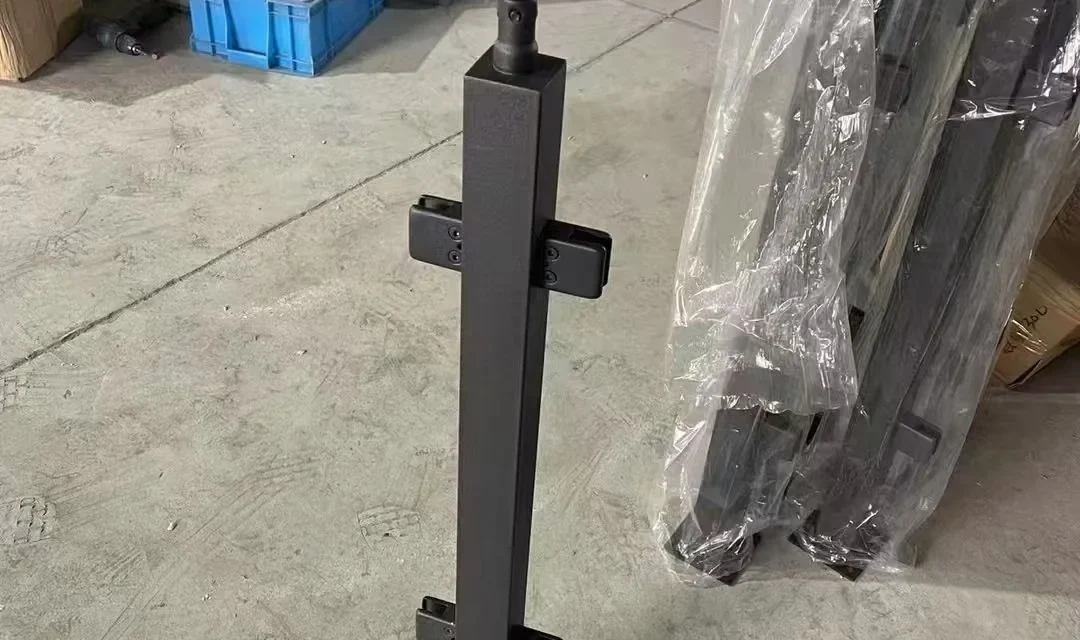
Specify black stainless steel railing posts by the approved post drawing, substrate grade, finish process and physical appearance reference. “Black” alone does not define the surface or its suitability for a project. Before ordering, agree how the post will match adjacent clamps and handrails, which areas are visible, and how appearance, handling and any proposed repair will be checked.
What does a black railing-post description tell the buyer?
Before releasing the finish, specify the PVD masking and fit checks for surfaces that affect assembly.
It tells the buyer the intended colour family, but leaves important details unresolved. A dark satin appearance can differ from a glossy black surface, and the underlying texture affects what the finished assembly looks like. Product photographs help discuss the design, but lighting, reflections and screens make them an unreliable final colour acceptance reference.
BalusterPost lists a black PVD square glass balustrade post. The listing identifies a product configuration whose final dimensions, fixing points and finish are confirmed for the project. It does not establish a universal coating specification, test result or service-life guarantee for every black post order.
BalusterPost manufactures stainless steel railing posts, with business coordination in Taizhou, Jiangsu, China. Related clamps and other accessories may come from qualified specialist manufacturing partners. A coordinated black appearance does not imply that every component is manufactured or finished at the same facility.
Why must the substrate grade remain in the specification?
The colour name should not replace the stainless-steel material requirement. State the agreed grade, product form and required evidence independently of the finish. Where a supplier proposes a different grade or process, obtain approval before treating it as equivalent. A black surface can make visual identification less informative; appearance is not a material verification method.
The British Stainless Steel Association’s external-application guidance considers the site environment, local exposure, finish, design and maintenance in material selection. Use that as a reason to describe the actual service conditions, not as proof that a particular black finish or grade is suitable for every balcony.
Tell the supplier whether the installation is indoors or outdoors and provide relevant exposure and cleaning information. Project-specific material and finish suitability needs review by the responsible parties. Do not assume a decorative surface eliminates the need to consider the stainless substrate or the installed details.
What should a finish sample establish?
Agree an identified physical sample that represents the intended colour, gloss and surface texture. Record its reference, date and approval status. Define the viewing conditions and the surfaces to be assessed. The sample should be useful to both the buyer and the party performing the finish inspection, rather than existing only as an unlabelled piece at one office.
A flat swatch can help establish appearance, but a fabricated post has edges, weld areas, recesses and connection details. Where those areas matter visually, agree whether a representative finished component is needed. Identify any surfaces that will be concealed after assembly so the acceptance discussion focuses on the intended result.
Keep the approved sample distinct from a promotional photograph. If a later sample is accepted, record whether it replaces the earlier one or applies to a different order. The surface-finish guide explains why a finish description should be tied to an agreed inspection basis.
How do black posts match partner-sourced clamps and handrails?
Review the visible assembly, not only each component in isolation. A post and clamp may both be called black while differing in texture or gloss. Place representative parts together under the agreed viewing conditions and record the acceptance decision. Do not promise an exact match from separate catalogue images.
List each component’s supplier reference and finish requirement. Identify who coordinates the comparison and who approves a difference. If a matching finish is unavailable for a nominated fitting, discuss the options before production. That may involve changing the selected accessory or accepting a deliberate visual difference, subject to the buyer’s approval.
Fit and appearance are separate checks. A clamp that matches the post’s colour can still have an incompatible mounting interface. Preserve the approved hole pattern, attachment face and glass interface while coordinating the finish. Any coating or finishing requirements affecting mating areas should be specified by the responsible component supplier.
Which finish details belong in the RFQ?
| RFQ item | Information to agree | Common ambiguity |
|---|---|---|
| Post construction | Drawing, revision, material and visible faces | Colour is specified but the assembly is not |
| Finish identity | Named process and approved appearance reference | “Black” is treated as a complete specification |
| Matching parts | Clamp, support and handrail references | Separate catalogue colours are assumed identical |
| Acceptance | Viewing conditions, sample and decision owner | Different reviewers apply different expectations |
| Handling | Protection, cleaning guidance and repair approval route | Site teams improvise treatment after delivery |
Request any finish-specific care instructions and supporting evidence required by the order. If a performance claim is important to the purchasing decision, ask what exact finish, substrate, test method and exposure it covers. Do not turn a general brochure claim into a guarantee for the completed railing.
This guide does not prescribe coating thickness, test duration or a universal pass value. Those requirements need a defined technical basis and agreement with the finishing supplier. The same applies to any proposed colour measurement criterion: the method and acceptance limits must be appropriate to the agreed sample and surface.
What should be checked before approving a batch?
Confirm the drawing and material first, then inspect the finish against the approved reference. Record the inspected parts and locations. Look at the visible faces and transitions identified in the agreement rather than limiting the check to the easiest flat area. Report differences in a way that links photographs to particular parts.
The first-article inspection process can include a representative finished assembly when agreed. A sample approval should state what it covers: appearance, dimensions, fit or a defined combination. It should not be described as structural approval of the installed glass guard.
For repeat batches, retain the appearance reference and identify any change in the finishing arrangement. If the original reference is damaged, unavailable or no longer representative, resolve that before accepting a replacement sample. A historical statement that the customer “liked the black finish” is not a repeatable acceptance criterion.
How should black posts be handled and repaired?
Follow the agreed protection and care instructions through packing, receiving and installation. Use handling arrangements that prevent finished faces from rubbing against hard or dirty surfaces. Keep part identification readable without applying an unapproved marking method to a visible face. Inspect damaged wrapping before it conceals an unresolved surface issue.
Do not assume that polishing, grinding or applying a local touch-up product will restore the approved finish. Ask the responsible supplier for a repair proposal and obtain the buyer’s acceptance where appearance or specification would change. Record the affected area and the verification needed after any approved work.
Protect the finish while checking interfaces on site. A field modification should be reviewed for its effect on both the assembly and the finish. A successful cosmetic touch-up does not approve a changed mounting or glass connection.
Black railing-post FAQ
Can a photograph be the only colour reference?
It is useful for an initial enquiry, but a physical approved reference and agreed viewing conditions provide a more reliable purchasing basis.
Does black PVD prove suitability for a coastal project?
No. The actual substrate, finish specification, design, exposure and maintenance requirements need assessment. The colour or process name alone is insufficient.
What should I send with an enquiry?
Send Ryan Liang the post drawing and intended appearance, together with the material requirement, application, quantity and adjacent fitting references. Identify which finish details still need confirmation before requesting a production quotation.




