
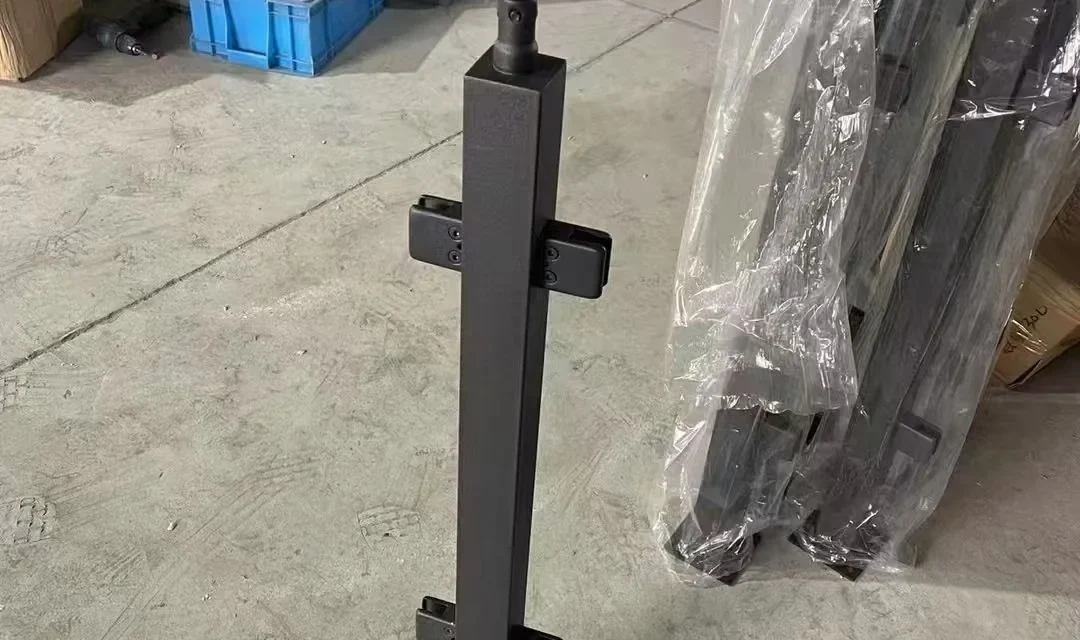
When a stainless steel glass clamp is described as cast, ask for the actual casting grade and applicable material specification rather than relying only on a shorthand label such as 304 or 316. Casting designations and wrought product names are related references, not interchangeable purchase descriptions. Verify the complete clamp model, material evidence and project suitability separately before approving the order.
Why can a material certificate use a different name?
A buyer may request a 316 glass clamp and receive documentation carrying a casting designation. That difference is a reason to clarify the specification, not immediate proof of a wrong delivery. Conversely, a supplier’s claim that two names are equivalent is not enough to establish that the delivered product meets the contract. The relevant material form and governing specification need to be explicit.
A finished clamp assembly may contain a body, screws, inserts and other components. A material designation for one metal component does not identify every part of the assembly. Start by asking which component the certificate or declaration covers. Then check how that component is linked to the product and batch being supplied.
BalusterPost’s core manufactured products are stainless steel baluster posts and railing posts. Glass clamps are coordinated through qualified specialist manufacturing resources. This guide does not claim that all available clamps use a particular manufacturing process or casting alloy. The actual model and material documentation must be confirmed with each enquiry.
How do CF8 and CF8M relate to 304 and 316?
The BSSA table of ACI casting grades lists CF8 alongside the related wrought grade 304 and CF8M alongside 316. It also lists CF3 and CF3M alongside 304L and 316L respectively. These are useful cross-references for understanding material names, not a declaration that every requirement for one product form is identical to another.
As another first-party example, Stainless Foundry’s CF8M alloy page identifies CF8M as a cast alloy and 316 as a comparable wrought alloy. The careful distinction between cast and comparable wrought names matters. A buyer should retain the actual specified cast designation in the purchase record instead of replacing it with a more familiar shorthand.
No chemical limits, mechanical properties or acceptance values are prescribed here for an unspecified clamp. Obtain the applicable specification and approved requirements for the actual product. A general alloy reference cannot establish conformity of a particular batch.
What information belongs in a clear material enquiry?
| Question | Useful supplier response | Why it matters |
|---|---|---|
| Which component is being described? | Identified clamp body or other part | Avoids extending one material claim to the whole kit |
| What is the material form? | Confirmed manufacturing route for that part | Makes the designation understandable |
| What grade is specified? | Actual designation, not only a sales label | Provides a reference for document review |
| Which specification applies? | Named document and applicable edition | Defines the agreed material basis |
| What evidence is available? | Document type and batch linkage | Shows what can actually be verified |
| What remains outside that evidence? | Explicit limitations and separate parts | Prevents unsupported system claims |
Do not add a pressure-equipment or structural approval claim merely because a material specification is also used in those industries. A standard’s existence and a finished clamp’s compliance are different facts. Ask the responsible designer what evidence is required for the intended railing application.
Does casting establish the strength of the clamp?
No manufacturing-process label alone establishes a clamp’s suitability. The actual product geometry, component arrangement, materials, manufacture and relevant verification all matter. A claim such as cast is stronger or machined is always safer is too broad to use as a purchasing rule.
Keep material documentation separate from performance evidence. A chemical composition report does not report the capacity of the assembled clamp on a specific post with a particular glass build-up. Likewise, a test report for a named system does not identify an unrelated shipment’s material. Each document should be used for the question it can answer.
The glass clamp sample guide helps organise product-specific approval. A physical sample provides a reference for identity and finish, but should not acquire a certification claim simply because the buyer accepts its appearance.
How should a buyer review an unfamiliar designation?
First compare the designation with the purchase specification. If the order uses only a generic stainless label, obtain clarification before treating the paperwork as conforming or nonconforming. Record the proposed material description in writing and establish who is authorised to approve it for the project.
Next identify the document’s issuer, date, component scope and batch reference. If those details do not connect the document to the supplied part, ask the supplier to explain the traceability. Do not fill missing information by assuming a certificate from a previous order applies to the current delivery.
Then resolve any difference between the quotation, approved sample and production documentation. A change in wording may be a clarification, while a change in material may be a substitution. The supplier should identify which occurred. A substitution needs review against the agreed requirements before release.
What if the clamp and railing post use different product forms?
Record each component separately. A fabricated post can have a tube, plate and welded fittings with their own material requirements, while a sourced clamp body may be described using a casting designation. A single material word on the top of the quotation is an inadequate substitute for that component-level description.
Use the stainless steel post range to identify the main assembly and attach the clamp reference to the relevant post position. The post bill-of-materials guide explains how to keep distinct parts visible in the supply schedule. That separation helps prevent a valid statement about one component being repeated as a claim about all of them.
How should distributors describe the product?
Use verified model information in the product description and retain the exact material designation in the technical record. If a familiar shorthand is used to help customers navigate a catalogue, make the underlying specification available and avoid presenting a rough cross-reference as an exact certification.
Do not promote a supplied clamp as manufactured by BalusterPost. Describe the coordinated supply role accurately. Similarly, do not claim a named foundry, casting method, inspection process or country of manufacture unless the actual supply information supports it.
When updating a catalogue, keep old and new model references distinguishable. An updated material description should not silently rewrite the documented basis of earlier shipments. Customers ordering replacements need the facts relevant to their original assembly as well as the current offer.
What should receiving inspection resolve?
Check the product identity and paperwork against the approved order, then record any mismatch before installation. Visible finish is not a material verification method. An attractive polished surface does not establish a casting grade, just as a difference in surface appearance does not by itself prove an alloy substitution.
If additional material testing is required by the agreement, use the specified method and acceptance criteria through a competent provider. Do not improvise an alloy conclusion from a magnet or a single unqualified reading. The aim is to answer the contract’s actual question with suitable evidence.
Frequently asked questions
Is CF8M simply another name to print as 316?
CF8M is a cast designation commonly cross-referenced to wrought 316. Preserve the actual material form and specification in the technical record rather than treating the names as identical purchase descriptions.
Does a casting certificate approve the assembled railing?
No. Material documentation and railing-system suitability address different questions. Confirm the product-specific evidence required for the project separately.
Can BalusterPost confirm a clamp’s actual grade?
Request the available model-specific information during enquiry. No grade, document type or availability is promised by this general guide. Send Ryan Liang the required clamp reference and material specification so the supply scope can be reviewed clearly.
What should a buyer ask when a casting shows a surface cavity?
Record the clamp model, lot and exact location of the visible cavity before deciding on a remedy. Photograph its relationship to the screw seat, receiving thread, insert pocket and mounting face. Surface appearance alone cannot establish the depth, cause or relevance of the discontinuity.
Ask the specialist clamp manufacturer to state the applicable acceptance criteria and proposed disposition. Keep a material designation question separate from the condition being reported. A certificate for the casting alloy does not resolve whether a particular local feature is acceptable in the supplied component.
If welding or material removal is proposed, obtain a documented technical review before work proceeds. TWI’s repair-procedure guidance describes factors involved in developing and reviewing repairs. It provides general context and does not authorize repair of a specific glass clamp or define its acceptance criteria.
An illustrative clamp has a cavity next to a screw seating surface. Filling it cosmetically may hide the observation while leaving seating and load-path questions unresolved. The supplier and authorized reviewer should choose acceptance, a qualified repair route or replacement, then state the required reinspection. Preserve the original photographs with the final decision.
| Review item | Record to retain | Decision |
|---|---|---|
| Observation | Model, lot and feature location | Define affected components |
| Disposition | Applicable criteria and technical review | Accept, repair or replace |
| Release | Reinspection and traceable record | Confirm the agreed configuration and condition |
Primary technical reference: Read the source document and its stated scope




