
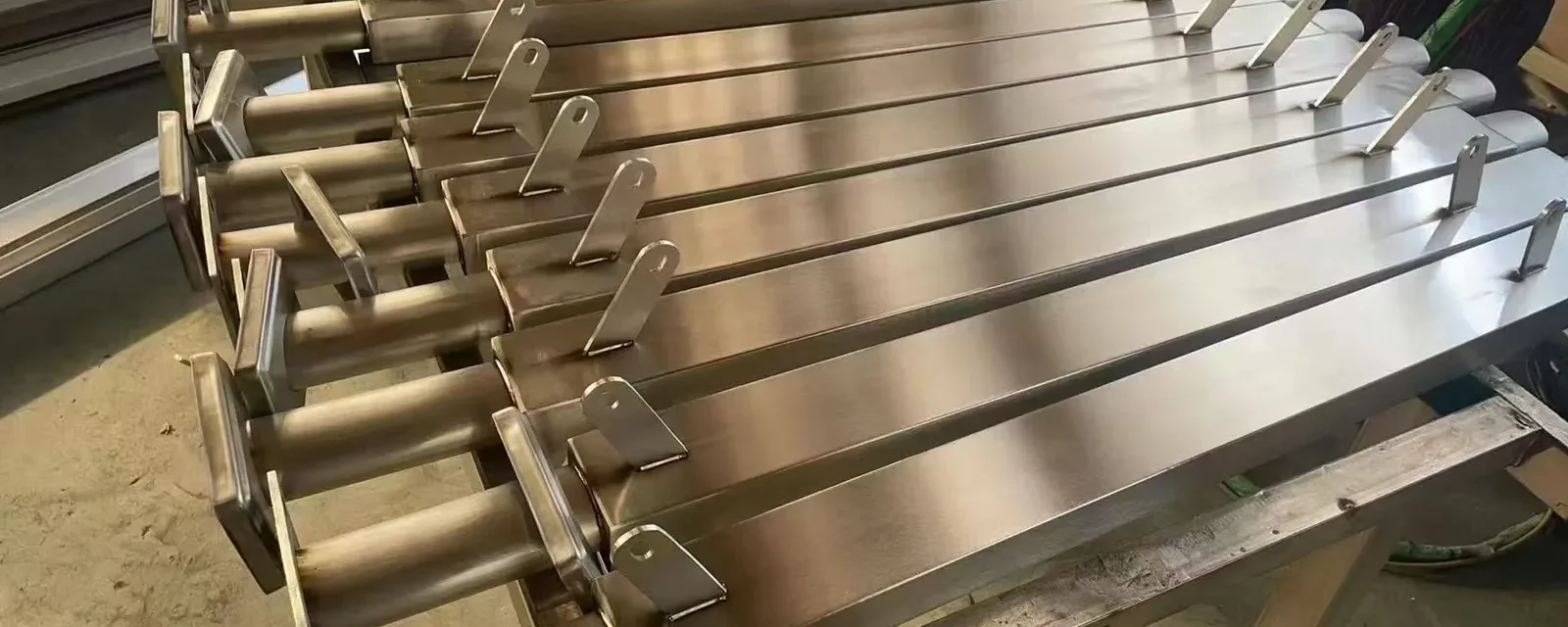
A distributor should build a stainless steel railing-post range around a small number of fully defined, repeatable configurations—not a long list of visually similar posts. Select the mounting method, post role, profile, glass or handrail interface, material and finish for each core item. Give every approved combination its own drawing revision and order code. Treat other combinations as project-specific until demand and compatibility have been proven.
What is the real buying decision?
The question is not simply which post photographs to put in a catalogue. It is which configurations a distributor can quote, identify, receive and reorder without asking a site installer to modify a finished railing. A square post with a different clamp centre, a side-mounted base instead of a top-mounted base, or a revised handrail saddle may be a different item even when the visible upright looks identical.
This guide is for buyers who sell stainless steel baluster posts or glass-railing posts across multiple jobs. It proposes a purchasing system, not a universal stock list. The right assortment depends on actual enquiries, approved project designs, local rules, installer practices and commercial demand. No post configuration is structurally approved merely because it appears in a distributor catalogue.
BalusterPost’s core manufactured product is the stainless steel railing post. Business coordination is based in Taizhou, Jiangsu, China. Related items such as glass clamps may be coordinated through qualified specialist manufacturing partners; they should be identified separately rather than represented as BalusterPost-manufactured posts.
Which configurations should be core range items?
Begin with demand evidence: recent RFQs, accepted drawings, replacement requests and the installers’ actual mounting conditions. Group requests by functional interface, not by marketing name. A core item should have a controlled drawing, agreed material and finish, stable mating interfaces, an unambiguous code and a repeatable inspection plan. “Popular-looking” is not an acceptance criterion.
A useful planning distinction is core repeat item, repeatable option and project-only item. The first is a configuration the distributor expects to reorder to the same specification. The second changes an explicitly controlled variable, such as finish or handrail connection, while preserving the approved base design. The third needs a new drawing and project review. These are suggested management labels, not claims about BalusterPost stock, minimum order quantities or delivery times.
| Range decision | What to define | What can go wrong if left open |
|---|---|---|
| Post role | Intermediate, end, corner or stair position and fitting orientation | Correct-looking upright has fittings on the wrong face |
| Mounting | Top or side/fascia mounting, base geometry and anchor interface | Base cannot fit the actual substrate or edge detail |
| Profile | Square, round or other approved section, wall and length | Cover, saddle or adjacent run no longer matches |
| Infill/handrail | Glass thickness range, clamp or bracket interface and rail connection | Mating parts or site dimensions conflict |
| Material/finish | Specified grade, surface reference and exposed faces | Mixed appearance or unsuitable unreviewed substitution |
| Order control | Item code, drawing revision, approved sample and change status | Reorder repeats a superseded or incompatible version |
Do not turn every theoretical permutation into a catalogue SKU. If four decisions each have several options, the number of combinations grows quickly while demand may concentrate in only a few. Use actual enquiry and reorder records to promote a project-specific design into the repeat range. The square-tube glass balustrade post illustrates a product family; its pictured configuration is not a promise that every mounting and fitting combination is interchangeable.
Can one post serve straight runs, corners and stairs?
Only when the approved drawing shows that its fitting orientation, glass line, handrail angle and load path suit every intended position. A straight-run intermediate post normally should not be relabelled as a corner or stair post simply to reduce SKU count. The geometry and connection details can change even if the upright section stays the same.
Record a role mark on the drawing and packing identification. Where left- and right-hand configurations differ, use separate codes or an explicit orientation field. Include a sketch showing the installer-facing side and datum direction. A photograph alone is a poor orientation control because it can be mirrored, cropped or taken from the opposite side.
Mounting deserves its own decision. Top mounting and fascia/side mounting place the base and anchors in different conditions. The project engineer and local approval authority must determine loads, substrate adequacy, edge distances, anchors and safety requirements. A purchasing range can standardize a fabricated shape; it cannot pre-approve every building substrate.
Which dimensions must remain stable for repeat orders?
Freeze the dimensions that define interchangeability: finished post height and profile; base plate or side bracket footprint and hole pattern; glass-fitting centres and offsets; handrail support position; datum faces; and any mating cover or cap geometry. Add a clear tolerance and inspection method for critical dimensions. Our drawing-tolerance guide explains why a datum is more useful than a vague “same as last order” note.
Specify material and finish with the same discipline. “Stainless steel” and “brushed” are incomplete repeat-order descriptions. Record the agreed grade, tube product specification where applicable, finished appearance reference, directional grain if relevant, and surfaces that will be visible after installation. ASTM A554-26 covers welded stainless mechanical tubing in round, square, rectangular and special shapes, but citing it does not define the complete fabricated railing post, glass connections or project loading. State the edition and any purchaser-specified requirements when the standard is part of the order.
Grade choice should follow the exposure and maintenance conditions of the destination project, not an automatic “one grade for all” rule. A distributor can offer a defined material option, but the specifier must approve its use for the location. The 304 versus 316L selection guide is a starting point, not a substitute for project-specific review.
How should a distributor code each post?
Use a product-family code plus controlled attributes, but do not rely on the code to carry every technical detail. The code should point to a master drawing and bill of materials. A practical item record contains the post role, mounting style, profile, grade, finish, infill/handrail interface, drawing number and revision, and an approval status. Keep the human-readable description beside the code so buyers can catch an obvious mismatch.
For illustration only, a distributor might use “SQ–TOP–INT–304–BR” as an internal label. That string is not a BalusterPost catalogue number and is insufficient on its own: it says nothing about dimensions, wall, hole positions or glass interface. The controlled drawing and signed sample remain the specification. Avoid assigning a new code to a cosmetic packaging change if the part is fully interchangeable; equally, do not keep the old code when a functional interface changes.
Create a one-page range register with columns for code, role, mounting, material/finish, drawing revision, sample status, last approved order reference and replacement compatibility. Mark uncertain or project-only designs as such. This register helps sales, procurement, receiving and customer service answer the same question from the same source.
What must be checked before promoting a project post into the repeat range?
- Confirm a real use case. Identify the installation position, substrate and mating glass/handrail system, rather than assuming the previous project represents the wider market.
- Approve the drawing and interfaces. Check the post body, base, connection centres, handedness and visible finish.
- Confirm material evidence. Agree which documents and markings establish the specified grade and traceability; do not confuse a tube certificate with approval of the finished assembly.
- Review a first article. Compare the physical post with the controlled drawing, record deviations and obtain a disposition before declaring it repeatable. See the first-article inspection guide.
- Test the ordering information. Ask a colleague who did not attend the project to select the correct item, fittings and revision from the register. If they must infer orientation from a photo, the record is not ready.
A first article is evidence for a defined configuration and inspection scope, not a blanket certification for future projects. Structural calculations, test requirements and local-code approvals remain project matters. When the post is used with glass clamps, covers or other coordinated components, record those as separate parts with separate supply and compatibility checks.
How can repeat orders avoid silent substitutions?
Place the item code and drawing revision on the RFQ, purchase order, supplier confirmation and receiving record. Require a change notice before altering grade, tube wall, hole pattern, clamp position, weld detail, finish reference or other functionally relevant feature. The buyer should approve or reject the proposed change against both the current installation and existing replacement demand.
Do not accept “equivalent” without defining the relevant equivalence. Two grades can have different suitability for a given environment; two finishes can look different side by side; two base plates can share overall dimensions but have different anchor holes. Ask for a marked-up drawing, reason for change, affected order quantities and compatibility statement. If the change is not fully interchangeable, issue a new revision or item code and segregate old and new stock.
For replacement requests, request the original item code, drawing revision, photographs of installed connections and site measurements where the record is incomplete. A distributor should not promise a drop-in replacement from a brand or profile name alone. Where old drawings are missing, treat the request as a new technical review rather than guessing from a photo.
What belongs in the first RFQ for a repeatable range?
Send a range matrix rather than a single generic “stainless post” line. For each proposed item, identify role, mounting, profile, grade, finish, interface, target quantity and controlled drawing. State which attributes are fixed and which may be quoted as options. Ask the manufacturer to flag unbuildable combinations or drawing conflicts before pricing. The purchase-order checklist helps carry that approved definition into a transaction.
Also ask how the finished pieces will be labelled and separated by item and revision, and how visible surfaces will be protected during packing. Confirm the inspection evidence required at dispatch and the handling of nonconformities. These are questions to resolve in the RFQ; this guide does not claim a particular stock level, production capacity, packaging method or lead time.
If you are defining a distributor range, send BalusterPost your drawings and range matrix. Identify the configurations intended for repeat orders and the ones still project-specific. Ryan Liang, Export Manager, can coordinate the commercial discussion; engineering suitability and any project approval must still be established for the actual installation.
Frequently asked questions
How many stainless steel post SKUs should a new distributor launch?
There is no universal number. Start with documented local demand and a small set of fully specified, distinguishable configurations. Add variants only when a real installation need and repeat-order evidence justify the extra control work.
Can the same item code cover 304 and 316L?
Not if the code is supposed to identify one exact material. Use separate codes or a mandatory material suffix linked to separate controlled specifications, and obtain project approval for the grade selected.
Are glass clamps included with a railing post?
Not by default. Define whether clamps and other accessories are in the quoted bill of materials, their quantities and interfaces, and their separate supplier/quality records. BalusterPost’s manufactured core product is the post; related accessories can be coordinated through specialist partners.
Is an approved sample enough for every reorder?
No. Retain the sample and revision as references, but verify each order against the current specification and agreed inspection plan. A changed interface, material, finish or installation condition may require fresh review.




