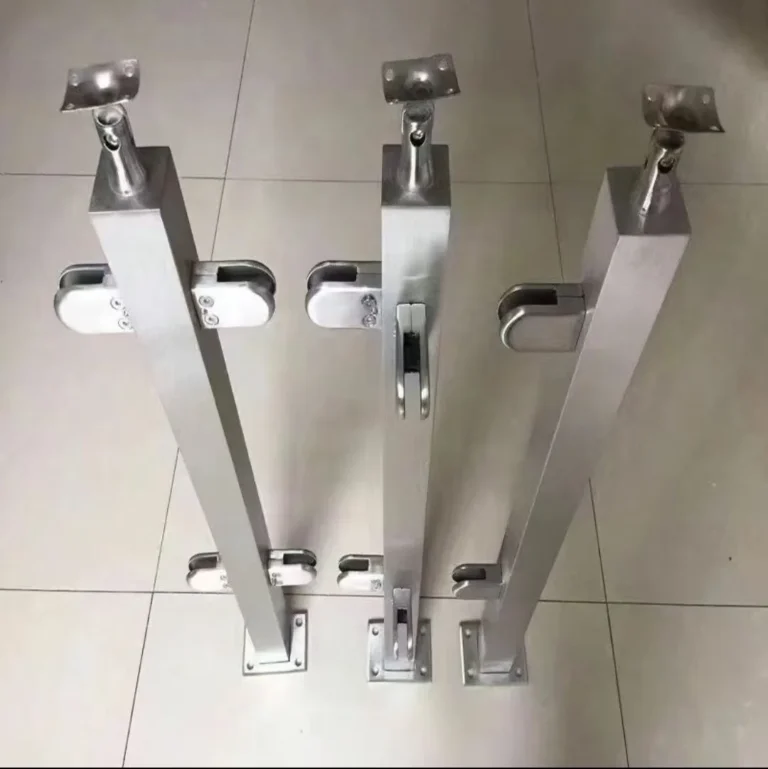
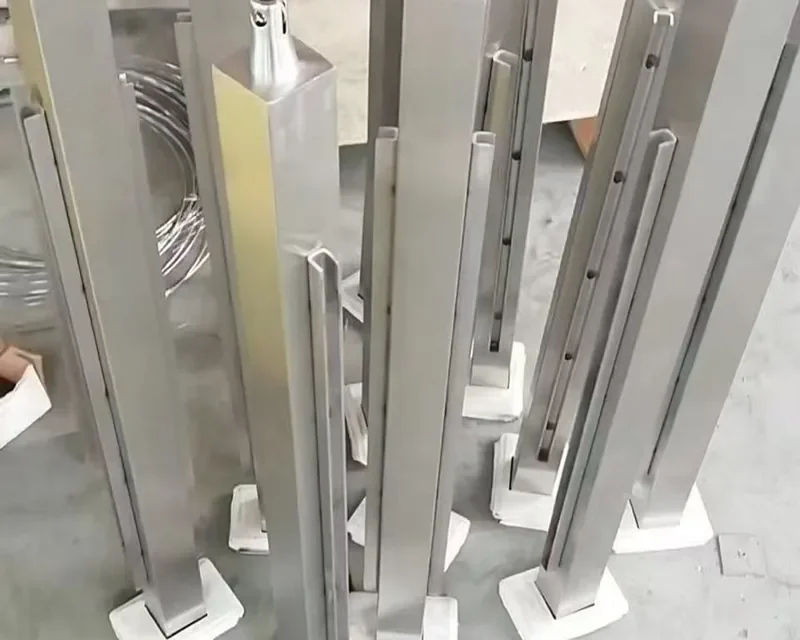
Short answer: a stainless steel railing post purchase order should convert the accepted quotation into one controlled production baseline. It must identify every post variant, drawing revision, material, finish, fitting, inspection rule, packaging requirement, delivery term and required document. Production should begin only after the supplier acknowledges the order and all referenced attachments are aligned.
Why is the purchase order different from the RFQ?
The request for quotation explains what the buyer wants priced. The supplier’s quotation explains what it has priced and any assumptions or exclusions. The purchase order, together with its accepted attachments and supplier acknowledgement, records what is actually ordered.
Copying only a product description and total quantity into the PO creates a gap. Important details may remain scattered across emails, marked-up drawings, samples and quotation notes. When those sources conflict, production staff may use a different revision from the buyer’s project team.
Use the OEM railing post RFQ checklist before quotation. Use the PO checklist below after commercial and technical review to freeze the agreed scope.
What should be locked before production?
| PO control | Minimum information | Risk if omitted |
|---|---|---|
| Item identity | Buyer part number, supplier model, description and variant | Similar posts can be mixed or substituted. |
| Drawing baseline | Drawing number, revision and approval date | Production may follow an obsolete attachment. |
| Quantity split | Quantity for every level, corner, end, stair and mirrored post | The total can be correct while the installation mix is wrong. |
| Material | Grade, product form, relevant specification and evidence | “Stainless steel” does not define the ordered material. |
| Finish | Finish designation, grain direction, visible faces and reference sample | Technically acceptable parts may look inconsistent together. |
| Inspection | Characteristics, sampling, acceptance, records and hold points | Buyer and supplier may apply different release criteria. |
| Packaging | Protection, unitisation, labels, package limits and wood rules | Correct posts may arrive damaged or unidentified. |
| Delivery | Incoterms rule, named place, version and milestone dates | Cost, risk and handover responsibilities remain ambiguous. |
1. Identify the parties and document references
State the legal buyer and seller names, billing and delivery details, PO number, issue date, currency and the supplier quotation being accepted. If an importer, distributor, consignee or inspection company is involved, identify its role without confusing it with the contracting buyer.
List every attachment by title, number and revision. Avoid “as per previous email” or “same as last order” unless the exact historical document is attached and still valid. A repeat order should confirm whether the old drawing, finish sample, packing method and regulations still apply.
2. Break the total quantity into controlled variants
Do not order “200 railing posts assorted.” Create a separate line or schedule for each unique geometry and orientation. Common variants include level, corner, end, stair-up-left, stair-up-right, top-mounted, fascia-mounted and posts with different glass or handrail interfaces.
Each line should show the part number, drawing, quantity and included fittings. Reconcile the sum against the layout schedule. Add spare quantities only when they are intentionally approved; do not hide them inside the main quantity.
3. Freeze the approved drawing revision
The PO should reference one released drawing revision for each item. The drawing needs controlled dimensions, datums, interfaces and tolerances rather than a rendering alone. The supplier acknowledgement should repeat the same revision.
If the drawing is still under review, mark the PO or line as held for technical release. Commercial approval should not be mistaken for authorisation to manufacture. The first production milestone can be “approved drawing received” rather than an assumed calendar date.
4. Specify material by component and evidence
State the stainless grade for the post body and other critical components such as the base plate, welded supports or adapters. If the order requires material test certificates, heat or lot traceability, or PMI, name the scope and sampling plan.
The railing post material verification guide explains why one mill certificate or one XRF reading does not automatically cover every finished component. Keep related fasteners and accessories on their own evidence path where they come from specialist manufacturing resources.
5. Define finish and visible acceptance
A finish name such as “satin” is not a complete acceptance rule. State the required finish or reference sample, visible faces, grain direction, treatment after welding and limits for scratches, weld shadows, colour variation and handling marks.
Where appearance is important, identify an approved physical sample or signed first-article photographs under controlled lighting. Photographs help communication but do not measure roughness or colour unless the purchase specification defines a suitable method.
6. List what is included with each post
Clarify whether base covers, glass adapters, clamps, gaskets, handrail supports, screws, anchors, caps and installation tools are included, excluded or packed separately. A phrase such as “complete railing post” can mean different things to the buyer and supplier.
BalusterPost’s core manufacturing product is the stainless steel post. Glass clamps, fasteners and other related hardware may be coordinated through qualified specialist manufacturing resources. The PO should preserve their manufacturer, specification, quantity and inspection responsibility rather than treating every accessory as an unnamed post component.
7. Convert quality expectations into an inspection plan
Specify which dimensions and visual conditions are critical, what will be sampled, who inspects, which records are required and what happens when a result fails. Include any witness or hold point before finishing, packing or shipment.
If a first article is required, state that batch production or shipment is conditional on written approval. The first-article approval checklist covers assembly fit, material, dimensions, welds, finish, fittings and records. Approval of one characteristic should not be interpreted as approval of every unreviewed feature.
8. Record price, payment and adjustment rules
Show unit price and line value for every variant, plus tooling, samples, testing, packaging, freight or document charges that are not included in the unit price. State the currency, payment milestones and documents required for each payment.
Do not leave price adjustment language open-ended. If material, freight or exchange-rate adjustments are permitted, define the trigger, evidence and approval process. Normalise the quotation scope before the PO is issued.
9. Write the Incoterms rule correctly
State the three-letter rule, the precise named place or port and “Incoterms 2020.” For example, naming only “FOB” or “DAP” is incomplete. The location affects where delivery occurs and where costs or risk transfer under the selected rule.
The International Chamber of Commerce guidance explains that Incoterms rules allocate defined obligations, costs and risk between seller and buyer. They do not replace the sales contract, product specification, payment terms or title-transfer agreement. Buyers should select the rule with their logistics and trade advisers.
10. Separate lead time from production release
A delivery promise should name its starting condition. Lead time may depend on receipt of deposit, approved drawings, samples, colour or finish approval, buyer-supplied components or inspection release. Record milestone dates and which party controls each prerequisite.
Use a change log after release. A revised hole pattern, finish, quantity or packaging method can affect material already purchased and work already completed. No change should enter production without a documented revision, commercial impact review and acknowledgement by both parties.
11. Define packaging, labels and shipment evidence
State individual surface protection, separators, protection for projecting fittings, carton or crate structure, package mass or dimension limits, lifting points, moisture controls, labels and packing-list format. The railing post packaging guide provides a fuller specification and arrival-inspection checklist.
When regulated raw-wood pallets, crates or dunnage are used, confirm destination requirements. The official International Plant Protection Convention standards list identifies ISPM 15 as the standard for wood packaging material in international trade. Processed wood products such as plywood follow different treatment under the standard, so buyers should specify the actual packaging material rather than demand a mark on every wood-based item.
12. List the final document package
The PO should name documents, format, language and submission timing. Depending on scope, these may include the acknowledged PO, approved drawings, material records, inspection report, PMI report, first-article approval, packing list, package photographs, commercial invoice and transport documents.
Do not request “all certificates” without defining them. Separate supplier quality evidence from project engineering, regulatory and customs documents. Each document needs an owner, due date and acceptance status.
How should conflicting documents be handled?
Include an agreed order of precedence among the PO, approved drawing, technical specification, accepted quotation and referenced standards. The correct hierarchy depends on the contract, but leaving it unstated is risky. A supplier exception should be visible and accepted in writing rather than buried in an earlier email.
Ask the supplier to return an acknowledgement that repeats the part numbers, revisions, quantities, price, delivery term and release conditions. Silence is not a technical review. Resolve every exception before material is cut.
Common purchase-order mistakes
- Using a generic product name without part numbers or variants.
- Attaching several drawing revisions without identifying the released one.
- Ordering a total quantity without the level, corner and stair split.
- Assuming “316L post” defines every fitting and fastener.
- Writing an Incoterms abbreviation without the named place and version.
- Approving production while finish or first-article decisions remain open.
- Changing an email attachment without updating the PO baseline.
- Leaving packaging and final documents until the shipment is ready.
How BalusterPost reviews a custom post order
BalusterPost manufactures drawing-based stainless steel baluster posts and stainless steel railing posts, with business coordination from Taizhou, Jiangsu, China. A workable order should align the buyer’s part list, approved drawings, material and finish, inspection plan, packaging and delivery requirements before production release.
Review a representative adjustable twin flat-bar balustrade post, then contact Ryan Liang, Export Manager, with your RFQ, accepted quotation and draft purchase-order schedule for a consistency review.
Frequently asked questions
Can a supplier quotation replace the purchase order specification?
No single document should be assumed to contain the whole agreement. The PO should identify the accepted quotation and all controlled technical attachments, then resolve conflicts and exceptions.
Should production start before drawings are approved?
Only if the buyer has deliberately authorised a limited activity. Otherwise, place the line on technical hold and define drawing approval as the production-release milestone.
How should left- and right-hand stair posts be ordered?
Give each orientation a distinct part number, drawing and quantity, with the viewing direction defined. Do not rely on handwritten “left” and “right” notes without a datum.
Does an Incoterms rule define product acceptance?
No. Incoterms rules address specified delivery obligations, costs and risk. Product specification, inspection, payment and acceptance need separate contract terms.
What is the most important PO attachment?
There is no universal single document. For custom posts, the released drawing and variant schedule usually control physical production, while the PO connects them to quantity, price, inspection, packaging and delivery.
What should happen after the supplier acknowledges the PO?
Close any exceptions, confirm release conditions and maintain one revision-controlled change log through production, inspection and shipment.