EU-bound stainless steel railing post shipments now need a packaging compliance review under the EU Packaging and Packaging Waste Regulation (PPWR). Since 12 August 2026, buyers should identify each packaging format, decide who is the PPWR manufacturer, importer and producer, request the applicable conformity evidence, and separate current duties from later labelling, recyclability, recycled-content, reuse and empty-space deadlines.
What changed on 12 August 2026?
Regulation (EU) 2025/40 entered into force on 11 February 2025 and generally applies from 12 August 2026. It covers packaging regardless of material and whether the packaging originates in industry, manufacturing, retail, distribution or households. For railing-post shipments, that scope can include cartons, timber cases, pallets, plastic film, bags, strapping, edge protectors and other items used to contain, protect, handle or deliver the posts.
The European Commission’s 11 August 2026 implementation update confirms that the rules begin applying on a phased basis. This distinction matters: the PPWR applies now, but not every numerical target or label became mandatory on the same date.
Which PPWR dates matter to a railing-post buyer?
| Date | Official milestone | Practical buyer response |
|---|---|---|
| 11 February 2025 | PPWR entered into force | Begin assigning roles and collecting packaging data |
| 12 August 2026 | Regulation generally applies; requirements are phased | Review packaging placed on the EU market and applicable documentation |
| From 2028 | Harmonised packaging labelling is scheduled to apply | Track the implementing details before redesigning labels |
| From 2030 | Major recyclability, recycled-plastic, empty-space, restriction and reuse measures begin applying | Build future requirements into packaging development without claiming early compliance |
These are headline milestones, not a complete legal calendar. The application of a specific article can depend on packaging type, economic-operator role, implementing acts and exemptions. Importers should have their EU compliance adviser confirm the requirement for each actual supply chain.
What counts as packaging in a railing-post shipment?
The legal test is functional, not simply the material name. An item may be packaging when it contains, protects, handles, delivers or presents a product and is not an integral part of that product. A transport package can also consist of several components that only become a packaging format after assembly.
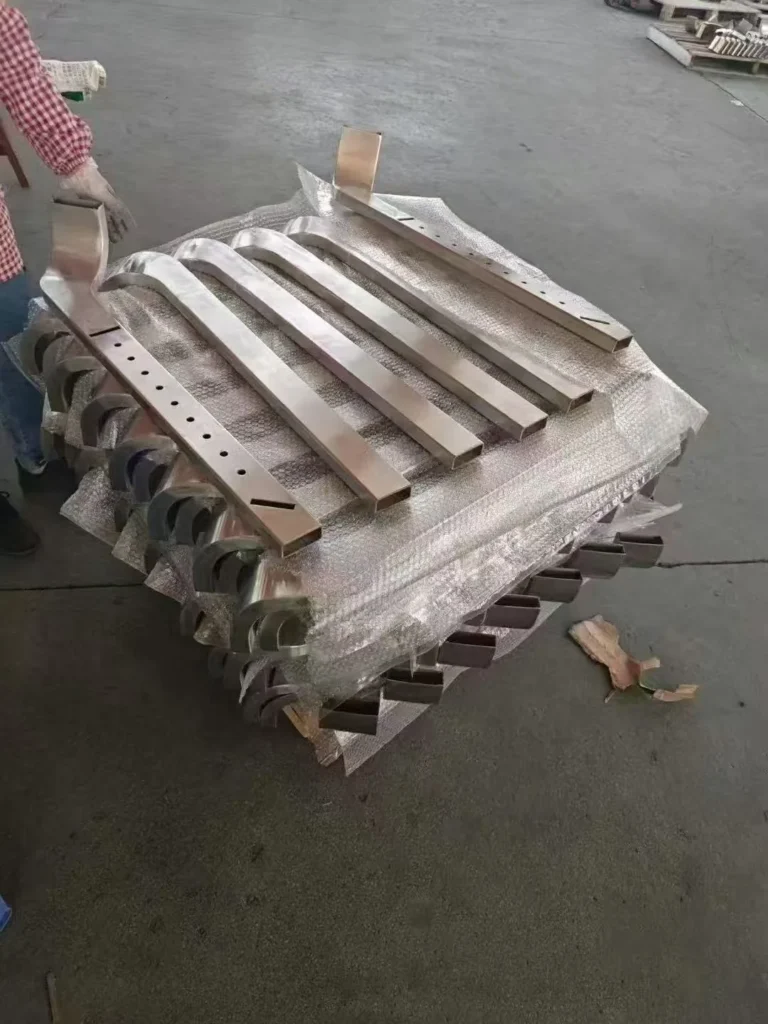
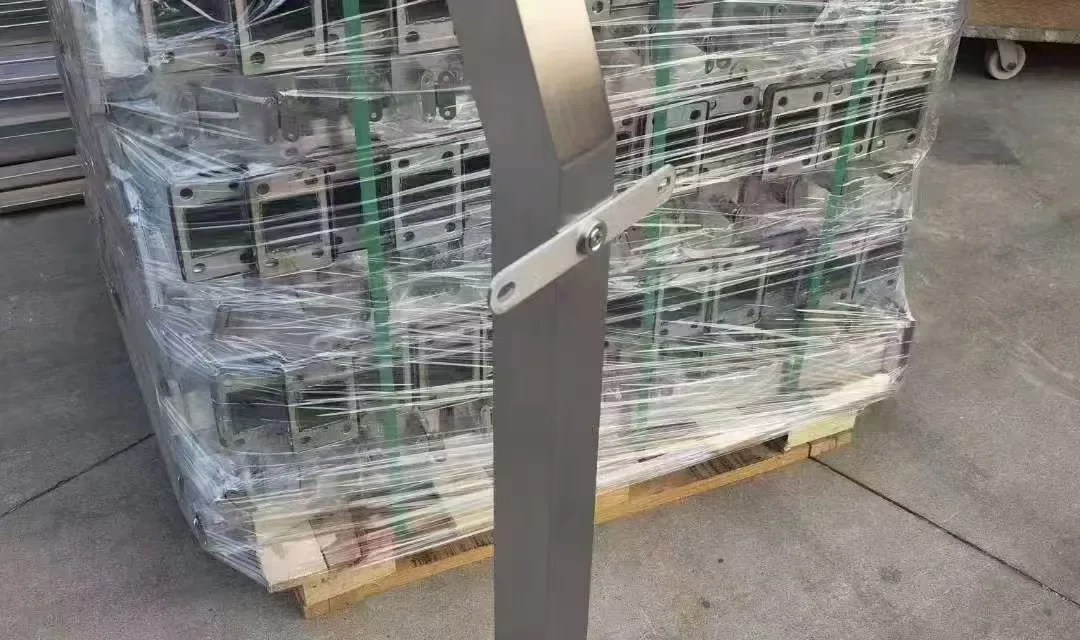
Prepare an inventory by format rather than writing only “export packing.” A useful shipment map can list the outer case or carton, pallet, inner sleeve, surface-protection film, plastic bag, foam or paper separator, corner guard, band, buckle and label. Record the material, approximate weight, whether it is single-use or reusable, who specifies it and where it is expected to become waste.
The Commission’s 2026 PPWR guidance explains that Annex I is indicative and that an item still needs to meet the packaging definition. Buyers should therefore avoid declaring every shipping accessory to be packaging—or excluding it—without checking its function.
Who is the packaging manufacturer under the PPWR?
“Manufacturer” under the PPWR does not always mean the company that physically converts cardboard, timber or plastic. The 2026 Commission guidance explains that the decisive issue can be who orders the packaging and decides its design specifications, particularly when the packaging or packaged product is supplied under that party’s name or trademark.
The manufacturer is responsible for ensuring that packaging meets the applicable sustainability and labelling requirements in Articles 5–12 before it is first made available on the Union market. A supplier, laboratory or certification scheme may support conformity assessment, but that does not automatically transfer the manufacturer’s legal responsibility.
There is a specific micro-enterprise rule in Article 3, and the guidance adds conditions concerning who supplies the packaging and where that supplier is located. Do not apply the exception from company size alone. Confirm the exact facts of the arrangement.
How are the importer and producer roles different?
The importer is an EU-established person placing packaging or packaged products originating outside the EU on the market. The “producer” is identified for extended producer responsibility (EPR): registration, reporting and financing the collection and treatment of packaging waste in the Member State where the packaging is expected to become waste.
The manufacturer, importer and producer can be different companies. The Commission guidance notes that producer identification depends on packaging type, the Member State, whether the recipient is an end user, and who first makes the packaging or packaged product available there. Direct sales from a third country to an EU professional end user can produce a different result from selling to an EU distributor.
Put these roles into the purchase file. Incoterms, payment terms or the name of the physical packing company do not by themselves answer every PPWR role question.
What evidence should buyers request now?
Request evidence by packaging type and revision. Depending on the applicable requirements, the file can include:
- a packaging bill of materials with material and component descriptions;
- drawings, photographs or specifications that uniquely identify the format;
- the name and address of the responsible manufacturer;
- supplier declarations and test reports supporting the applicable Articles 5–12 requirements;
- the conformity-assessment record and EU declaration of conformity where required;
- traceability information linking the evidence to the packaging used;
- single-use or reusable status and any reuse-system evidence;
- weights by material category needed for importer or EPR reporting;
- the agreed party responsible for registration and reporting in each Member State.
Annex VII of Regulation (EU) 2025/40 describes the internal-production-control documentation, while Annex VIII gives the structure for an EU declaration of conformity. A generic statement that “packing is recyclable” is not a substitute for a format-specific file.
Does every shipment already need the 2030 features?
No. The Commission says harmonised labelling will apply from 2028, while major requirements on recyclability, recycled plastic, empty space and reuse apply from 2030. Buyers should prepare for those dates, but should not claim that a 2026 package satisfies a future methodology that is not yet applicable or fully specified.
Future readiness can still guide current decisions. Reduce avoidable mixed materials, record component weights, make formats easy to identify, and ask whether a protective function can be achieved with less packaging. Changes must not sacrifice corrosion protection, surface-finish protection, handling safety or product identification.
How should stainless steel posts be protected without overpacking?
Stainless steel railing posts have visible brushed or polished surfaces, projecting clamps, welded adapters, base plates and threaded interfaces. Their packaging must control contact, abrasion, moisture, movement and part mixing. “Use less packaging” is not an instruction to remove the separators or restraints that prevent damage.
Start with the hazard and choose the minimum effective system: clean surface film where appropriate, non-abrasive separators between finished faces, protective caps for threads, blocks that prevent projecting fittings from carrying load, corrosion-compatible materials, and a stable outer package suited to the handling route. Then document why each component exists.
The stainless steel railing post packaging guide explains finish protection, crate layout, labels and packing approval. The PPWR review adds legal roles and environmental evidence; it does not replace transit-risk engineering.
What should change in the RFQ and purchase order?
Add a separate packaging schedule instead of hiding requirements in one delivery sentence. Define the destination Member State, sales route, recipient type, packaging formats, permitted materials, weight-reporting format, marking, document owner, sample-approval point and change-control process.
Require notification before any packaging substitution. Changing a plastic film, carton construction, pallet, coating or separator may affect both transit performance and the compliance file. Link the approved packaging revision to the packing list and purchase order, just as the post drawing revision is linked to production.
Use the railing-post purchase-order checklist and the material-verification guide to keep product and packaging records under the same revision discipline.
Can wood pallets and crates create separate requirements?
Yes. The PPWR is not the only rule relevant to transport packaging. Wood packaging used in international trade may also need phytosanitary treatment and marking under the rules applicable to the route. Those requirements address a different risk and do not prove PPWR conformity.
Similarly, carrier restrictions, dangerous-goods rules, customs requirements and national EPR systems can apply independently. The buyer should maintain a compliance matrix instead of treating one declaration as proof of every shipping requirement.
PPWR packaging checklist for an EU railing-post order
- Map every packaging format and component used for the shipment.
- Record materials, weights, reuse status, supplier and approved revision.
- Identify the PPWR manufacturer for each format.
- Identify the EU importer and the EPR producer in each destination Member State.
- Determine which Articles 5–12 requirements apply on the shipment date.
- Collect format-specific technical documentation and declarations.
- Confirm labels and traceability information required now.
- Test transit protection for the actual post geometry and finish.
- Control packaging substitutions through written approval.
- Track the separate 2028 and 2030 milestones.
What can BalusterPost provide?
BalusterPost focuses on manufacturing stainless steel baluster posts and railing posts, with business coordination based in Taizhou, Jiangsu, China. For an EU-bound enquiry, buyers can specify the required post configuration, destination, packing method, identification scheme and document list. Packaging and related purchased materials can be coordinated with qualified specialist resources according to the agreed shipment specification.
BalusterPost should not be assumed to be the EU importer, EPR producer or legal manufacturer of every packaging format. Those roles depend on the specific commercial and distribution arrangement. Send the destination and compliance matrix through the BalusterPost enquiry page for quotation review. Buyers evaluating a representative post configuration may also review the FG1 square stainless steel post.
Frequently asked questions
Does PPWR apply to industrial transport packaging?
Its scope covers all packaging, including packaging originating from industry and manufacturing. The applicable duties still depend on the packaging format, role, date and any relevant exemption.
Is the Chinese railing-post supplier automatically the PPWR manufacturer?
Not automatically. The Commission guidance focuses on who orders and decides the packaging design and whose name or trademark is involved, with a specific micro-enterprise rule. Review the actual transaction and packaging format.
Who pays EPR fees for an imported shipment?
The PPWR producer is responsible for EPR duties in the Member State where the packaging is expected to become waste. The identity can change with the route, recipient and whether the product is sold directly to an end user.
Can the package be marked “recyclable” now?
Only when the claim is supported and permitted under the rules applicable to that package and market. Do not use an unsupported environmental claim or present a future 2030 methodology as a current certification.
Does PPWR replace protective packaging tests?
No. Regulatory documentation does not demonstrate that a crate, carton or pallet will protect the post finish and fittings through the actual transport route. Transit performance and regulatory conformity both need evidence.