A low unit price does not show whether a stainless steel railing post supplier understands your project. Railing posts combine architectural appearance, safety-critical geometry, glass or handrail interfaces, anchors and surface finishing. A quotation based on one photograph may exclude important work or conceal assumptions that become expensive after production begins.
The best comparison starts with a controlled RFQ package and a common list of questions. This guide helps contractors, distributors and purchasing teams evaluate custom stainless steel railing post manufacturers without relying on unsupported marketing claims.
Prepare the same RFQ package for every supplier
Supplier comparisons are meaningful only when everyone prices the same scope. Include the latest drawings, quantities and performance requirements, then issue written clarifications to all bidders. At minimum, provide:
- Post elevations and sections with dimensions
- A schedule identifying end, middle, corner, stair and transition posts
- Stainless grade and product form
- Visible surface finish and grain direction
- Glass, clamp, adapter and handrail interfaces
- Base or fascia connection geometry approved for pricing
- Required samples, inspections and documentation
- Quantity, packaging groups, destination and requested delivery window
If the design is still developing, label unknown items clearly. Ask suppliers to list every assumption and exclusion rather than silently filling gaps.
1. Can the supplier work from controlled drawings?
Custom posts should be produced from an approved revision, not from messages scattered across email and chat. Ask how the supplier numbers drawings, records revisions and links production to the final approval. A useful submittal shows the post profile, material, height, base, hole centres, connector orientation, weld locations, finish and position code.
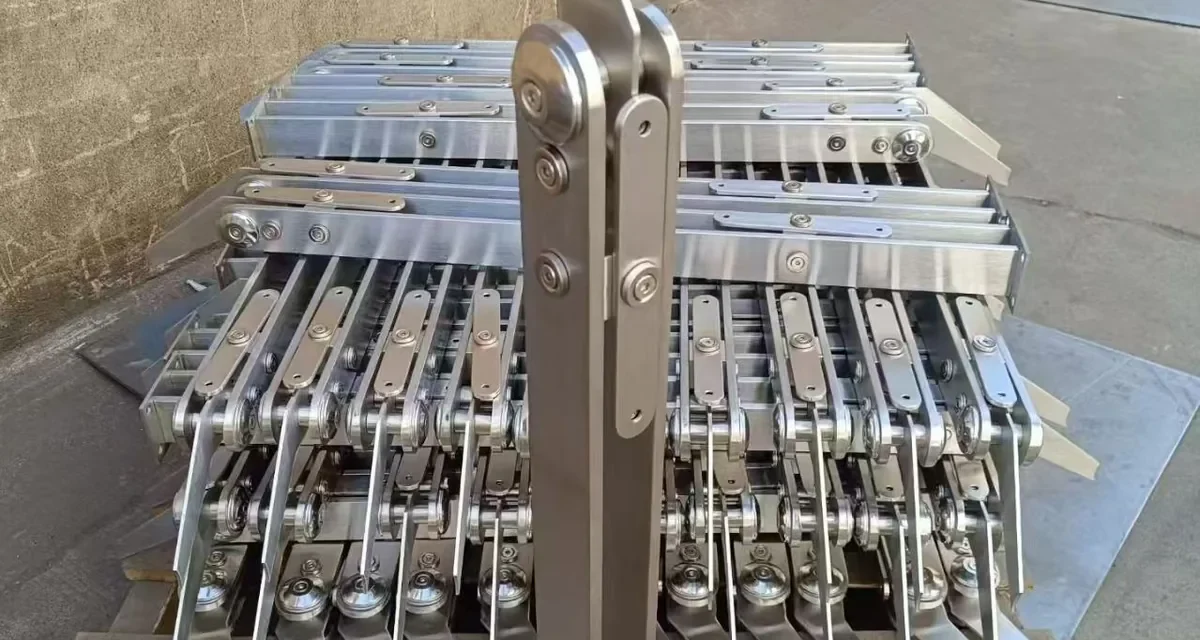
For angled work, a model such as the BP-FB01 adjustable twin flat-bar post still requires project-specific information. “Adjustable” does not remove the need to define glass offsets, post positions and allowable movement.
2. Is the material description specific and traceable?
“Stainless steel” is not a complete purchasing description. State the grade required by the project and ask what material records can be supplied. Depending on the contract, documentation may include the supplier’s material certificate, heat or batch reference, purchase record or an agreed verification test. Do not request paperwork that the project does not need, but do not accept a grade claim that cannot be connected to the delivered batch.
Grade selection must reflect exposure. Review the 304 versus 316L comparison before finalizing an RFQ for exterior, coastal or poolside work.
3. Does the quotation define sections and components?
Compare the proposed tube or bar section, wall thickness, base plate, adapters, clamps, saddles and covers. Two posts with the same height and photograph can contain very different sections and fabrication steps. Ask the bidder to identify which components are included and which must be sourced separately.
4. How are holes, adapters and welds controlled?
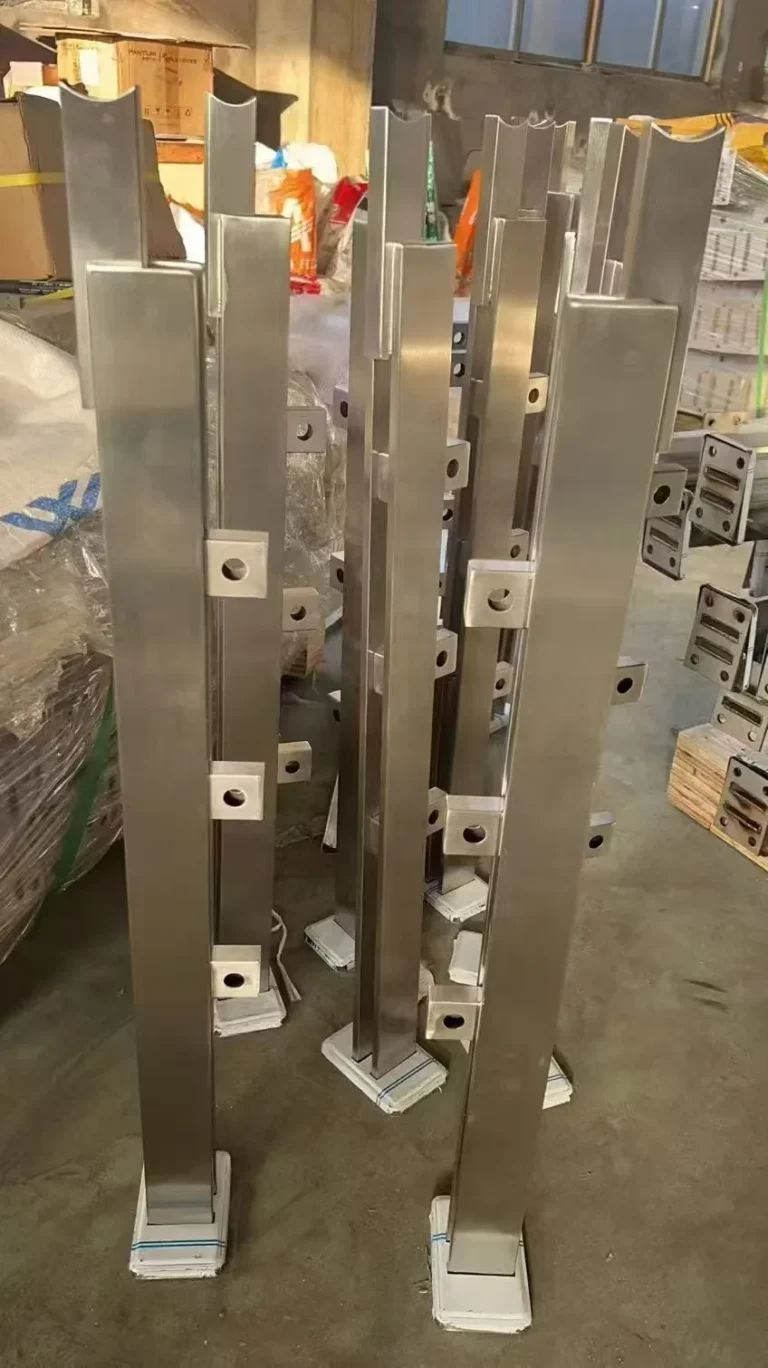
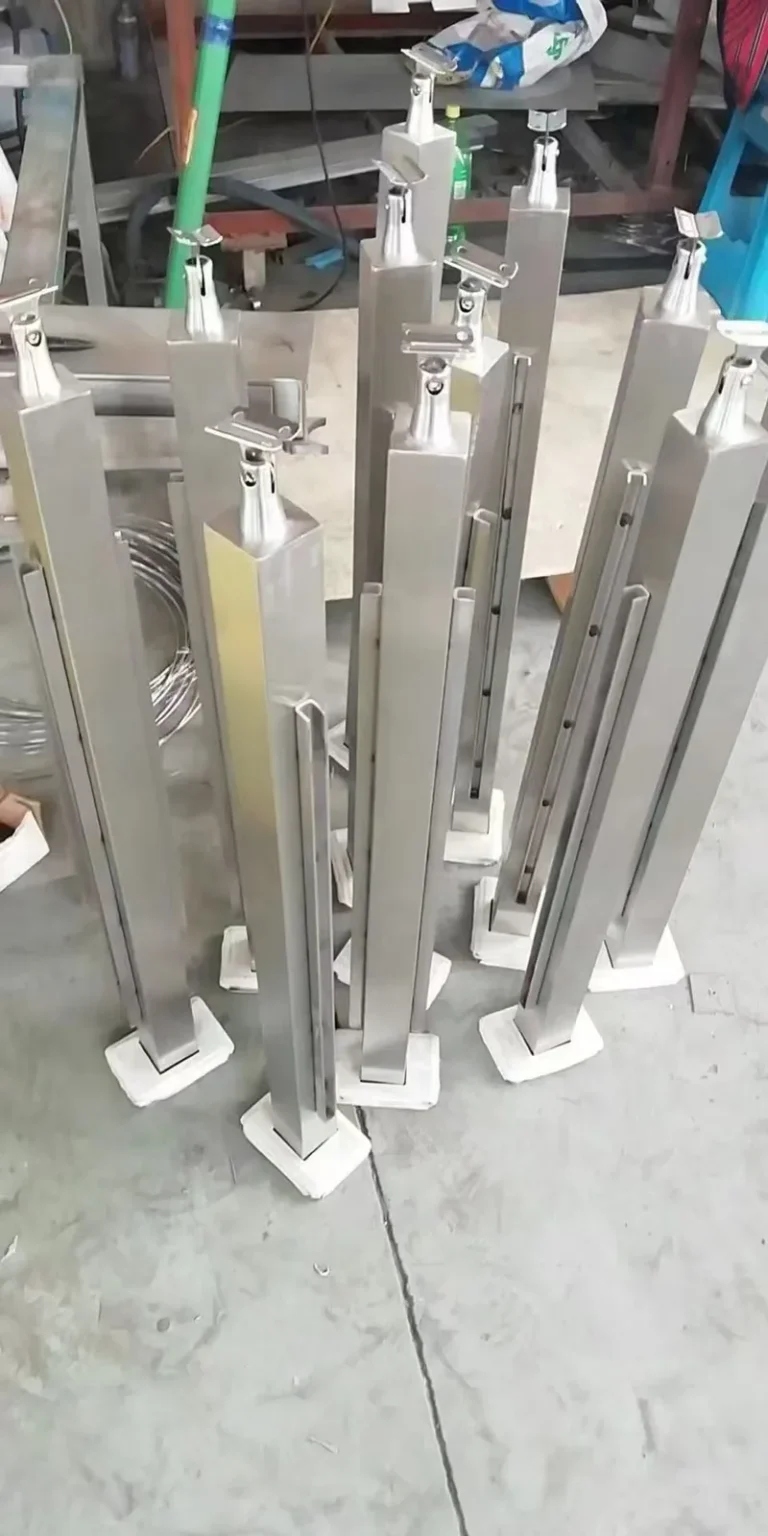
Glass alignment depends on repeatable centres and orientations. Ask how jigs, templates or CNC processes are used where appropriate, and how the finished assembly is checked. For welded glass adapters such as those shown on the BP-SG01 square post, review both positional accuracy and the visual finish around the weld.
5. What does the finish specification actually mean?
Terms such as satin, brushed, mirror, black or gold are incomplete without an approved visual reference. Establish the required appearance, texture or sample, grain direction and acceptable colour variation. For PVD or other decorative finishes, ask how different production batches will be managed and protected.
Agree on whether welds are visible, blended or intentionally expressed. The acceptable finish on a hidden base component may not be acceptable on a feature stair post at eye level.
6. Can the supplier provide a representative sample?
A sample should test the difficult parts of the job, not just demonstrate that stainless steel can be polished. Include the actual profile, one critical connection, a weld transition and the proposed finish. Record the approved sample with photographs and a reference number so production inspection has a clear benchmark.
7. What is checked before packing?
Ask for the inspection points that matter to installation: overall height, base dimensions, hole centres, orientation, handed parts, finish, quantity and labels. The buyer should define critical tolerances on the drawing. A vague promise of “100% inspection” is less useful than a clear list of characteristics, instruments and records.
8. How will posts be identified on site?
Repeated developments and stairs may contain many similar-looking parts. Each post should be linked to a position or type code that matches the installation drawing. Labels need to remain readable through shipping but should not damage the finished surface.
9. Is the packing suitable for architectural finishes?
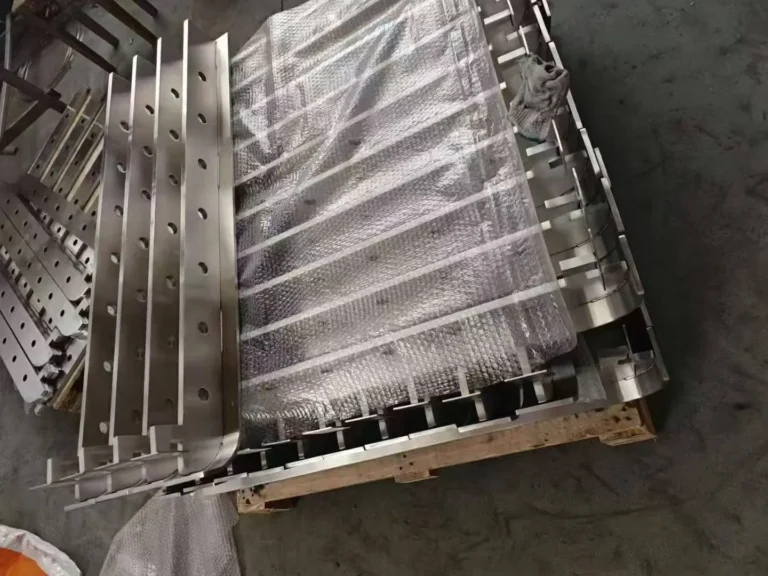
Export packing must prevent posts from rubbing against each other and protect projecting clamps, adapters and saddles. Ask how protective layers, separators, moisture control and outer cases are arranged. Clarify whether packing is organized by floor, area or installation sequence. BalusterPost post models use surface protection and export packing, with the final arrangement agreed for the order.
10. How are changes and nonconformities handled?
Ask for the process before placing the order. Who approves drawing changes? How is affected work held? What evidence is provided if a dimension or finish does not meet the approved requirement? A practical corrective process is more credible than a claim that problems never occur.
A 15-point comparison scorecard
- Understands the intended application and exposure
- Lists assumptions and exclusions
- Uses controlled, approved drawings
- Defines grade and material records
- Defines tube, bar and plate sections
- Coordinates glass and handrail interfaces
- Explains fabrication and positional checks
- Provides a representative finish sample
- Agrees critical dimensions and tolerances
- Identifies left, right, corner and stair parts
- Provides an inspection record when specified
- Protects architectural surfaces during packing
- States lead-time assumptions and approval hold points
- Controls revisions and changes
- Provides a clear contact for technical questions
Red flags during quotation
- A final price based only on a reference photograph
- No distinction between 304, 316L or other requested grades
- No written confirmation of included fittings and finish
- Dimensions changed to “standard” values without approval
- Decorative finish promised without a sample or batch discussion
- Safety or code compliance claimed without project-specific engineering
- Unrealistic delivery promises that ignore drawing and sample approval
BalusterPost’s current post range includes square-tube, round-tube, single and twin flat-bar, welded-adapter, stair and balcony configurations. Send your RFQ package through the contact page and request a response that identifies assumptions, options and drawing requirements.
Frequently asked questions
Should I ask for the lowest possible unit price first?
First establish a comparable scope. A lower price may exclude material documentation, fittings, finish work, samples, inspection or protective packing.
What is the most useful first sample?
Choose a sample containing the most visually or dimensionally critical connection, together with the specified profile and finish.
Can a catalogue replace shop drawings?
No. A catalogue helps select a product family, but project drawings control dimensions, positions, interfaces and mounting details.