
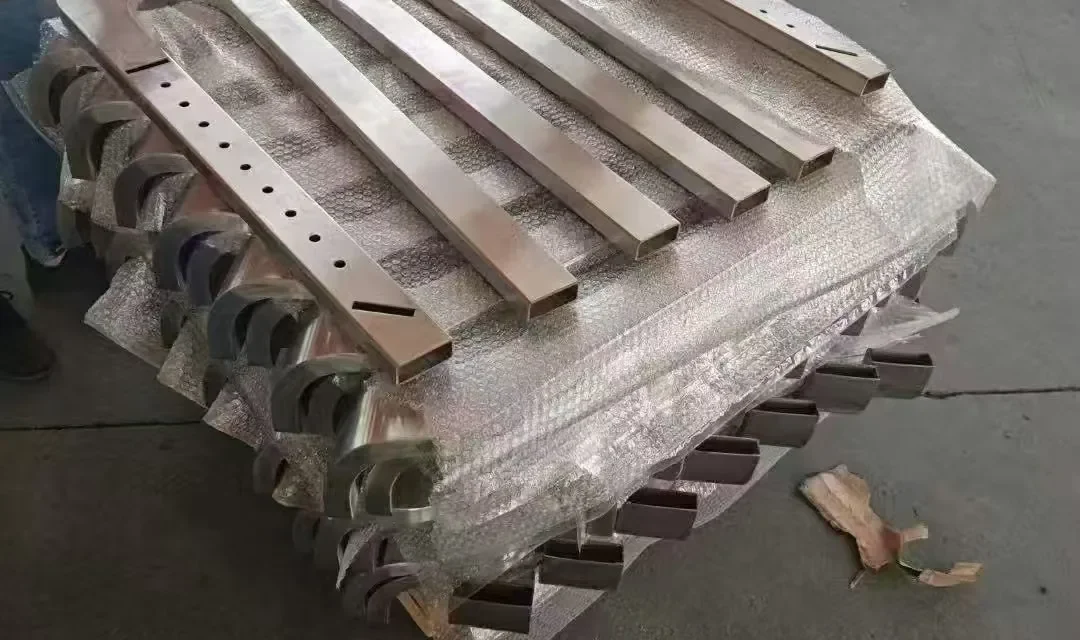
Before ordering fascia-mounted stainless steel railing posts, check that the approved fixing arrangement can be installed, inspected and maintained in the actual edge detail. Show the post, supporting structure, cladding, waterproofing interfaces and required tool approach on coordinated drawings. A post that fits the visible elevation may still have an inaccessible connection; do not resolve that conflict by changing fixings or cutting surrounding construction without approval.
What does an access review add to mounting-method selection?
Choosing side or fascia mounting establishes the general connection location. An access review asks whether the specified work can actually be performed there. These are different purchasing decisions. A catalogue view of a side-mounted post rarely shows the neighbouring facade, soffit, return wall or finished edge that determines access on the project.
The mounting-method guide compares the broader options. This article focuses on installation and inspection space after the project has proposed a fascia connection. It does not design anchors, prescribe edge distances or establish the suitability of a supporting structure.
BalusterPost manufactures stainless steel posts. Associated fittings may be supplied by specialist manufacturing partners. All available post configurations, mounting details and project-specific changes require confirmation against the actual drawing; this guide is not a promise that any catalogue post can be converted to fascia mounting.
Which drawings should the buyer collect?
Request a section and relevant elevation showing the actual supporting edge, post bracket or base, fastener locations and adjacent finishes. Identify drawing revisions and units. A plan can show where the post belongs while omitting the very obstruction that prevents access to a fixing.
Include the construction sequence. A connection may be accessible before a closure panel is installed and inaccessible afterward. That is not automatically unacceptable, but the project must decide how installation, inspection and later access will be handled. A purchasing assumption should not become an undocumented maintenance limitation.
For a square post enquiry, send the proposed fascia detail rather than relying on the product family’s external shape. Identify which parts are supplied by the post manufacturer and which belong to the supporting construction or project fixing package.
What clearances should be discussed without inventing dimensions?
Ask the responsible installer and fixing-system supplier to identify the space needed for the actual installation method, tooling and verification. The required approach can differ between connections. This guide deliberately provides no universal clearance dimension, because a convenient number could be unsuitable for the specified fixing and work sequence.
| Access question | Who supplies the information? | Evidence to retain |
|---|---|---|
| Can the specified installation method be performed? | Installer and applicable fixing supplier | Approved method and coordination detail |
| Can the connection be inspected? | Project inspection team | Inspection stage and access arrangement |
| Do finishes obstruct the approach? | Facade or architectural coordinator | Section including final finishes |
| Is access lost during construction? | Main contractor or sequencing coordinator | Hold point before closure |
| Can maintenance reach the connection? | Designer and owner representative | Accepted service-access arrangement |
Keep access requirements separate from structural dimensions such as specified anchor spacing or edge distance. They may interact in the coordination process, but purchasing staff should not move a fixing to gain tool space without the required design review.
How do covers and facade panels affect the order?
A decorative cover may conceal the connection in the finished appearance. Ask whether it is installed before or after the post fixing and how it is removed if removal is intended. Confirm its relationship to the actual bracket, fastener projection and adjacent panels. Do not infer removable construction from a photograph.
Similarly, a facade panel shown as a thin line may have returns, backing or attachment features that occupy the proposed work area. Obtain the relevant detail from the party responsible for it. A post supplier cannot confirm clearance against an undefined neighbouring component.
Record supply boundaries for covers and trim. If these are separate project items, identify who checks fit against the railing connection. If they are included in the enquiry, request confirmation of the actual proposed configuration and finish rather than assuming a standard accessory is suitable.
What should happen when access conflicts with the approved design?
Describe the conflict with a marked drawing and, where useful, a photograph or coordinated model view. State which operation cannot be completed. “The bracket does not fit” is less useful than identifying the obstructed fastener, inspection point or cover-removal direction.
Ask the responsible parties to compare options and issue an approved change. Possible project decisions may involve sequencing, adjacent construction or the connection itself, but none should be adopted solely through an informal site instruction to the fabricator. The final approved detail must reach production and installation together.
Do not solve the conflict by substituting an unapproved anchor, omitting a fixing, enlarging a hole or altering waterproofing. This is a procurement coordination rule, not a description of permissible field repairs. The project needs an explicit decision for its actual circumstances.
Can a mock-up help before the order is released?
A coordinated mock-up can demonstrate the proposed assembly sequence and reveal obvious access conflicts. Define what it is intended to check, including which surrounding construction is represented. A post mounted to an open test plate does not reproduce a connection behind a closed facade panel.
Document the mock-up result and its limits. Demonstrating that a tool can reach a fixing does not establish the connection’s structural adequacy. The first-article inspection guide helps organize dimensional and assembly observations; the project must separately determine required engineering evidence.
What should the release package contain?
Include the accepted post drawing, supporting-edge section, fixing reference, adjacent-finish detail and construction-sequence notes relevant to access. Identify any inspection hold point before closure. Make sure the component schedule uses the same revisions as the accepted coordination drawings.
At receiving, keep parts associated with their approved configuration. A later substitute cover or bracket can reopen an access issue that was previously resolved. The purchase order should require affected changes to be reviewed before they are incorporated into the delivery.
What does an unresolved access item look like?
Suppose a fascia closure is scheduled before the railing connection is inspected. The release question is whether the accepted sequence provides the inspection team access at the required stage. It is not enough to confirm that the bare bracket fitted during a workshop trial.
Record the affected position, closure detail, operation needing access and named person responsible for resolving it. Attach the accepted sequence or revised detail when the issue closes. If only some positions are affected, identify them explicitly so the remaining order can be reviewed on its own merits. This prevents a localized coordination problem from becoming either a blanket approval or an unexplained hold on every post.
Fascia access questions from buyers
Does a side-mounted post always need rear access?
Do not generalize. The requirement depends on the actual connection and installation method. Obtain the applicable instructions and project detail.
Can the installer use a smaller tool to solve the problem?
Only if it remains consistent with the approved installation and verification requirements. Tool availability should not be used to bypass a required procedure.
Is future access the post supplier’s responsibility?
Responsibilities must be assigned in the project. The post supplier can provide component information, while the designer and owner must address the installed access arrangement.
What is the best attachment for an enquiry?
Send Ryan Liang the coordinated edge section, including the proposed post connection and surrounding finishes. Mark open access questions before requesting final fabrication pricing.




