
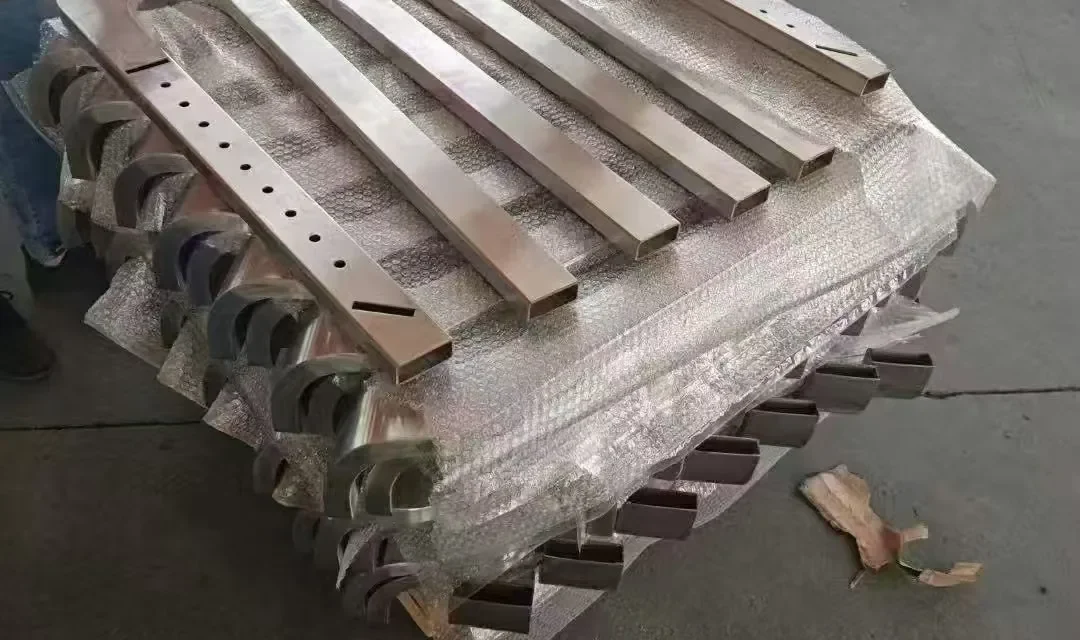
Before ordering stainless steel railing posts, identify the actual supporting construction and provide the approved connection detail, including the relationship between finishes and the structural support. A label such as concrete floor or steel edge is not a complete fixing specification. Separate the post supply from anchor selection and project design, and resolve missing substrate information before releasing affected fabrication details.
Why does substrate information belong in a post RFQ?
For this specific decision, use the hollow steel support connections for railing posts guide alongside the approved project documents.
For this specific decision, use the timber deck framing for stainless railing posts guide alongside the approved project documents.
For this related decision, review wind information for glass railing posts before releasing the affected work.
Before accepting substitute anchors, check the anchor qualification for the design condition and compare the exact variant with the released plate detail.
The purchased post connects to something outside the manufacturer’s component drawing. If that supporting construction is undefined, the supplier may receive an apparently complete post schedule while the project connection remains unresolved. The RFQ should expose that boundary rather than implying the post manufacturer has approved a support it has not assessed.
This guide is an information checklist for purchasing coordination. It does not select anchors, calculate loads, prescribe edge distances or approve a substrate. Those decisions require the applicable project information and appropriately responsible professionals. A catalogue mounting photograph does not replace that work.
BalusterPost’s core manufactured products are stainless steel baluster posts and railing posts. Business coordination is in Taizhou, Jiangsu, China. Any proposed connection configuration and associated supply scope must be confirmed against the actual enquiry. Related accessories may come from qualified specialist manufacturing partners.
What is the difference between a finished surface and a support?
A visible tile, paving layer, screed or decorative panel should not be described as though it necessarily identifies the structural support behind it. Show the layers and name the relevant supporting element on the project detail. Purchasing staff should transmit the designer’s information rather than infer support adequacy from appearance.
For a square stainless steel post, include the proposed base or bracket and its relationship to the supporting construction. The post’s external profile alone cannot explain how the installation load path is intended to work.
If the final finish is not selected, mark the interface as provisional. State which dimensions depend on its thickness or position and who will confirm them. Do not allow an estimated finish layer in an early quotation sketch to become an unnoticed production instruction.
Which project documents should accompany the enquiry?
Provide the accepted connection section, relevant supporting-structure drawing and post position schedule. Identify revisions and any location-specific differences. If the project engineer supplies a separate fixing schedule, connect its references to the post drawing so the manufacturer can identify the intended interface.
Ask the project team to distinguish verified existing conditions from design assumptions. A refurbishment project may have less reliable information about concealed construction than a new-build drawing suggests. Where investigation is outstanding, retain that uncertainty in the enquiry rather than presenting an assumed detail as surveyed fact.
A site photograph is useful context, especially for obstructions and interfaces, but it cannot provide every hidden dimension or material property. Use photographs alongside the required drawings and assessments, not as a replacement for them.
How should information ownership be assigned?
| Information | Party to identify | Release question |
|---|---|---|
| Supporting construction | Project designer or responsible surveyor | What is confirmed and what remains assumed? |
| Fixing design | Responsible design professional | Which approved detail governs the connection? |
| Anchor product information | Specified fixing supplier | Which instructions apply to the selected product? |
| Post fabrication | Post supplier | Does the drawing match the accepted interface? |
| Installation method | Responsible installer | Can the specified method be performed? |
| Final authorization | Named project authority | Who closes the open interface items? |
The table assigns questions, not universal contractual duties. Actual responsibilities depend on the project agreements. Record the named parties for the order so a missing answer is directed to someone who can supply or approve it.
What must be confirmed before base details are released?
Check that the post drawing and accepted connection detail use consistent references for the mounting arrangement. Identify any hole pattern, orientation or associated component that depends on the selected fixing design. The fabricator should not have to guess which of two conflicting drawings takes precedence.
The mounting-method guide compares the broader choices. This checklist begins after a proposed method exists and asks whether the information supporting that choice has actually been supplied and approved.
If a fixing detail changes, review affected fabrication features before production continues. A change described as an anchor substitution can still raise an interface question. Obtain the responsible design decision rather than assuming that a different product name leaves every physical requirement unchanged.
How should access and adjacent construction be included?
Show relevant edge finishes, waterproofing interfaces, cladding and closures on the coordination detail. Ask the responsible project parties to identify any constraints on the proposed installation. Do not instruct the post supplier to solve an undefined building interface through an improvised bracket modification.
The fascia installation access checklist addresses tool and inspection access in more detail. A support description and an access description answer different questions; both may be needed before the connection can be released.
Where construction sequencing affects access, record the relevant stage and reviewer. A detail that can be installed before closure may require a defined hold point. The purchasing package should retain that agreed sequence without inventing an installation procedure.
What if the site differs from the approved information?
Identify the affected positions and document the actual observation. Compare it with the reference used for the order and ask the responsible project team to assess the difference. Do not simply enlarge a hole, omit a fixing or add an unapproved packing arrangement to continue installation.
Record whether the disposition changes the post, the fixing design, adjacent work or only the installation sequence. Each accepted change should reach the parties whose work it affects. A revised site sketch that never reaches production can leave the next delivery repeating an obsolete interface.
For an illustrative example, a buyer may discover that the edge detail differs between two balcony zones previously grouped under one standard section. Split the affected positions in the schedule and obtain the appropriate approved details. Do not extend an acceptance decision for one zone to the other without review.
How can a buyer compare quotations with different assumptions?
Ask each supplier to list the connection information used and any exclusions. One price may cover only the fabricated post while another includes a proposed accessory package. Comparing totals without those boundaries can conceal an unresolved design or supply responsibility.
Prepare a common clarification sheet before selecting the offer. Identify which assumptions are accepted, which remain provisional and which require project review. The resulting comparison should show a consistent scope without implying that a commercial quotation constitutes structural approval. Retain the clarification with the final order so the production team receives the same basis that procurement evaluated.
Substrate information FAQ
Is “for concrete” enough for a post quotation?
It may begin a discussion, but it does not define an approved project connection. Identify the actual support and required fixing information before production release.
Can the post supplier select the building’s anchors?
Do not assume that responsibility is included. Define the supplier’s scope and the project’s design and acceptance responsibilities explicitly.
Does a successful sample fit approve the support?
No. Physical fit is a limited observation. The project must separately establish the required suitability and performance evidence.
What should I send to BalusterPost?
Send Ryan Liang the post schedule, approved connection section and supporting-construction references. Mark provisional information and identify who will close each outstanding design question before fabrication is authorized.




