Short answer: a stainless steel railing post EPD should identify the declared product, lifecycle boundary, calculation rules, data period, programme and independent verification. It can support environmental procurement, but it does not by itself prove that a post is lower carbon, structurally compliant or suitable for a project. Buyers must compare declarations only when their product function, unit, scope and methodology align.
This 2026 industry update explains what overseas buyers, architectural-hardware distributors and project teams should request when environmental information is added to a stainless steel baluster post RFQ.
What changed with ISO 14025 in 2026?
The International Organization for Standardization published the second edition of ISO 14025:2026 in June 2026. ISO identifies the 2006 edition as withdrawn and the 2026 edition as the current published standard. The new edition sets principles, requirements and guidance for environmental product declaration programmes and their EPDs, using the ISO 14040 and ISO 14044 lifecycle-assessment framework.
For a railing buyer, this is not a reason to insert “ISO 14025” into every purchase order without context. It is a reason to check which EPD programme, product category rules, verification route and transition requirements apply to the declaration being requested. Existing declarations may still show an earlier reference depending on programme rules and validity dates; the programme operator should resolve transition questions.
What is an EPD for a stainless steel railing post?
An environmental product declaration presents quantified environmental information for a defined product under stated calculation and reporting rules. For a custom stainless steel railing post, the declared item might be a post model, a product family, a mass-based amount of fabricated metal or another unit defined by the applicable product category rules.
The declaration should make its boundary visible. Depending on its rules, it may cover raw-material supply, tube or bar production, fabrication, finishing, packaging, transport, installation, use, replacement and end-of-life stages. A number without its declared unit and lifecycle modules cannot be compared responsibly.
An EPD is environmental information, not a structural approval. It does not replace project drawings, load design, material requirements, welding controls, finish acceptance or local railing-code review. Keep the environmental evidence package connected to—but distinct from—the railing compliance document hierarchy.
Four evidence levels buyers should not confuse
| Evidence level | What it can support | What it cannot automatically prove |
|---|---|---|
| Industry lifecycle inventory | Background data for stainless steel material assessment | Impact of one named post from one factory |
| Mill or upstream material EPD | Declared impacts for a defined steel product and producer scope | All downstream fabrication, finishing and packing |
| Fabricated-product EPD | Declared impacts for the covered post or product family and boundary | Every custom drawing, location or installation scenario |
| Project-specific assessment | Project quantities, transport scenarios and specified lifecycle assumptions | Automatic transfer to a different project |
Use the evidence level that answers the procurement question. Industry data may be useful during early material studies. A registered product declaration may be needed for a formal submittal. A project assessment may be required when exact quantities, routes and installation scenarios matter.
Why a recycled-content statement is not an EPD
Recycled content describes one material attribute. An EPD reports multiple environmental indicators within a defined lifecycle model. The two should not be treated as synonyms, and neither should be converted into a “low-carbon” claim without an appropriate comparison basis.
The worldstainless lifecycle inventory resource explains that lifecycle assessment considers resource use and emissions across the lifecycle, including durability and end-of-life recovery. Its industry dataset can support assessment work, but it is not automatically a product-specific declaration for a fabricated railing post.
Ask where recycled-content data came from, which material batch or production route it covers, which calculation method was used and whether it is supplier-specific or an industry average. Do not assume that a higher percentage alone determines the total declared impact.
How should buyers check whether two EPDs are comparable?
Begin with function, not the headline carbon number. A square tube glass post and a heavy fascia-mounted post may not provide the same function, use the same amount of material or include the same components. Even similar posts can have different declared units and lifecycle coverage.
EPD International warns in published declarations that comparison requires aligned product category rules, product functions and technical performance, declared or functional units, lifecycle scope, impact-assessment methods and validity. Its explanation of independent EPD verification also shows why the programme and verifier should be identifiable.
EPD comparison gate
- Are both declarations valid on the comparison date?
- Do they cover equivalent post functions and technical performance?
- Do they use the same declared or functional unit?
- Are the product category rules identical or formally aligned?
- Do they include the same lifecycle modules and cut-off rules?
- Are geography, energy data, transport assumptions and data periods disclosed?
- Are accessories, base plates, glass adapters, fasteners and packing treated consistently?
- Is third-party verification and programme registration clear?
If one answer is no or unknown, record the difference instead of ranking the products by a single figure. Environmental comparison needs the same discipline as normalizing stainless steel post quotations.
What product data should a railing post buyer request?
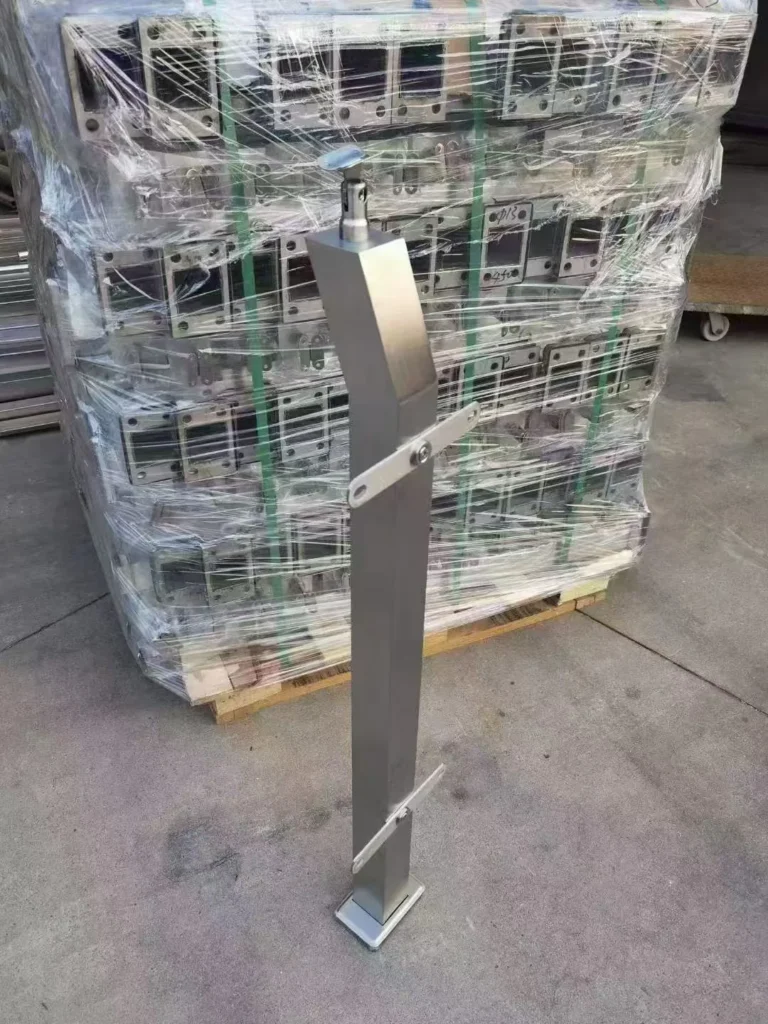
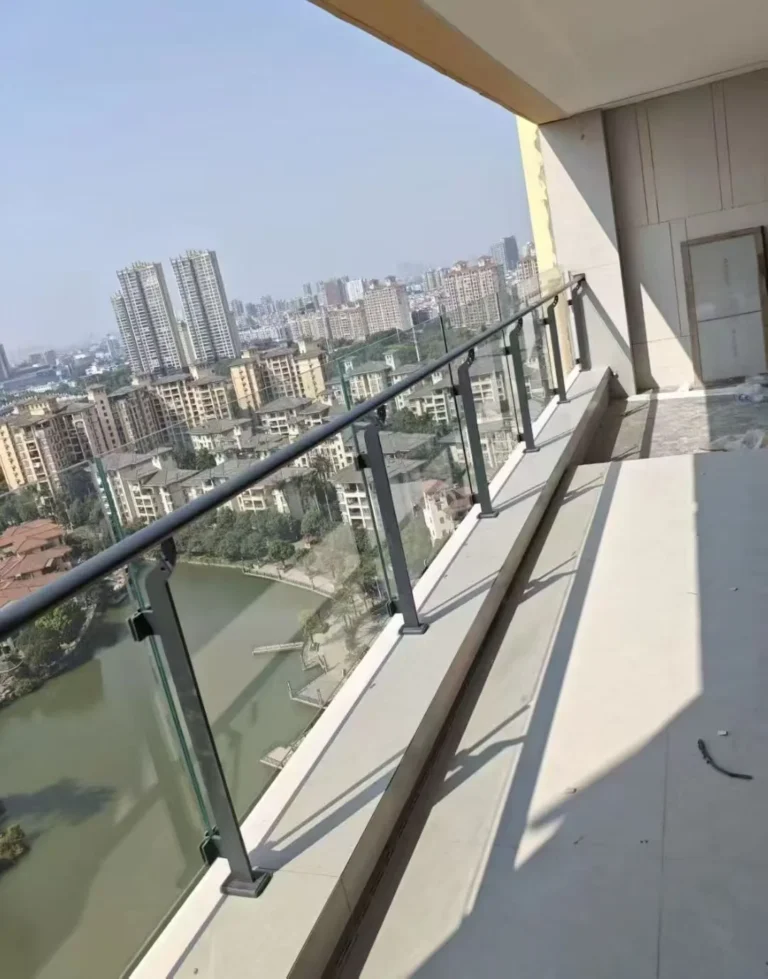
A useful environmental data request starts with a technically frozen product. Ask for the drawing number and revision, post type, stainless grade, component list, net mass, finish, mounting method and included accessories. A square tube glass balustrade post should not be represented by data for an undefined “stainless steel component.”
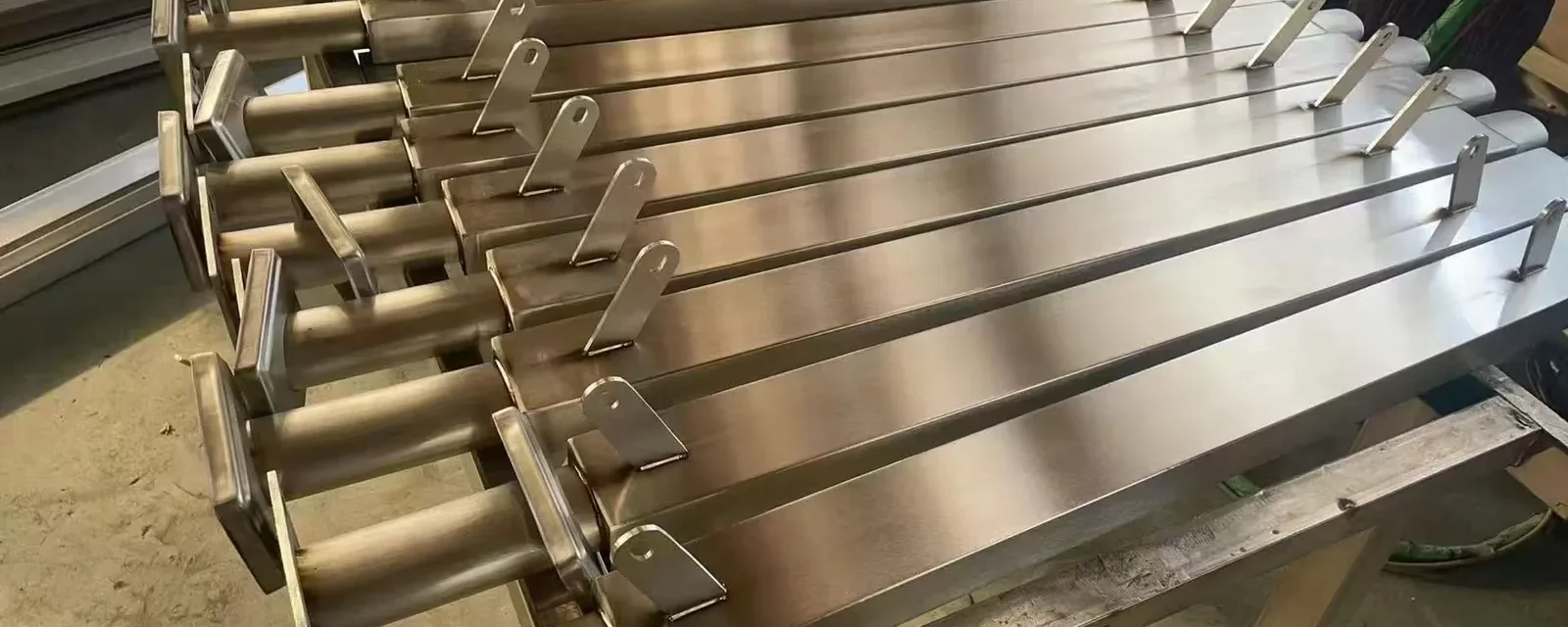
The bill of materials should separate the post body, base plate, welded tabs or adapters, covers, fasteners, gaskets and coordinated hardware when those items fall within the declared product. Identify the origin and type of upstream environmental data, while respecting commercial confidentiality.
For fabrication, request the declared production site or representative site scope, data period, allocation method where relevant, finish route, packaging materials and waste treatment assumptions. For logistics, state whether the EPD contains fixed scenarios or whether the project team must add actual delivery distances and transport modes.
Material grade still follows exposure and design requirements
Do not change SUS304 to SUS316L—or reduce post thickness—solely to improve one environmental indicator. Grade and geometry must first meet the project’s corrosion environment, structural design, fabrication and appearance requirements. The 304 versus 316L railing post guide explains why exposure conditions remain central to material selection.
Environmental assessment can then compare technically acceptable options. A durable solution should be evaluated across the required lifecycle boundary rather than on manufacturing data alone. Service life, maintenance, replacement and end-of-life assumptions must be documented rather than invented.
How to write an EPD requirement into an RFQ
Use a separate environmental-information schedule instead of adding a vague line such as “provide green certificate.” A clear request can include:
- Purpose of the information: early design, tender comparison, formal submittal or project LCA.
- Accepted EPD programme and applicable product category rules.
- Required declared product, drawing revision and component boundary.
- Required lifecycle modules, indicators and reporting format.
- Geographical scope and project transport scenarios.
- Verification, registration, publication and validity requirements.
- Rules for product-family or representative-product declarations.
- Deadline, language and responsibility for updates or clarifications.
Mark each item as mandatory, preferred or informational. A supplier should be able to answer “available,” “not available,” “upstream data only” or “requires project-specific work” without being encouraged to relabel a generic document as a product EPD.
Common environmental-claim red flags
- “Low carbon” appears without a reference product, unit, boundary or method.
- A mill-level declaration is presented as if it covers fabrication and delivery of the finished post.
- Recycled content is presented as the complete lifecycle result.
- An expired or withdrawn document is supplied without transition clarification.
- Two EPD values are compared although their lifecycle modules or PCR versions differ.
- A declaration for one product family is applied to a custom post outside its stated range.
- Environmental documentation is used as a substitute for structural or material compliance.
What can BalusterPost provide for an environmental review?
BalusterPost’s core manufactured products are drawing-based stainless steel baluster posts and stainless steel railing posts, coordinated from Taizhou, Jiangsu, China. Related hardware may be coordinated through qualified specialist manufacturing resources when requested, and its environmental data must retain the correct supplier and product boundary.
This article does not claim that BalusterPost currently holds a product-specific EPD. For an environmental-information request, buyers should identify the required programme, product scope and project use. Available drawing, bill-of-material, mass, finish, packing and upstream documentation can then be reviewed against that requirement rather than being overstated. Contact Ryan Liang, Export Manager, with the project schedule and required evidence level.
Frequently asked questions
Does a stainless steel railing post EPD prove the product is low carbon?
No. An EPD reports environmental information under stated rules. A lower-impact claim requires a valid, like-for-like comparison with aligned products, units, lifecycle scope and methods.
Is an EPD the same as recycled-content certification?
No. Recycled content is one material attribute. An EPD uses lifecycle assessment to report multiple indicators for a defined product and boundary.
Can a stainless steel mill EPD cover a finished baluster post?
It can provide upstream material information within its declared scope, but it does not automatically include downstream cutting, welding, finishing, accessories, packaging or delivery of the fabricated post.
What is the current ISO standard for EPD programmes?
ISO lists ISO 14025:2026, edition two, as published in June 2026 and the 2006 edition as withdrawn. Buyers should still confirm the applicable EPD programme and its transition rules.
What should I send a railing post supplier with an EPD request?
Send the drawing revision, product and component boundary, quantities, material and finish specification, intended project use, accepted programme or PCR, lifecycle modules, verification requirement, geography and submission deadline.