
Short answer: UK importers of stainless steel railing posts should prepare stronger product-safety, information and traceability files, but should not treat the 2026 Construction Products Reform White Paper as final law. Current Great Britain marking and construction-product rules continue while the government develops reforms, including a proposed general safety requirement targeted for later implementation.
What did the UK publish in 2026?
On 25 February 2026, the UK government published its Construction Products Reform White Paper. It sets out a long-term programme to reform product scope, safety requirements, standards, testing, certification, product information, market surveillance and accountability across the construction-products supply chain.
The white paper is a policy and implementation programme. It is not a statement that every proposal already applies to products placed on the market today. Some measures can use existing powers, while others need primary or secondary legislation, further consultation and transition arrangements.
What rules apply in Great Britain now?
Great Britain means England, Scotland and Wales. The current construction-products regime remains in place while reforms are developed. Products covered by a UK designated standard, or subject to a UK technical assessment route, follow the applicable construction-product requirements.
Current GOV.UK construction-products guidance states that CE marking continues to be available for placing construction products on the Great Britain market and that UKCA can also be used. The correct route depends on the product, applicable standard or assessment and the evidence behind the marking.
Northern Ireland follows a different framework under the Windsor Framework. The government’s current product-marking table lists UKCA or CE for construction products in Great Britain and CE, or CE with UKNI where applicable, for Northern Ireland. Buyers must identify the destination market before requesting a marking.
Does every stainless steel railing post need construction-product marking?
No blanket answer should be taken from the product name. The buyer must establish how the post is placed on the market, its intended use, whether it is a construction product, and whether an applicable designated standard or technical assessment route covers it. A component, a complete kit and a project-specific fabricated item may not follow identical routes.
Do not ask a supplier to add CE or UKCA simply because the post will be installed in a building. The importer should confirm the regulatory basis, required declaration, assessment body where relevant and economic-operator responsibilities. The railing compliance documents guide explains why product conformity, building-code approval and ordinary quality records must remain separate.
What is the proposed general safety requirement?
The white paper proposes a general safety requirement (GSR) intended to bring construction products within a safety-focused regulatory framework, including products not covered by designated standards. The government says it aims to introduce regulations by the end of 2026, subject to parliamentary time, and bring the GSR into force in late 2027 after a transition period.
These are planned dates, not a guarantee that a final rule will have exactly the same scope, obligations or timing. Importers should monitor adopted legislation and regulator guidance before making compliance claims.
| Status in September 2026 | Practical meaning for railing-post buyers |
|---|---|
| Current: GB construction-product rules continue | Confirm the applicable designated standard or technical assessment route for the actual product. |
| Current: CE remains available in Great Britain | Do not assume every construction product has already switched exclusively to UKCA. |
| Current: Northern Ireland follows a different route | State GB or NI destination and obtain market-specific advice. |
| Proposed: general safety requirement | Prepare product-risk, information and traceability controls, but do not claim compliance with an unfinalised rule. |
| Planned: regulations by end 2026 and force in late 2027 | Track final legislation, transition dates and official guidance rather than using the white paper as law. |
What may change for manufacturers and importers?
The reform programme places greater emphasis on safety across the product chain. The white paper proposes duties for economic operators, including manufacturers, importers and distributors, to place only safe construction products on the market. It also describes future importer and distributor expectations around manufacturer verification, product information, safe transport and storage, and customer records that support traceability.
Final obligations must be read from the enacted rules. Nevertheless, the direction is clear: a UK importer should not rely only on a supplier’s product photo, invoice and unsupported “meets UK standards” statement. The importer needs a controlled understanding of the product, source, intended use, evidence and information delivered to downstream users.
Why is CE or UKCA not the same as “safe for this project”?
A conformity mark communicates compliance with a defined regulatory route. It does not approve every possible installation, substrate, post spacing, load, glass configuration or handrail detail. The white paper itself notes the risk of assuming that a mark confirms overall product safety when the underlying standard may address only specified characteristics.
Project designers and installers still need to check the railing system against applicable building regulations, structural requirements and installation conditions. A supplier declaration cannot replace project engineering.
What product information should importers prepare?
Start with information that can be controlled now, even before final reform rules are published:
- Product identity: model, buyer part number, drawing number and revision.
- Manufacturer identity: the entity responsible for manufacturing the post, not only a reseller name.
- UK economic operator: importer or authorised representative details where required by the applicable route.
- Intended use: the use represented in technical and marketing information.
- Regulatory route: designated standard, technical assessment or other confirmed basis.
- Declared information: performance, limitations and conformity documents required by that route.
- Safety information: handling, storage, installation, maintenance and foreseeable misuse information within scope.
- Traceability: batch, order or serial information linked to production and supplied records.
- Change control: advance review of changes to material, geometry, source, process or evidence.
- Record retention: responsible party, location, format and availability period under the applicable rules.
The material verification guide provides a practical chain from mill certificates and heat identity through fabrication and PMI. Material evidence is important, but it is only one part of the product file.
How should product claims be controlled?
Marketing, quotation and technical documents should make the same supportable claims. Avoid absolute phrases such as “fully UK compliant,” “approved for all buildings” or “certified railing system” unless the scope and evidence genuinely support them.
What traceability should follow the shipment?
Traceability should connect the commercial order to the produced variants and their technical file. For custom railing posts, record the PO line, approved drawing revision, quantity, batch identity, material records, inspection status and package label. This allows the importer to identify which customers received an affected batch if a safety or conformity issue emerges.
The railing post purchase-order checklist explains how to lock variants, documents and change control before production. A correct total quantity is not enough when level, corner and left- or right-hand stair posts differ.
How do digital product records fit the UK reform?
The white paper discusses better product information and potential consistency with relevant elements of the reformed EU regime where that supports UK objectives. Buyers should therefore make product data structured, revision-controlled and exportable, rather than building a closed system around one QR-code vendor.
This does not mean the EU Digital Product Passport automatically satisfies future UK requirements. The EU construction DPP guide explains that the EU system also depends on delegated and product-specific rules. UK and EU routes must be checked separately as they develop.
What should change in a UK buyer’s RFQ?
Add a regulatory-information schedule instead of asking for “UK approval.” It should request:
- Target market: Great Britain, Northern Ireland or both.
- Product description, intended use and supply format: component, kit or project-specific item.
- Proposed regulatory route and the party responsible for confirming it.
- Applicable declarations, marking and supporting assessment evidence.
- Manufacturer and UK economic-operator information.
- Technical, installation, safety and maintenance information.
- Batch traceability and document-revision controls.
- Change-notification and nonconformance procedures.
- Records required before shipment and records supplied with the goods.
Mark unresolved fields as “to be confirmed by UK importer” rather than inviting the overseas supplier to invent a legal route. A qualified UK construction-products adviser should review uncertain scope or conformity questions.
How should importers prepare without overreacting?
The sensible response is readiness, not relabelling. Do not replace CE with UKCA, add a GSR claim or create a new “UK safety certificate” solely because the white paper exists. Instead:
- Map each railing-post product and intended use to its current GB or NI route.
- Find gaps in manufacturer identity, technical evidence, instructions and traceability.
- Review storage and transport controls that could damage finished posts or lose identification.
- Align websites, quotations, declarations and installation information.
- Assign an owner to monitor final legislation, transition dates and regulator guidance.
- Update contracts and supplier requirements only when the final obligation and scope are known.
How BalusterPost can support a UK importer
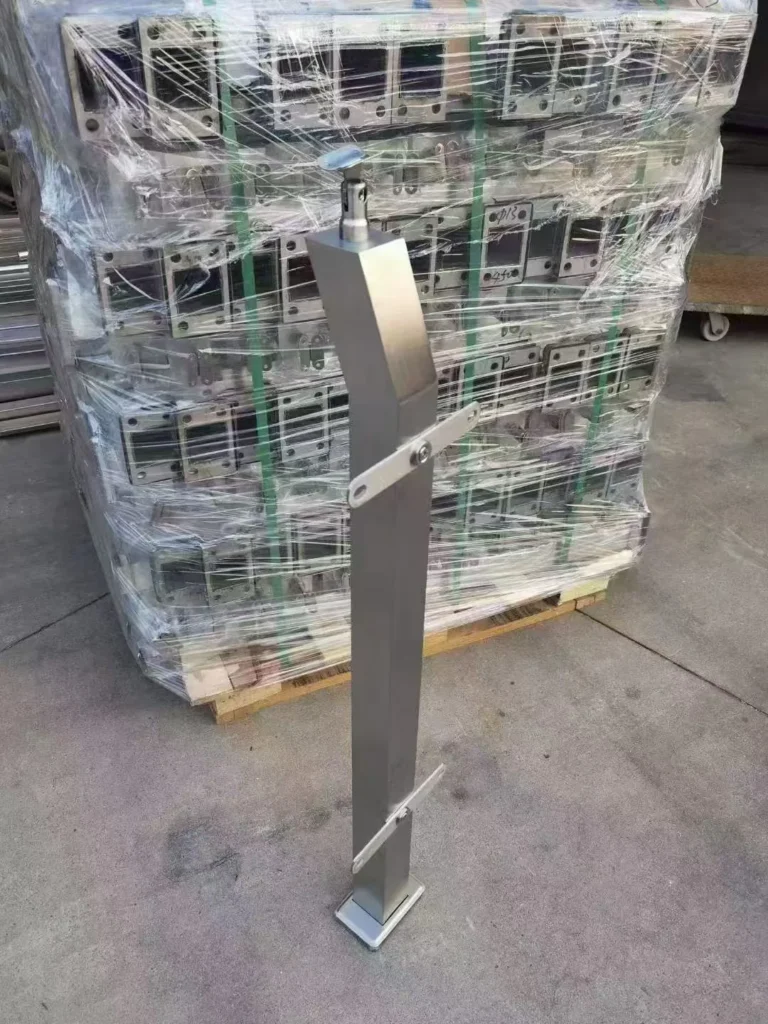
BalusterPost manufactures drawing-based stainless steel baluster posts and stainless steel railing posts, with business coordination from Taizhou, Jiangsu, China. We can organise agreed product identity, approved drawings, material and finish records, inspection results, batch references and packaging information available within an order.
We do not claim that one post model is automatically covered by every UK construction-product route. Related glass clamps, fasteners and specialist accessories may come from qualified professional manufacturing resources, so their manufacturer identity and evidence should remain separate.
Review a representative stair glass balustrade post system, then contact Ryan Liang, Export Manager, with the target UK market, intended use, controlled drawing and regulatory-information schedule.
Frequently asked questions
Is the 2026 UK white paper already binding law?
No. It sets out the government’s reform programme. Current rules continue until legislation and transition arrangements bring new requirements into force.
Is CE marking still accepted for construction products in Great Britain?
Current GOV.UK guidance says CE marking continues to be available, and UKCA can also be used. Confirm the applicable product route and evidence rather than selecting a mark by preference alone.
Will every railing post fall under the proposed GSR?
The proposal aims to broaden safety coverage across construction products, but buyers must wait for the final legislation, definitions, exclusions and transition rules before making a product-specific conclusion.
Does Northern Ireland follow the same marking route as Great Britain?
No. Northern Ireland follows relevant EU product rules under the Windsor Framework, with CE or CE plus UKNI routes depending on the conformity-assessment arrangement.
Does a CE or UKCA mark prove the installed railing is safe?
No. A mark relates to a defined product conformity route. Project design, post spacing, anchors, substrate, glass, installation and building-regulation approval remain separate.
What should importers do first?
Confirm whether the product is a construction product under the current destination-market rules, identify its applicable route, then review product information and traceability gaps while monitoring final reform legislation.