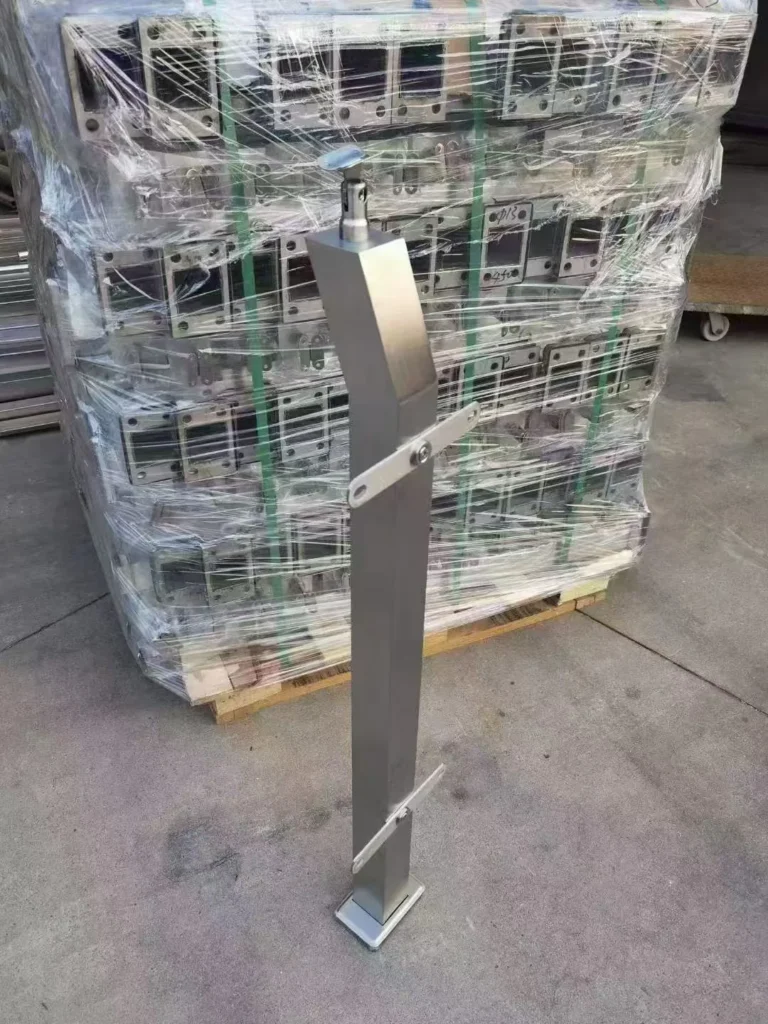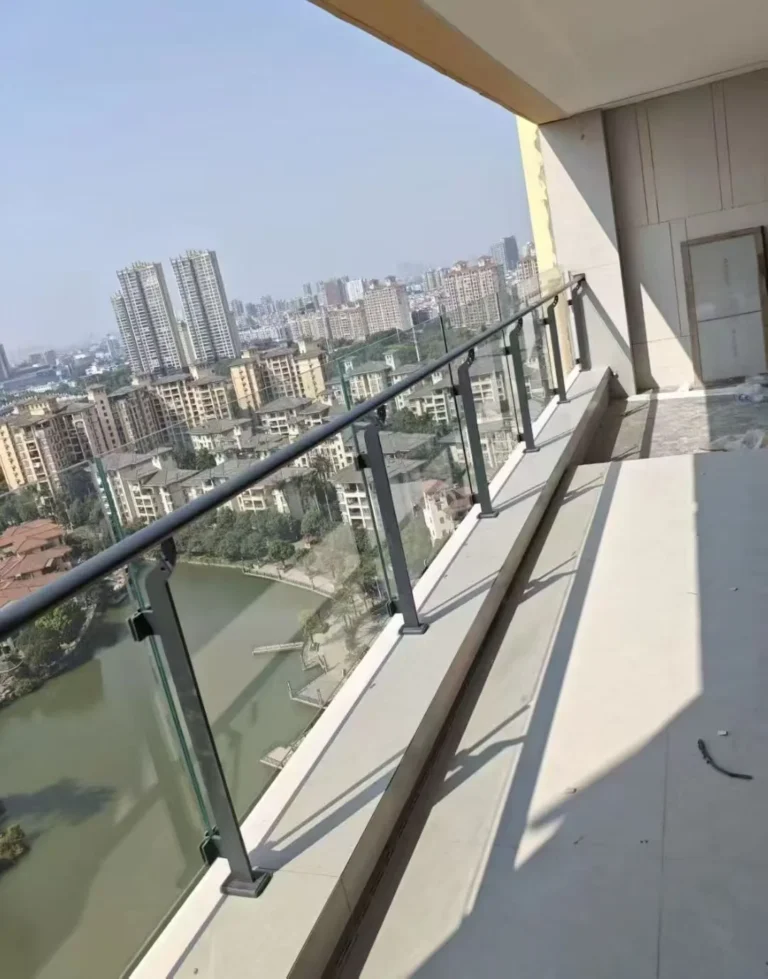
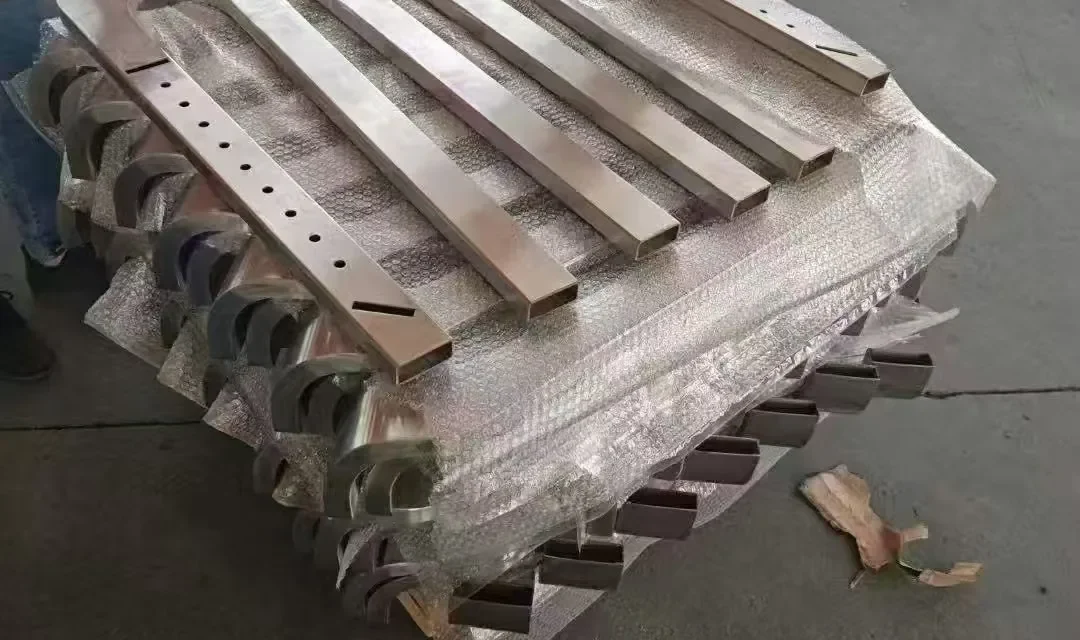
Short answer: an EU buyer should check the eight-digit CN code, annual imported net mass and CBAM data route before ordering stainless steel railing posts. The definitive regime began on 1 January 2026, and the regulation covers several iron-and-steel headings that may include balustrades or other fabricated posts. Classification and importer obligations must be confirmed for the actual goods.
Why CBAM matters to railing post buyers in 2026
The European Union Carbon Border Adjustment Mechanism, or CBAM, places carbon-reporting and certificate obligations on imports of specified goods. The European Commission confirms that the definitive regime applies from 1 January 2026. Iron and steel are among the covered sectors.
For stainless steel baluster posts, the first question is not simply “Is this stainless steel?” It is “Under which eight-digit Combined Nomenclature code will this finished product be declared?” Product design, degree of fabrication, intended use and customs interpretation can affect classification. Buyers should obtain a classification decision from their customs specialist or authority rather than copy a supplier’s suggested code without review.
Are stainless steel railing posts in the CBAM product scope?
They can be, depending on classification. Annex I of the consolidated CBAM Regulation includes heading 7308 for iron or steel structures and parts of structures. Its wording expressly gives balustrades, pillars and columns as examples. The Annex also includes heading 7326 for other articles of iron or steel, along with covered tube, fitting and fastener headings.
This does not mean that every post, accessory or shipment has the same code. A finished railing post, unfinished tube, anchor fastener and separately packed glass clamp may require different classifications. “Stainless steel” describes material; it does not settle the customs heading.
| Procurement question | Why it matters | Who should confirm it |
|---|---|---|
| What is the eight-digit CN code? | CBAM scope is defined by listed CN headings and codes | EU importer with its customs adviser or authority |
| What is the net mass? | The 50-tonne threshold is mass-based and cumulative | Importer using customs and shipment records |
| Who is importer of record? | Authorisation, declaration and certificate duties attach to the importer or representative | Contracting parties and customs representative |
| Will actual or default emissions be used? | The evidence route and verification work differ | Authorised declarant with the non-EU operator |
| Which installation produced the goods? | Actual emissions data must connect to the relevant production process and installation | Producer and supply-chain operators |
How does the 50-tonne threshold work?
The amended regulation introduced a single mass-based threshold of 50 tonnes per importer per calendar year. It applies cumulatively across covered goods in the iron-and-steel, aluminium, fertiliser and cement sectors. It is not a 50-tonne allowance for each shipment, supplier, product code or sector.
According to the Commission, an EU importer or indirect customs representative importing more than that threshold must apply for authorised CBAM declarant status. If the threshold is exceeded during the year, the obligations apply to the covered imports for that calendar year, including goods imported before the threshold was crossed. Electricity and hydrogen follow different treatment and are not included in this mass-based exemption.
A buyer close to the threshold should monitor cumulative net mass across its entire covered portfolio. A railing post order may be small while other steel or aluminium imports push the same importer over the annual limit.
Who is responsible: the EU importer or the Chinese supplier?
The authorised CBAM declarant is responsible for the EU declaration and surrender of certificates. A non-EU producer does not replace the importer in that legal role. However, the producer and its upstream suppliers may need to provide product, production-route and embedded-emissions information when the importer chooses or is required to use actual data.
That division should be written into the purchase agreement. The importer should name its required data format, period, scope, verification route and deadline. The supplier should identify what it can provide directly and what depends on upstream mills, specialist processors or an accredited verifier.
What changed in the definitive period?
The transitional reporting phase ended on 31 December 2025. From 2026, customs authorisation, annual declarations and financial obligations form part of the definitive regime for importers above the applicable threshold.
The Commission’s current implementation timeline states:
- In 2026, importers apply for authorisation and operators monitor and calculate embedded emissions.
- Accredited CBAM verifiers can register from September 2026 and begin verification work.
- CBAM certificate sales for 2026 imports begin in February 2027.
- By 30 September 2027, authorised declarants finalise the first declaration for 2026 imports and surrender the corresponding certificates.
The Commission’s CBAM verification page provides the current sequence and explains that annual declarations may use verified actual emissions data or Commission default values. Buyers should use the current legal and Commission guidance at the time of filing because implementation materials can be updated.
What data should a railing post RFQ request?
Do not add a vague line saying “supplier must be CBAM compliant.” Translate the importer’s data plan into specific deliverables. The OEM railing post RFQ checklist can carry the commercial and technical definition; add a separate CBAM schedule where applicable.
- Product identity: buyer part number, description, drawing revision and finished condition.
- Suggested customs information: supplier’s proposed HS/CN description, clearly marked as subject to importer confirmation.
- Mass data: net mass of covered goods, separated from pallets, cartons and other packaging.
- Origin and production locations: country of origin and the installations performing relevant production steps.
- Material route: specified stainless grade, material form, mill source and relevant precursor information.
- Emissions route: whether the importer plans to use default values or actual installation data.
- Evidence timing: data periods, templates, review dates and correction deadlines.
- Change notification: advance notice for a mill, material, process, production-site or source change that could affect the data.
Keep the material definition technically separate from CBAM reporting. The choice between grades should still follow exposure, maintenance and project requirements; see the 304 versus 316L railing post guide. CBAM does not turn one grade into an automatic substitute for another.
Actual emissions or default values?
The Commission permits authorised declarants to report using Commission default values or verified actual emissions data under the applicable rules. Actual values require a traceable calculation connected to the relevant installation and verification evidence. They are not created by multiplying shipment weight by a generic internet factor.
Default values can reduce data collection at the supplier level, but they do not eliminate the importer’s need to classify goods, monitor mass, maintain records and calculate its obligation correctly. The importer should compare the compliance effort and financial effect of each permitted route with a qualified CBAM adviser.
Is an EPD or product carbon footprint enough?
Not automatically. An Environmental Product Declaration or product carbon footprint may use a different functional unit, system boundary, allocation rule, data period and verification framework. CBAM calculations must follow the CBAM methodology and required production boundaries.
An EPD can still support broader construction disclosures when it is valid and product-relevant. The railing post EPD buyer guide explains how to check declared product, scope and programme information without treating an EPD as a universal compliance certificate.
How should buyers compare CBAM readiness between suppliers?
Ask for evidence of data control, not an unsupported “CBAM ready” badge. A useful review checks whether the supplier can identify the finished product, relate it to material and production records, separate net product mass, name relevant installations, preserve revisions and notify changes.
Also distinguish direct manufacturing evidence from coordinated supply-chain information. Stainless steel railing posts are BalusterPost’s core product focus. Glass clamps, fasteners and other related hardware may come from qualified specialist manufacturing resources; their source and data path should remain explicit when they are within the buyer’s scope.
Common CBAM procurement mistakes
- Assuming all stainless steel products share one CN code.
- Treating 50 tonnes as a per-shipment or per-product threshold.
- Waiting until customs clearance to decide who will supply emissions data.
- Using gross shipping weight instead of controlled net-mass information.
- Calling an unverified spreadsheet “actual emissions data.”
- Assuming an EPD automatically satisfies CBAM methodology.
- Adding a carbon surcharge without showing the legal and calculation basis.
The buyer should also maintain ordinary quality and compliance documents. CBAM does not replace drawing approval, material verification, dimensional inspection or project safety requirements. The railing compliance document guide separates these evidence streams.
How BalusterPost can support an EU importer
BalusterPost coordinates drawing-based stainless steel baluster posts and stainless steel railing posts from Taizhou, Jiangsu, China. For a CBAM-related enquiry, the buyer should provide its confirmed product scope, proposed CN classification, importer role, data template, reporting route and deadlines.
We can organise agreed product identity, drawing, material, mass and production-source information available within the order record. Actual embedded-emissions claims remain subject to the applicable installation data and verification requirements; they should not be promised before the evidence route is confirmed.
Review a representative square tube glass balustrade post, then contact Ryan Liang, Export Manager, with your technical specification and CBAM data schedule.
Frequently asked questions
Does CBAM apply to every stainless steel baluster post?
No automatic conclusion should be made from the product name alone. Scope depends on the CN code used for the actual imported goods and the current CBAM Annex.
Is the 50-tonne threshold calculated per order?
No. It is an annual, cumulative net-mass threshold per importer across covered goods in the specified mass-based sectors.
Must a Chinese railing post supplier buy CBAM certificates?
The EU authorised CBAM declarant buys and surrenders certificates. The non-EU producer may need to supply controlled production and emissions information.
When is the first definitive-period declaration due?
Under the current Commission timeline, the declaration covering 2026 imports and corresponding certificate surrender are due by 30 September 2027.
Can a supplier choose the final CN code?
A supplier can provide a proposed code and product details, but the EU importer should confirm the declaration classification with its customs adviser or competent authority.
Does CBAM prove that the railing is safe or compliant?
No. CBAM addresses embedded carbon obligations for covered imports. Structural design, product conformity, material, fabrication and installation requirements remain separate.