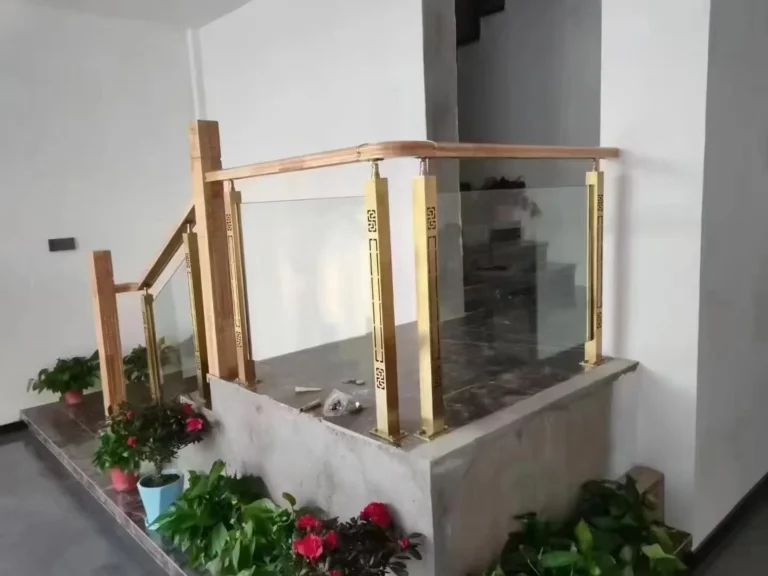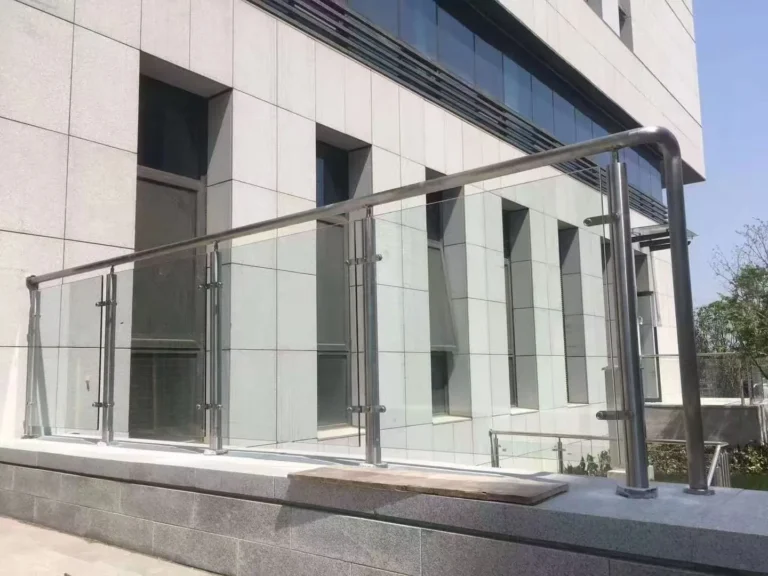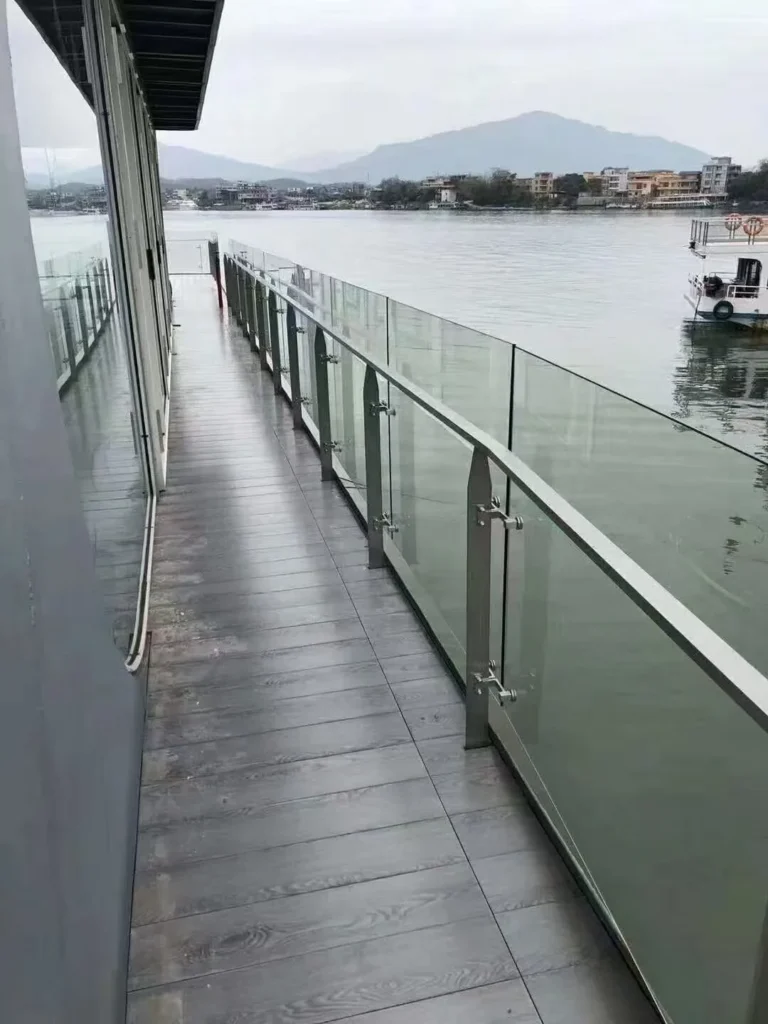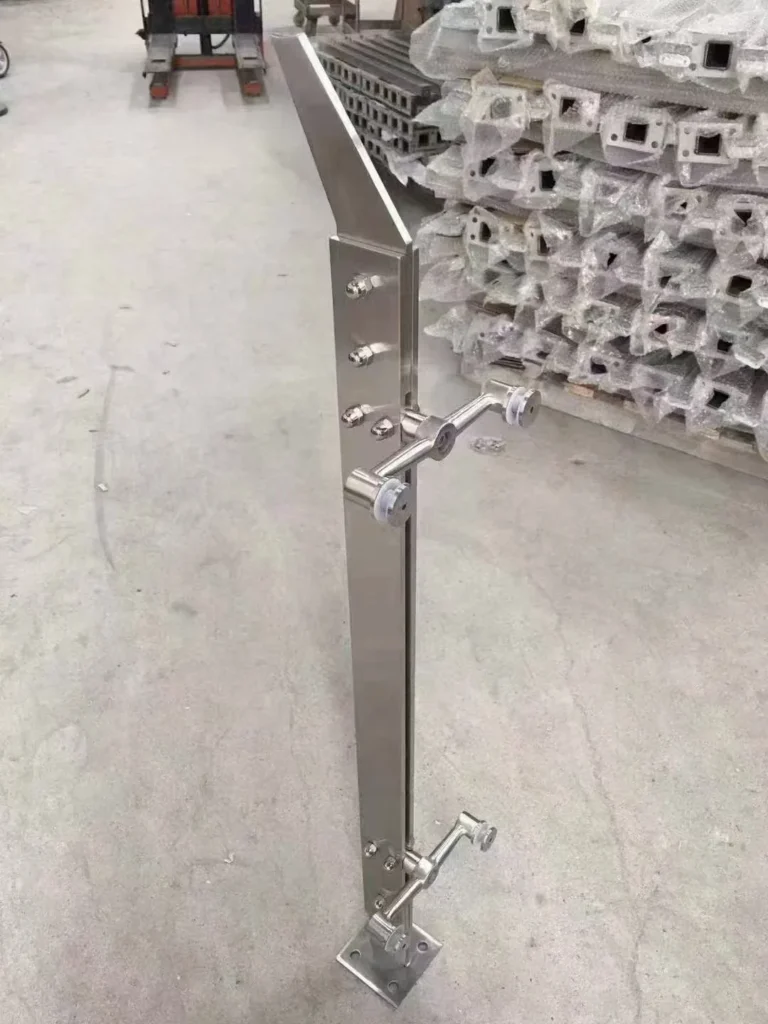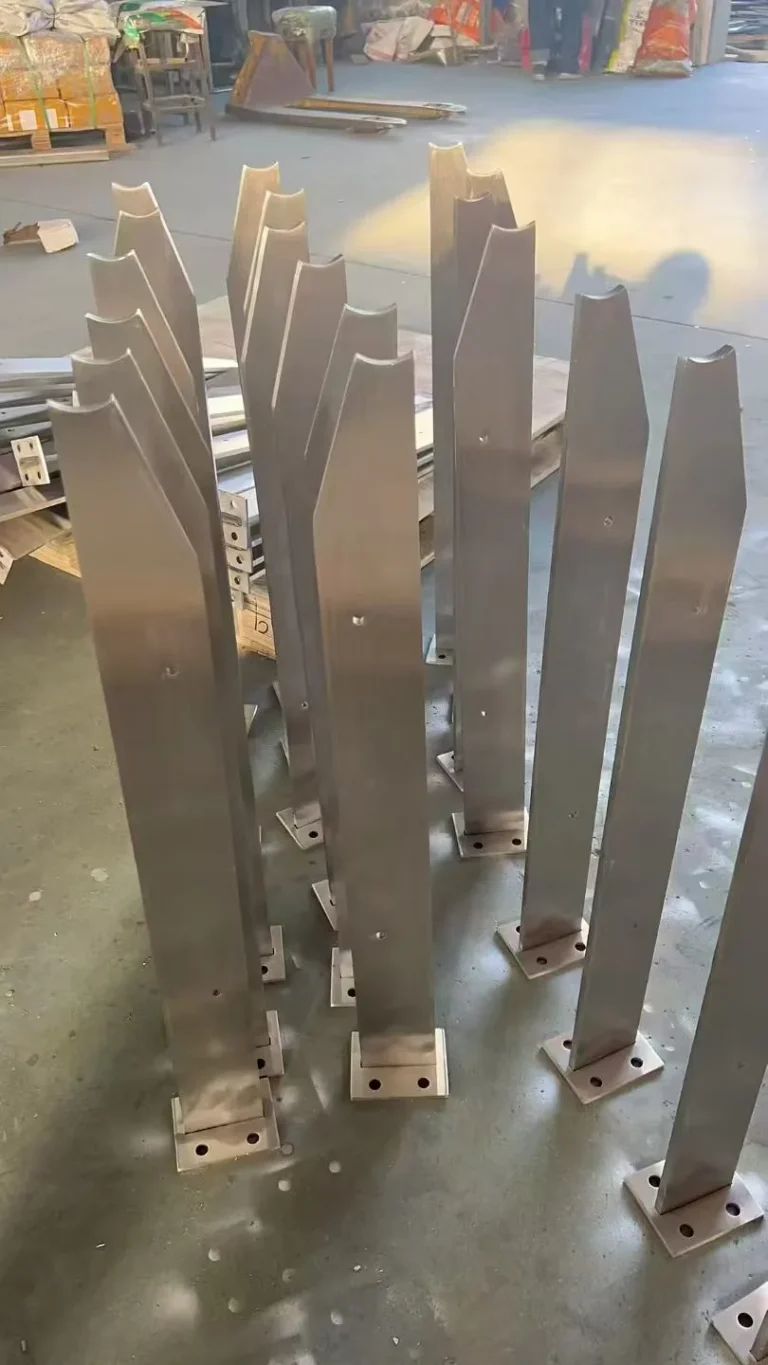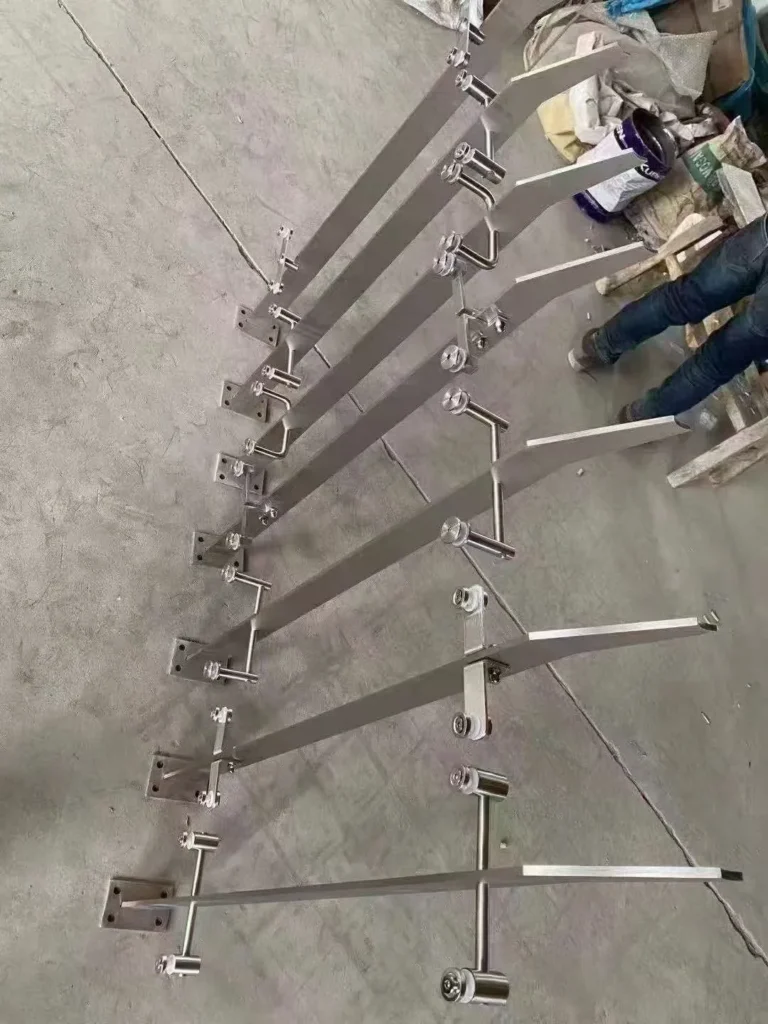
Short answer: choose a stainless steel railing post handrail support by matching the rail profile, design angle, connection method, required clearance, finish and project load path. Use a flat saddle for a compatible flat-bottom rail and a correctly radiused saddle for round tube. Adjustable heads help accommodate declared stair angles, but they do not replace controlled drawings, locking details or structural approval.
What is a railing post handrail support?
A post-top support is the connection between a stainless steel railing post and the rail above it. It commonly includes a stem or neck, a fixed or pivoting joint, and a saddle that meets the underside of the rail. The rail may be welded, screwed or bolted to that saddle according to the approved design.
Terminology matters. A top rail at the upper edge of a guard is not automatically a graspable handrail. Some systems use one rail for both functions; others require a separate handrail. The project designer must define which function applies before the support geometry is selected.
Fixed or adjustable: which support should a buyer choose?
| Support type | Best fit | Buyer checks |
|---|---|---|
| Fixed horizontal | Level runs with one controlled rail position | Post height, saddle orientation, rail centreline and attachment |
| Fixed angled | Repeated stair or ramp geometry with a released angle | Declared angle, handed variants, drawing datum and installation direction |
| Adjustable pivot | Projects with defined angle variation or site adjustment | Adjustment range, locking method, final appearance and access to tighten |
| Custom fabricated | Unusual rail profile, offset or architectural transition | Complete drawing, weld details, finish restoration and first-article approval |
A fixed support has fewer moving interfaces and gives a repeatable finished orientation when the project geometry is stable. An adjustable support can simplify stair variants, but only within its declared range and locking design. Do not assume that “adjustable” means any slope, any load or permanent freedom to rotate.
How do flat and radiused saddles differ?
The saddle should contact the intended rail profile without rocking or concentrating the connection at an edge.
- Flat saddles suit rails with a compatible flat underside, such as selected square or rectangular tubes.
- Radiused saddles are shaped for a stated round-tube outside diameter.
- Custom saddles may be required for oval, profiled, timber-capped or non-standard rails.
Match the actual contact geometry, not only the sales description. A nominal pipe size and an outside diameter are not always the same. The drawing should identify the rail material, section, outside dimensions, wall information where relevant, and the fastener or weld arrangement.
What changes for square, round and flat-bar posts?
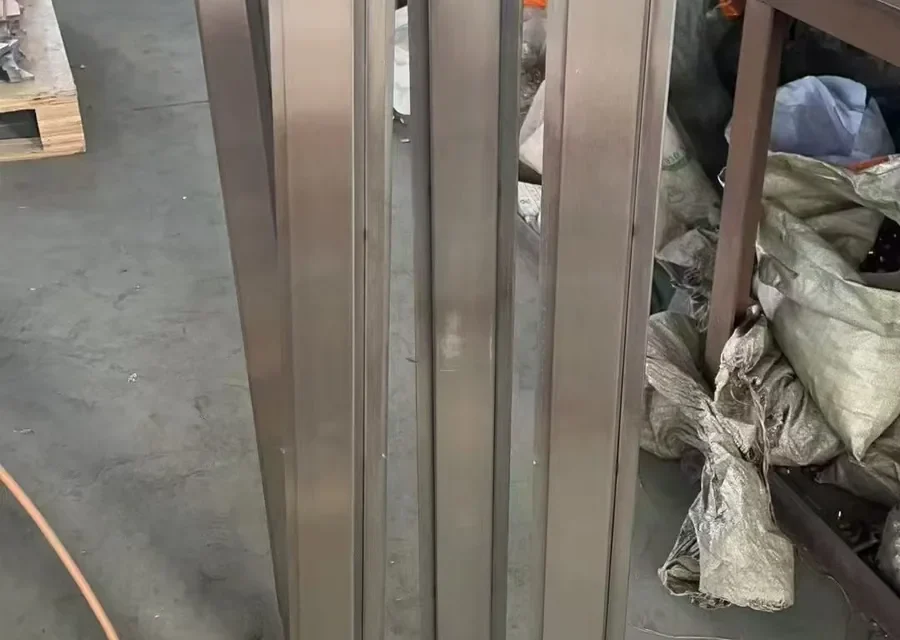
The post shape affects the support base, visual alignment and available connection area. A square-tube post provides clear faces for orienting a fixed or pivoting head. A round post needs rotational orientation controlled relative to glass fittings and the railing line. A flat-bar post may use an integrated cut profile, welded tab or another project-specific top detail.
The stainless steel railing post types guide compares square, round and flat-bar formats. Do not transfer a top detail from one format to another without checking wall thickness, edge distance, weld access and the complete load path.
How should stair and ramp angles be specified?
State the design angle, allowable variation and reference direction. Clarify whether the angle follows the finished tread line, ramp surface, handrail centreline or another project datum. Identify the viewing direction used to define left-hand and right-hand parts.
For a fixed angled support, the drawing should control the saddle orientation relative to the post and base. For an adjustable head, define the permitted angle range, pivot axis, locking method and final position. A site photograph is not a reliable angle specification.
Stair geometry also changes post height and transition conditions. The support at the first or last stair post may not match the intermediate posts. Model landings, corners and changes in slope before releasing a repeated post schedule.
When must graspability and clearance be checked?
When the supported rail is required to function as a handrail, the complete assembly must satisfy the governing accessibility and building requirements. The support cannot obstruct the gripping surface or reduce required clearance.
For US accessible routes, the US Access Board guidance for ADA handrails explains that gripping surfaces should be continuous, free of sharp or abrasive elements, and provided with required clearances. It also identifies permitted circular and non-circular gripping profiles. These provisions apply within their stated scope and do not create a universal specification for every country or project.
The 2024 International Building Code, Chapter 10, separately addresses handrails and guards in means-of-egress applications. The project design authority should identify the adopted code, edition, local amendments and whether the rail serves as a handrail, guard top rail or both.
Welded or mechanically fastened connection?
A welded rail-to-saddle connection can create a continuous assembly, but requires an approved weld detail, controlled heat input, access, distortion management and finish restoration. A mechanically fastened connection can simplify assembly or replacement, but needs defined fastener type, hole pattern, thread engagement, locking method and access for installation and inspection.
Hidden fasteners are not automatically better. They may improve appearance while making tightening or later inspection difficult. Exposed fasteners can be easier to verify but must suit the environment and architectural intent. The drawing should control the method rather than leaving installers to improvise.
Review the railing post weld finishing and inspection guide before cosmetic blending. Welding acceptance and visual finish acceptance should remain distinct.
How does the support affect the structural load path?
The support transfers forces between the rail and post. Its saddle, stem, pivot, fasteners and welds are part of the connection. A visually similar support may not have the same capacity, stiffness or failure mode.
Buyers should provide the project loads, support spacing, rail section, post section, connection details, material specification and applicable design criteria to the responsible engineer. BalusterPost does not assign a universal safe span, screw size or weld size from a product photograph. Those decisions require the complete system and project conditions.
Which dimensions belong on the fabrication drawing?
At minimum, identify:
- Post part number, shape, size and orientation.
- Finished rail centreline and support height from the installation datum.
- Fixed angle or adjustable range and pivot direction.
- Saddle length, width, thickness and flat or radiused profile.
- Rail section and contact surface.
- Hole quantity, diameter, countersink or thread, spacing and edge distance.
- Weld location and drawing-defined acceptance where welding is used.
- Visible finish, grain direction and protected surfaces.
- Straight, stair, landing, corner and handed variants.
Locate critical features from functional datums. The railing post drawing and tolerance guide explains why saddle angle, height and orientation should not rely on chained dimensions or informal annotations.
How should the support finish be coordinated?
The support and rail sit near eye and hand level, so differences in grain direction, gloss, weld blending and edge condition are visible. Specify which faces are architectural, how the grain should run, and whether the support is finished before or after assembly.
Do not use a general word such as “satin” as the entire acceptance method. Establish a physical or controlled visual reference when appearance is important. Our stainless steel railing post finish guide covers finish terminology, reference samples and inspection conditions.
Buyer inspection checklist
- Confirm part number, drawing revision and straight/stair/corner variant.
- Check support height, angle, rotation and rail centreline.
- Verify saddle profile against the actual rail sample or approved drawing.
- Inspect pivot movement, final locking and installation-tool access.
- Check hole pattern, fasteners, thread condition or weld record as specified.
- Assemble representative mating parts before releasing the batch.
- Inspect visible edges, grain direction, blending and protective film.
- Record deviations and obtain written approval before production continues.
A first-article assembly should include the intended rail or a controlled mating gauge. Measuring the post alone may miss saddle mismatch, interference, rotation or inaccessible fasteners.
How BalusterPost handles support selection
BalusterPost focuses on drawing-based stainless steel baluster posts and stainless steel railing posts, coordinated from Taizhou, Jiangsu, China. A square tube glass balustrade post can be configured with a project-defined fixed or adjustable top support, subject to the released drawing and system requirements.
For review, send the post schedule, rail profile, straight and stair geometry, material and finish specification, connection method, required clearances, project criteria and approval records. Contact Ryan Liang, Export Manager, before quotation when the support angle, saddle profile or rail function is not yet resolved.
Frequently asked questions
Can one adjustable support fit every stair angle?
No. Every adjustable design has a defined geometry and usable range. The project must also control locking, clearance, appearance and structural performance at the final angle.
Can a flat saddle support a round handrail?
Only when an approved interface is designed for that combination. Normally, a saddle matching the round tube outside diameter provides a clearer contact condition.
Is the guard top rail always a handrail?
No. Their functions and governing requirements can differ. The design authority must state whether one rail serves both functions or a separate graspable handrail is required.
Should the rail be welded or screwed to the saddle?
Either may be appropriate when engineered and documented. Compare load path, material, access, finish, installation sequence, inspection and maintenance before selecting the method.
What should be approved in the first article?
Approve the post and mating rail together where practical, including height, angle, orientation, saddle contact, connection, adjustment or locking, finish and documented deviations.